

July 29, 2024, 11:02 am | Read time: 4 minutes
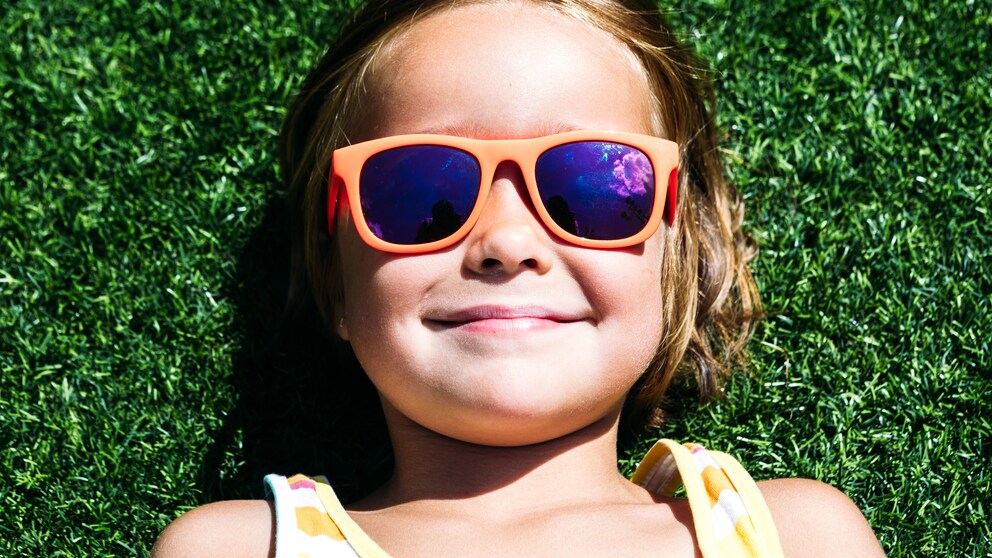
That’s dazzling! Sunglasses not only protect the eyes from the brightness of the sun but also from its UV radiation. Children’s eyes are particularly susceptible to this–for a specific reason.
When ophthalmologists examine children’s eyes closely, they see that the lenses are still completely clear. This is the part behind the pupils where incoming light–including sunlight–is focused. “This makes it easy for UV rays to penetrate the eye almost unfiltered and cause long-term damage,” warns ophthalmologist Prof. Vinodh Kakkassery. Therefore, it’s even more important for children to wear sunglasses. How parents can recognize a suitable model and what else they can do to provide the necessary sun protection for children’s eyes can be read here.
Overview
These Damages Threaten Children’s Eyes When They Are Repeatedly Exposed to the Sun Unprotected
UV radiation not only ages the skin but also the eyes. If a child is repeatedly exposed to intense sunlight unprotected, certain proteins in the eye lenses can be damaged. The lenses then cloud more quickly, increasing the risk of cataracts. According to the German Ophthalmological Society (DOG), it can also lead to the death of cells in the retina.
Parents need to know: Eye diseases are often the sum of many individual damages that accumulate over years and decades. It can take a long time before the first visual disturbances occur, according to the DOG. Sun damage early in life is particularly severe.
Good sun protection for the eyes is important for another reason: If UV radiation repeatedly hits the eyelids or conjunctiva, genetic changes in the skin cells there can occur. This can eventually lead to skin cancer. Here too, “We now know that the damage burden accumulated in early years is the main cause when white and especially black skin cancer develops later,” says Kakkassery.
Also interesting: This Swimsuit Color Can Be Life-Threatening for Children
Only From Young Adulthood Are the Rays Blocked by the Lens
Only with increasing age do lenses cloud and allow less UV radiation into the eye and onto the retina. From young adulthood, the rays are almost completely blocked by the lens.

What Is Snow Blindness and How Dangerous Is It?

How Much Sunscreen You Really Need
Sun Protection for Children’s Eyes–How Parents Can Proceed Correctly
Check UV Index in Weather Apps
Eye experts advise checking the UV hazard index daily, which can be found in many weather apps. If the value is 3 or higher, sun protection is necessary–including for children’s eyes. This can also be the case on rather cloudy days. In addition to sunglasses, a sun hat helps by casting shade on the face.
Look for Sunglasses with CE Mark
When buying children’s sunglasses, parents should ensure that the model has the CE mark, advises the DOG. It indicates that they meet EU safety standards. The glasses should protect against UV rays up to a wavelength of 380 nanometers.
Apply Sunscreen to Eyelids
In addition to sunglasses, sunscreen helps here. However, caution is advised when applying: If the product gets on the conjunctiva or cornea of the child, it stings badly.
Also interesting: “Ökotest” Discovers Banned Plasticizers in Children’s Sunscreens
In the midday sun in summer, the sun’s rays are strongest. From 11 a.m. to 3 p.m., children should not be in the sun. This is advised by the Federal Center for Health Education (BZgA).1
Applying Sunscreen–The Right SPF for Children
The skin of infants and young children is particularly sensitive, especially to UV radiation. According to the BZgA, the sun protection factor (SPF) for children’s sunscreen should be at least 30. Less is not recommended, and more is not necessarily needed. Conversely, there’s nothing wrong with using a cream with a higher SPF.
When applying, parents should not skimp and apply sunscreen generously–only then does the product offer the promised protection. The recommendation is to apply at least twice a day and always reapply after swimming.
What to Consider for Babies Up to 12 Months
In the first year of life, children should not be exposed to direct sunlight, according to the BZgA. Avoid using umbrellas or covers to prevent overheating. Sunscreen is also not recommended in the first year, as it unnecessarily burdens sensitive baby skin. Be cautious with baby oil: It even increases the skin’s sensitivity to light!
*With material from dpa