



January 30, 2026, 7:55 am | Read time: 8 minutes
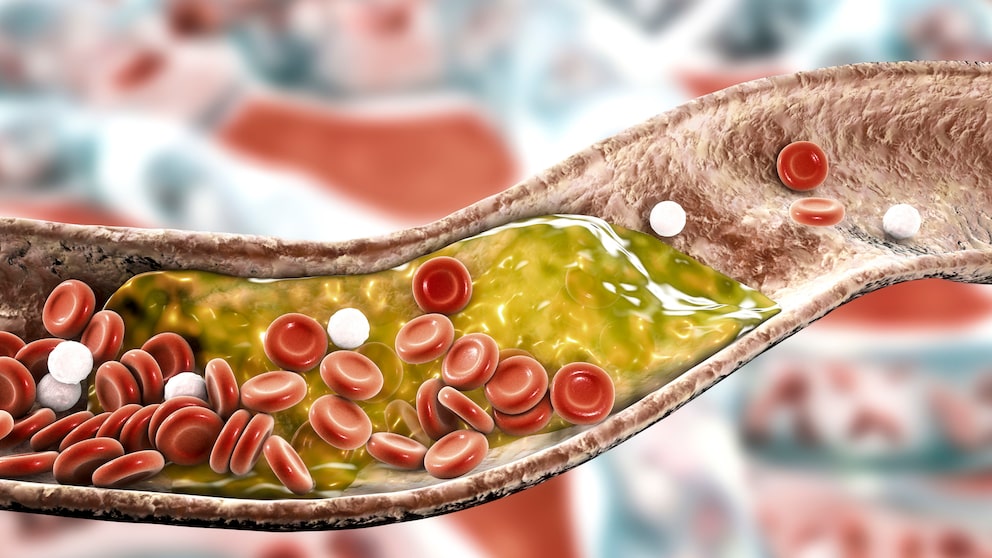
Arteriosclerosis often develops unnoticed over the years. Such deposits in the vessel walls within the artery lead to vessels becoming increasingly constricted and hardened. This increases the risk of heart attack, stroke, or other serious cardiovascular diseases. Those who inform themselves early can reduce their risk.
Even though arteriosclerosis occurs more frequently in older people, it is by no means a disease of the “old man.” It often begins in young adulthood. The tricky thing is that even if small deposits have already formed in the vessel walls within the artery, there are no symptoms at the beginning. FITBOOK identifies the signs of arteriosclerosis, shows how it is diagnosed, describes the treatment options, and reveals what can be done to prevent it.
Overview
- Arteriosclerosis – What Is Behind the Deposits?
- Risk Groups for Arteriosclerosis
- How Can You Tell if You Have Arteriosclerosis?
- Arteriosclerosis – the Worst-Case Scenario
- Examinations – How Arteriosclerosis Is Diagnosed
- How Is Arteriosclerosis Treated?
- What Can I Do Preventively to Reduce the Risk of Arteriosclerosis?
- What Diet and How Much Exercise Can Protect Against Arteriosclerosis?
- Sources
Arteriosclerosis – What Is Behind the Deposits?
Arteries are blood vessels that carry “fresh,” oxygenated blood away from the heart. This blood has the task of supplying the organs and tissues in the body with nutrients and oxygen, thereby enabling them to function properly. Arteriosclerosis is a disease of these important blood vessels: deposits in the vessel walls within the artery. These deposits, also known as “plaque,” can consist of blood clots, blood fats, or calcium deposits, for example. This plaque impairs the blood flow—sometimes severely.
Risk Groups for Arteriosclerosis
Contrary to popular belief, arteriosclerosis is not a disease of “old men”—this attribution comes from the fact that vessels become less elastic and more rigid with increasing age, and the disease is considered to be the most common cause of impotence. In fact, the disease often begins in young adulthood with so-called “fatty streaks.”
Men are affected slightly more frequently than women. Around a quarter of male cases occur before the age of 55, and 50 percent before the age of 65. In women, around every 7th arteriosclerosis event occurs before the age of 55 and every 3rd event before the age of 65, as a US study from 2016 shows.1
The 3 Main Risk Factors for Arteriosclerosis
The main risk factors for deposits in the vascular walls are smoking, high blood pressure, and high cholesterol levels—the latter may have a family history. In addition to physical illnesses such as rheumatism, psychological conditions such as anxiety disorders and depression are also suspected of increasing the risk of arteriosclerosis.
How Can You Tell if You Have Arteriosclerosis?
Even if small deposits have already formed in the arteries, there are usually no symptoms at the beginning of the disease. Blocked coronary arteries often cause a feeling of pressure and tightness in the patient’s chest. Blocked arteries also impair kidney function. This can be recognized by foamy urine, water retention in the legs, and high blood pressure.
Arteriosclerosis can also be the cause of disorders and dysfunctions of the nervous system. Blockages in the carotid artery are often the trigger. A common warning sign is a sudden loss of vision in one eye.
Symptoms of intermittent claudication are also a strong indication that there may be arterial deposits in the neck, heart, and brain vessels: a circulatory disorder in the legs that forces the patient to stand frequently. In technical terms, intermittent claudication is known as peripheral arterial disease (PAD). Sometimes the blood flow is so severely impaired due to this disease that limbs or parts of limbs have to be amputated.
Arteriosclerosis – the Worst-Case Scenario
Arteriosclerosis is a serious condition. As the disease progresses, deposits can combine to form a blood clot (thrombus), and they no longer “just” disrupt the blood flow, but prevent blood from passing through at all. This can cause an acute heart attack. Blood clots in the carotid artery and the vessels supplying the brain can cause a stroke.
Examinations – How Arteriosclerosis Is Diagnosed
The first step is for doctors to carry out a blood test, as elevated blood sugar and certain cholesterol levels can be signs of arteriosclerosis.
Relevant Blood Values for Suspected Arteriosclerosis
These include a high LDL cholesterol—currently 115 mg/dl (milligrams per deciliter) in healthy people; depending on the risk constellation, other limit values apply (below 55 mg/dl in people who already have the disease). As LDL cholesterol is usually calculated, it is better to measure the so-called ApoB-100: In addition to LDL, this protein also contains the so-called VLDL and IDL (which are also atherogenic and can therefore promote deposits.) Lipoprotein(a) only needs to be determined once in a lifetime, as it only changes insignificantly over the course of a person’s life.
As arteriosclerosis is primarily classified as a chronic inflammatory process, the so-called highly sensitive CRP (C-reactive protein) should also be determined as an inflammatory marker in the event of a risk constellation.
Stress ECG – Rather Unsuitable Method
If arteriosclerosis is suspected, the patient’s heart and arteries are also auscultated. In detail, however, the procedure and components of the examination depend on where the calcifications are suspected. Depending on the suspicion, an electrocardiogram (ECG) or exercise ECG may also be useful. Although this provides information about exercise capacity, it is only a very imprecise method of detecting a circulatory disorder (ischemia) of the heart.
Non-Invasive Imaging Procedures Depending on the Risk Constellation
Imaging procedures are used to gain insight into the heart and its function under stress. A cardiac ultrasound examination is the basic diagnostic procedure. If a circulatory disorder of the heart is suspected, further non-invasive imaging procedures can be considered. Depending on the risk constellation, a cardiac MRI, cardiac CT, myocardial scintigraphy, or stress echocardiography should be performed. The decision as to which method is most suitable is generally made by the treating cardiologist.
How Is Arteriosclerosis Treated?
Medication to Prevent or Alleviate Arteriosclerosis: Blood Thinners, Blood Pressure, and Cholesterol-Lowering Drugs
Depending on the severity of the disease, drug treatment may be advisable. To prevent or alleviate arteriosclerosis, doctors usually prescribe drugs that are also intended to prevent other problems of the cardiovascular system. These include coagulants (also known colloquially as “blood thinners”) and antihypertensives.
Cholesterol-lowering drugs should also be prescribed if high cholesterol levels or deposits are already present. These include statins in particular, but also newer substances such as PCSK-9 inhibitors or bempedoic acid.
If a Circulatory Disorder of the Heart Has Been Detected: Stent Implantation or Bypass Treatment
If a circulatory disorder is detected in cardiac MRI diagnostics, for example, surgical intervention is sometimes necessary. In the area of the heart, neck, and leg arteries, balloon catheters can be used to expand the constrictions, i.e., to widen them and, if necessary, to supply them with a vascular support, a so-called stent. If this is not possible via the catheter procedure, the constriction can also be bridged (bypass treatment). Surgeons can create this bypass using the body’s own vessels or artificial “vessels.”

Window Shopping Disease: What Causes Constant Leg Pain

Cardiologist on Coronary Heart Disease: “Sudden Cardiac Death Can Be the First Symptom in the Worst Case”
What Can I Do Preventively to Reduce the Risk of Arteriosclerosis?
Prevention should begin before any arteriosclerosis occurs, in the form of a healthy lifestyle. Risk factors such as smoking or an unhealthy diet should be avoided, and risk factors in the blood (especially the cholesterol levels mentioned above) should be checked regularly. It is also advisable to check your blood pressure occasionally in order to detect possible high blood pressure as early as possible.
What Diet and How Much Exercise Can Protect Against Arteriosclerosis?
Your diet should primarily be plant-based (fruit, vegetables, salad, pulses) and rich in unsaturated fatty acids (olive oil, nuts, etc.). Highly processed foods should be avoided. It is also advisable to stop smoking and to avoid or minimize alcohol consumption.
How much exercise is helpful? After the figure of 150 minutes of exercise per week had long been considered ideal in the WHO recommendations, the results of a US study in 2022 deviated from this ideal.2 According to this study, even more exercise is needed to prolong life: it corrected the ideal amount of exercise per week to 150 to 300 minutes of moderate endurance activity per week plus strength training twice a week.