



December 2, 2025, 3:03 am | Read time: 7 minutes
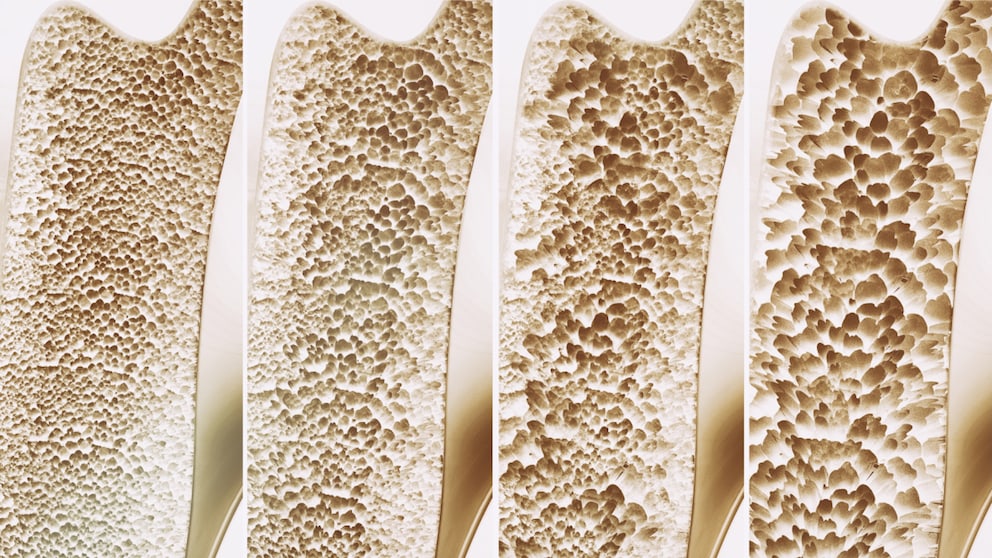
Osteoporosis refers to the loss of bone density in the human skeleton. With around six million people affected in Germany, it is considered a widespread disease–yet estimates suggest that only about 20 percent of all cases are detected and treated in time. What symptoms to watch for and who is most frequently affected.
Follow the FITBOOK channel on WhatsApp now!
These Symptoms May Indicate Osteoporosis
1An increased risk of osteoporosis is often only recognized when the first fractures occur. According to the Federal Self-Help Association for Osteoporosis, only about 20 percent of those affected in Germany are diagnosed in time. The disease is often only discovered “when a fracture attributable to the disease has already occurred,” according to the association’s website. Early diagnosis is particularly important because the risk of further fractures significantly increases after an osteoporosis-related fracture.
Typical signs to watch for:
- Bone fractures after seemingly harmless falls
- Spontaneous fractures without apparent cause
- Persistent, sometimes severe back pain with limited mobility
- Bone pain
- Decrease in height
- Pronounced curvature of the spine (“dowager’s hump”)
Particularly noticeable: Bones can break even under minor stress–such as lifting a heavy object. So-called stress fractures, or fatigue fractures due to repeated stress, are also common in osteoporosis–sometimes even without prior increase in stress.
When Exactly Is It Called Osteoporosis?
Normally, we build up our bone mass until about the age of 30, so bone density is highest in the early to mid-thirties. From this point, natural bone loss begins. As we age, we lose about one percent of bone mass per year. However, we can partially influence this process–as explained further below under Prevention.
Osteoporosis is diagnosed when significantly more bone mass is lost than occurs in the natural aging process. The causes are varied and divided into two categories.
- Primary osteoporosis is triggered by factors such as age, hormone deficiency (especially estrogen), poor nutrition, or lack of exercise.
- Secondary osteoporosis is caused by other diseases or medications. Diseases that promote bone loss include intestinal, liver, and kidney diseases, as well as hormonal and metabolic disorders like diabetes mellitus type I.
In both cases of osteoporosis, bone metabolism is disrupted. The balance between bone formation and resorption is disturbed, leading to increased loss of calcium and collagen from the bone substance. When these two components are missing, the bone becomes porous and brittle, resulting in an unstable bone structure and ultimately a higher risk of fractures. This is one reason why older people are more prone to bone fractures.
Who Is Particularly Affected
According to the Bone Evaluation Study-2 published in 2024, the number of osteoporosis cases in the German general population aged 50 and older was around 5.87 million in 2018–equivalent to 15.9 percent. Women accounted for 81.6 percent of the cases, especially after menopause.2 According to data from the Scientific Institute of the AOK (WIdO) from 2023, among patients over 90 years old, women are four times more likely to be affected than men, with 29.2 percent compared to 7.4 percent.3
Why Are So Many Women Affected?
Why are so many women affected? Menopause and early menopause are central risk factors for the disease. The declining estrogen levels lead to an accelerated loss of bone mass.
In contrast, osteoporosis is very rare among younger patients. Among those aged 35 to 49, less than one percent of the population is affected.
In men, secondary osteoporosis is said to occur more frequently than in women, due to factors such as excessive alcohol consumption, systemic steroid therapies, or hypogonadism (testosterone deficiency/lack of or reduced hormonal activity of the testes).4
Check for These Risk Factors After Age 50
According to the medical guidelines of the Dachverband Osteologie (DVO), women after menopause and men aged 50 and older should undergo a basic examination for osteoporosis risks–but only if they have certain risk factors for bone fractures.5 In Germany, this check can easily take place when someone with known risk factors or a question about their fracture risk visits a doctor. A DXA bone density measurement (dual-energy X-ray absorptiometry) can then assess the condition of the bones.
The DVO guidelines recommend basic diagnostics in the following situations for adults, if medically relevant fracture risk factors exist from age 50. Examples include:
- previous fractures (vertebrae, hip, humerus, forearm, pelvis …)
- certain chronic diseases (e.g., rheumatoid arthritis, type 1 diabetes, Crohn’s disease, MS, Parkinson’s)
- endocrinological causes (hyperparathyroidism, hypogonadism, Cushing’s …)
- medications that damage bones (especially oral glucocorticoids, aromatase inhibitors, anticonvulsants, opioids)
- significantly increased risk of falling
- underweight (a BMI under 20, especially under 18.5)
- smoking, alcohol >50 g/day
- kidney failure from stage 3
- parent with a hip fracture
A typical sign of osteoporosis is a bone fracture in a disproportionate situation. For example, lifting a heavy object or a slight bump can lead to a fracture. But vertebral fractures, stress fractures–fatigue fractures due to continuous stress–and back pain can also be signs of bone loss. In osteoporosis, stress fractures often occur even without prior increase in stress.
Over 70
From age 70, the average fracture risk is so high that osteoporosis diagnostics should be offered according to guidelines if the result would influence therapy (e.g., decision on medication treatment). Diagnostics are also recommended if there is any indication that osteoporosis might be caused by another disease. Diagnostics should also be carried out promptly if there have been multiple falls in the past year or a new vertebral or hip fracture.
Under 50
Under age 50, diagnosis is only recommended for severe or rare risk indicators. Such as aromatase inhibitors, HIV, and severe inflammatory diseases.
Also interesting: Is yogurt really that healthy for bones? Study provides answers
Treatment Options
The goal of osteoporosis therapy is to prevent bone fractures, relieve pain, and maintain or improve quality of life. Therefore, the therapy is individually managed by the doctor depending on the patient’s degree of illness. Key components include exercise, nutrition, and medication options up to surgical methods. Self-help groups also play a central role.
A balanced diet with sufficient calcium (for bone stability) and vitamin D (improves calcium absorption) is an essential part of the therapy. Functional training under guidance should reduce the risk of falls and prevent fractures. According to the Federal Self-Help Association for Osteoporosis, Nordic walking, gentle strength training, or water aerobics are suitable sports for osteoporosis.6
Medications can promote the formation of new bone substance and slow down bone resorption. Various drug groups are used depending on individual needs, such as bisphosphonates, denosumab, teriparatide, or selective estrogen receptor modulators. The choice of medication depends on factors such as age, gender, fracture risk, and comorbidities.
In cases of painful vertebral fractures or advanced instability, surgery may be necessary. Procedures like kyphoplasty or vertebroplasty help stabilize fractured vertebrae and effectively relieve pain. Kyphoplasty is a minimally invasive procedure to stabilize the fractured vertebra and relieve pain. In vertebroplasty, a special bone cement is injected into the vertebra through a hollow needle.

Increased Risk of Osteoporosis May Be Detectable in the Eyes
Foods That Are Especially Beneficial During Menopause
Importance of Physical Activity in Childhood for Later Osteoporosis Risk
Studies and reviews show that physical activity (especially weight-bearing activity) during growth and young adulthood leads to higher peak bone mass (PBM)–and thus can indirectly reduce the risk of osteoporosis later in life.7 The foundation for higher peak bone mass is therefore laid in childhood and adolescence.
How to Reduce the Risk of Bone Loss
Although osteoporosis can be triggered by various factors such as hormonal changes and other diseases, we have two important ways to influence it: diet and exercise. A diet rich in calcium and vitamin D strengthens bones, as do physical activities. Like muscles, the skeleton needs mechanical resistance to promote bone formation and stability.
Regular strength exercises are considered particularly effective, as they can almost balance the loss of bone mass by building new mass.8 However, endurance and coordination exercises, as well as gymnastics, are beneficial as long as they sufficiently stress the bones. As studies show, walking alone is unfortunately not enough.9
With the following factors, you can reduce your risk of osteoporosis:
- Ensure plenty of physical activity in daily life
- Engage in regular sports (preferably with strength exercises)
- Maintain a healthy diet with sufficient vitamin D and calcium
- Avoid severe underweight
- Avoid excessive alcohol consumption
- Refrain from smoking