


March 20, 2026, 12:18 pm | Read time: 6 minutes
To many, the organ seems about as useful as the appendix: the thymus. However, this gland in the breastbone is not entirely useless. As part of the immune system, it plays a very important role during childhood and adolescence. After that, the thymus ceases its activity and shrinks. Therefore, it is considered rather superfluous and useless in adults. But that seems to be a misconception–what the thymus does and how to keep it active.
Briefly Explained: The Function of the Thymus
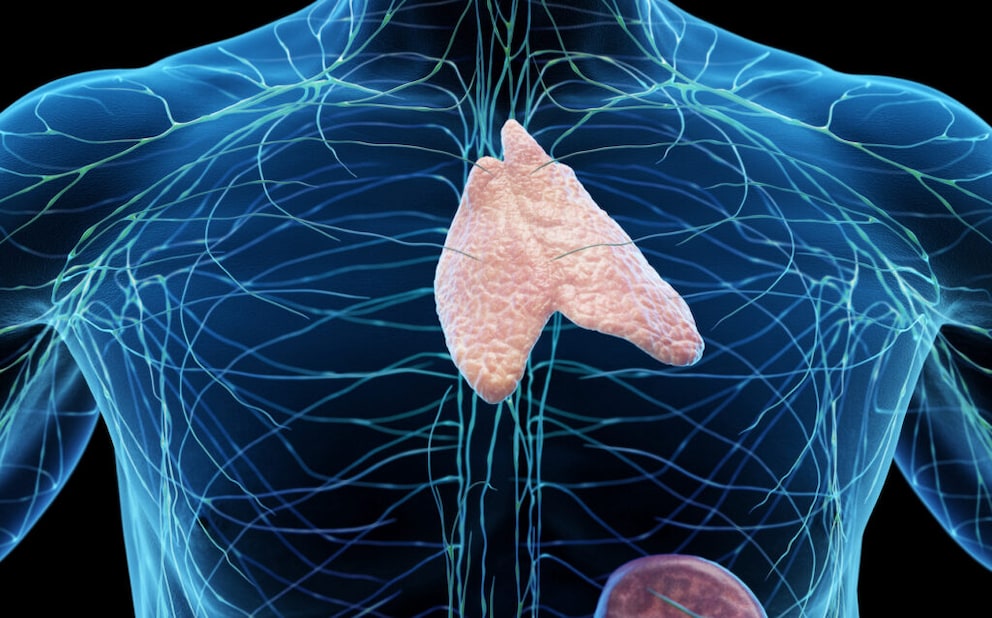
The thymus (also known as the thymus gland) is a small organ located in the chest behind the breastbone. The gland is an important part of the immune system. This system matures in the bone marrow and the thymus. In the thymus, T-cells learn to distinguish between foreign and self-antigens and to react accordingly to foreign cells. This is crucial for the body to fight bacteria and viruses without attacking its own cells. In other words, the thymus plays a significant role in building a healthy immune system and preventing the development of autoimmune diseases.
The small organ behind the breastbone is active even before birth, but its function decreases after puberty. The thymus shrinks, and the tissue changes. The spleen and lymph nodes then take over its functions.1
Why Is the Organ Removed?
In Germany, doctors and patients may opt for the removal of the thymus if it is affected by tumors. Even with benign tumors, this decision can be made to prevent malignant changes. Additionally, the surgical removal of the thymus gland (thymectomy) can be part of the treatment for the autoimmune disease myasthenia gravis (MG).2,3
Also of interest: Symptoms and treatment of the autoimmune disease Hashimoto’s thyroiditis
U.S. Study: Removed Thymus Increases Cancer Risk
In the U.S., the situation regarding thymectomy is similar.4 In their 2023 study, researchers from Massachusetts General Hospital and Harvard Medical School describe the frequency as follows: “The routine removal of the thymus is performed in various surgical procedures.” Based on this, they wanted to find out whether the thymus is indeed as useless for adults as is often assumed, or if “the adult thymus is necessary for maintaining immune competence and overall health.”5
For the study, the scientists analyzed data from 1,146 patients with thymectomy and 6,021 comparable patients without gland removal. Result: Within five years, mortality in the thymectomy group was significantly higher (8.1 versus 2.8 percent). The cancer risk was also increased (7.4 versus 3.7 percent).
In a subgroup, it was also shown that patients without a thymus produced fewer new T-lymphocytes and had higher levels of pro-inflammatory cytokines in their blood. This suggests that the thymus gland might be important for immune function even in adulthood.
Anti-Cancer Function of the Thymus Deciphered Only in 2025
Scientists from Heinrich Heine University Düsseldorf discovered unique immune cells in thymus tissue samples from infants in 2025. According to this, special natural killer cells, which are defense cells that directly attack sick or degenerated cells, are formed in the thymus. The special thing about them: Compared to killer cells from bone marrow and lymph nodes, they are not inhibited by cancer cells because they do not carry an inhibitory receptor on their surface (NKG2A receptor). This allows them to efficiently attack and destroy tumors. The finding is an important milestone in cancer research.6
Current Study: Healthy Thymus Protects Against Cancer and Heart Disease
A team led by researchers from Harvard Medical School conducted two studies showing that adults with a healthy thymus not only live longer but also have a lower incidence of cancer and cardiovascular diseases compared to adults with a damaged thymus.7,8 Data were provided by 25,031 adults from a national lung cancer screening study and 2,581 participants from the Framingham Heart Study–a large, long-term cohort of generally healthy adults.
Using a deep learning model, the research team analyzed the size, shape, and composition of the thymus in CT scans of the participants. Based on this, they developed a “thymus health score.” Individuals with a high score had about a 50 percent lower risk of premature death, a 63 percent lower risk of heart-related death, and a 36 percent lower risk of developing lung cancer compared to those with a low thymus health score. These associations remained significant when considering age and other health factors.
The team suspects that thymus health could reflect the state of the immune system. It is possible that the immune system is less able to respond to new threats like cancer when thymus health and thus the diversity of T-cells decline.
Does the Score Predict How Well Cancer Therapy Works?
In the second study, the researchers analyzed CT scans and treatment outcomes of over 1,218 cancer patients treated with immunotherapy. Patients with a higher thymus score had about a 37 percent lower risk of cancer progression and a 44 percent lower risk of death than patients with a lower score, even after accounting for other patient, tumor, and treatment factors.
“The thymus has been neglected for decades and could be a missing piece of the puzzle in explaining why people age differently and why cancer treatments fail in some patients,” said Hugo Aerts, corresponding author and professor of radiation oncology, in a press release.9

The Surprising Impact of Daily Caloric Intake on Longevity

Youthful Immune System in Old Age May Be Harmful
Thymus Remains Active for Different Lengths of Time–These Factors Matter
How quickly and to what extent the thymus gland deteriorates also seems to be related to lifestyle. The analysis showed that chronic inflammation, smoking, and obesity are associated with impaired thymus function. This suggests that lifestyle factors and systemic inflammatory processes can influence immune defense throughout life. In the Framingham cohort, reduced thymus function was also associated with features of metabolic syndrome, including high blood pressure and elevated blood sugar and triglyceride levels. Additionally, higher levels of pro-inflammatory proteins in the blood and an increased risk of frailty and disability were found.
Thymus More Important for Adults Than Previously Thought?
As early as 2023, David Scadden from Massachusetts General Hospital, who worked on the aforementioned U.S. study, stated in a release from “The Harvard Gazette”: “This study shows how important the thymus gland is for maintaining adult health. The main reason the thymus impacts overall health seems to be that it protects against the development of cancer.”
And Hugo Aerts is also convinced: “Our findings suggest that thymus health deserves much more attention and may open new ways to understand how we can protect our immune system as we age.”