


January 26, 2026, 1:53 pm | Read time: 7 minutes
Studies suggest that already commonly prescribed drugs could have new benefits, saving time and money compared to developing new drugs. According to a recent study, certain drugs may offer some protection against liver cancer and serious complications of cirrhosis. People with advanced fibrosis or metabolic fatty liver disease in the study also benefited from the most commonly prescribed cholesterol-lowering drugs.
Viagra was originally developed to treat angina pectoris—it then proved to be effective against erectile dysfunction. Minoxidil, originally developed as a drug to treat high blood pressure, is now sold as a hair loss remedy. And aspirin, originally used to relieve pain and thin the blood, has been shown in studies to provide surprisingly good protection against bowel cancer. When already approved and well-studied drugs are used for new therapeutic indications, there is always great potential. For some years now, there have been indications that taking statins, originally developed to lower cholesterol, can significantly reduce the risk of progressive liver failure and liver cancer.
Overview
- Only 17 Percent of Liver Cancer Patients Survive 5 Years Post-Diagnosis
- Which Drugs Have a Protective Effect Against Liver Cancer?
- 5 Million People in Germany Take Statins
- “Less Liver Cancer with Statins”
- 16,500 Patients With Chronic Liver Disease Observed for 10 Years
- Statin Users Are Less Likely to Develop Liver Cancer
- Statins as Additional Therapy?
- Sources
Only 17 Percent of Liver Cancer Patients Survive 5 Years Post-Diagnosis
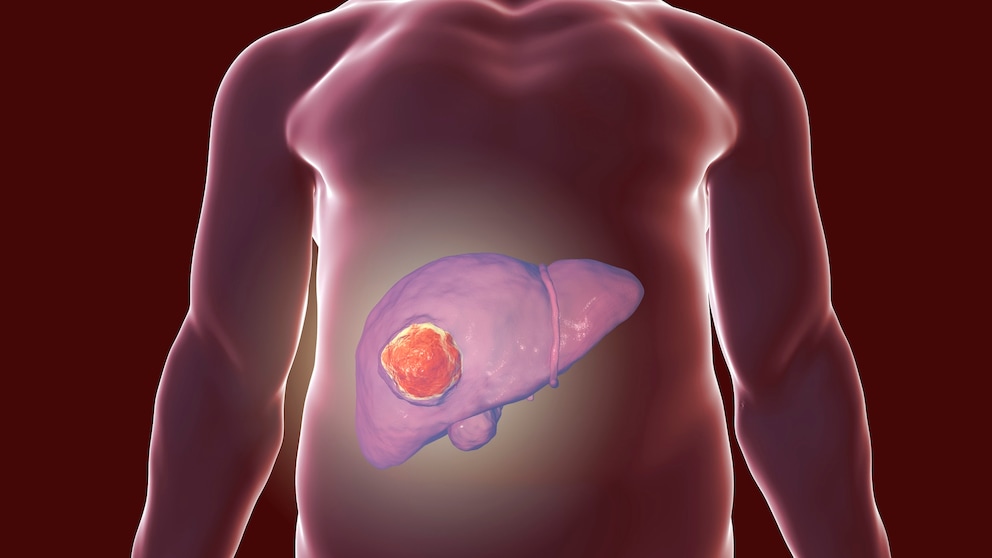
Due to its poor prognosis, liver cancer is one of the most common causes of cancer death worldwide. In Germany, there are almost 8200 deaths per year for every 9800 new cases of liver cancer, according to figures from the Center for Cancer Registry Data. Five years after diagnosis, on average, only 17 percent of those affected are still alive, and after ten years, the figure is only 12 percent.1 Only lung cancer and bowel cancer claim more cancer victims worldwide in terms of the number of cases.
Because the prospects of a cure are so poor, there is no established early detection of liver cancer in Germany. Only people who have risk factors for liver cancer can undergo regular screening free of charge: Patients with liver cirrhosis, patients with a persistent hepatitis B virus infection, patients with a chronic hepatitis C virus infection, or non-alcoholic fatty liver hepatitis, and patients with advanced liver fibrosis.2
Which Drugs Have a Protective Effect Against Liver Cancer?
Various methods are available for the treatment of liver cancer. According to the liver cancer patient guideline, there is no ideal method that is recommended for everyone. The best treatment can be found in a certified liver cancer center.
In Germany, alcohol consumption and chronic hepatitis C virus infection are the most common causes of liver cancer and cirrhosis. Accordingly, medication against this infection can reduce the risk of liver cirrhosis and thus liver cancer. In patients with chronic liver disease, acetylsalicylic acid is said to help; if diabetes mellitus is also present, studies suggest that the drug metformin is a good option.3
Chronic liver disease gradually leads to a deterioration in liver function. This increases the risk of serious complications such as liver cancer or liver failure.
5 Million People in Germany Take Statins
Relatively new in the focus of anti-liver cancer research: statins. As the most frequently prescribed cholesterol-lowering drugs, they generate enormous profits for the pharmaceutical industry. Active substances such as atorvastatin and fluvastatin are taken by almost five million people in Germany.4 The mechanism: statins inhibit an enzyme in the liver called HMG-CoA reductase, resulting in less cholesterol in the cells. This inhibits the development and progression of arteriosclerosis, which is known to cause heart attacks and strokes.5
For some years now, researchers have considered it possible that statins reduce the risk of liver cancer. And even if no one knows exactly how it could work, there are already studies that point to a possible link.
“Less Liver Cancer with Statins”
“Less liver cancer with statins”—this was the title of a study published in the Journal of the National Cancer Institute in 2015, which compared 1195 liver cancer patients with 4640 control subjects and found that taking statins could be beneficial.6,7
Another study, based on data from the UK Biobank, showed that people with no previous liver disease who took statins regularly had a 42 percent reduced risk of developing a malignant liver tumor.8
Since preventive use of statins is not advisable for healthy individuals, research is focusing on their potential to prevent liver cancer in people with diabetes and chronic liver disease. Both groups have an increased risk of liver cancer.
16,500 Patients With Chronic Liver Disease Observed for 10 Years
U.S. researchers have conducted a 10-year follow-up study on 16,500 patients, all over 40, who received a chronic liver disease diagnosis between 2000 and 2023 and underwent treatment at Boston’s Mass General Brigham Clinic.
3610 of them received documented statin therapy; the rest did not. Ultimately, the study sought to determine whether statin use in these individuals reduces the risk of hepatocellular carcinoma—the most common type of liver cancer—and acute decompensation of cirrhosis, which occurs when the body can no longer compensate for the liver’s gradual failure due to cirrhosis. What influence do the type of statins administered and how long they are taken have? The specialist journal “Jama Internal Medicine” published the study results.9
Important: This is a retrospective observational study. This means that it cannot prove causality, but can only show associations. And: many statin users already had an indication to take statins for other reasons—such as cardiovascular disease—anyway. Whether the observed effects are solely due to the statins or are partly due to other factors remains to be seen. Nevertheless, we do not want to withhold the results from you.
Liver Cancer–Early Signs, Causes, and Treatment
These Skin Changes May Indicate Advanced Liver Cirrhosis
Statin Users Are Less Likely to Develop Liver Cancer
In the 10-year analysis, only 3.8 percent of statin users developed hepatocellular carcinoma—as already mentioned, this is the most common type of liver cancer—compared to eight percent of non-users. After adjustment for possible influencing factors, this corresponded to a 33 percent lower risk.
Only 10.6 percent of statin users experienced liver decompensation within ten years. This compares with 19.5 percent of non-users. This corresponds to a 22 percent lower risk.
The protective effect of statins was particularly strong when they were taken for a longer period of time. And: Lipophilic statins performed slightly better in reducing the risk of liver cancer (3.7 percent compared to 4.1 percent for hydrophilic statins), while hydrophilic statins had a slight advantage in liver decompensation (7.9 percent vs. 11.2 percent).
In subgroup analyses, patients with dyslipidemia, cirrhosis, or metabolic fatty liver disease benefited the most. In addition, many statin users showed improvements in the course of fibrosis. This means less progression of scarring and, in some cases, even a regression.
Statins as Additional Therapy?
Statins could be an important additional therapy for people with chronic liver disease in the future. However, only under medical supervision. Because this is a retrospective observational study, the study presented here does not prove causality, but only shows associations. Additionally, the results may not be easily generalizable to diverse population groups. Could statins also protect healthy people from liver cancer? That is what we need to find out. Therefore, statins should not be taken lightly for prevention. The German Heart Foundation cites muscle complaints and muscle cramps as the most common side effects of statins. The most serious side effect of statins is muscle deterioration, rhabdomyolysis. However, this is extremely rare.4
The German original of this article was published in March 2025.