


October 15, 2025, 9:07 am | Read time: 5 minutes
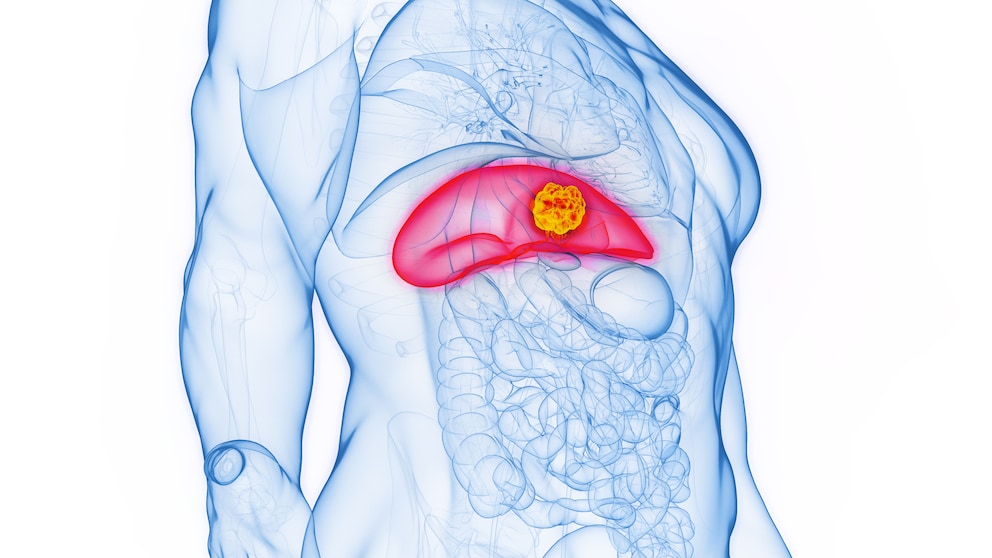
Liver cancer is considered one of the rarer types of cancer in Germany, but the number of new cases is increasing. The insidious disease often develops slowly and remains undetected in its early stages. However, the chances of recovery increase significantly if the tumor is detected early. FITBOOK explains why prevention is so important, what warning signs to look for, and how new therapies offer hope.
Early Signs and Symptoms
Liver cancer rarely causes symptoms in its early stages. Initial complaints usually appear only in advanced stages and are often nonspecific. These include:
- Pressure pain in the upper right abdomen
- A palpable swelling under the rib cage
- Loss of appetite, nausea, or fever of unknown origin
- Digestive issues such as bloating, constipation, or diarrhea
- Fatigue, physical weakness, and reduced performance
- Unexplained weight loss
- Jaundice and itching
These signs can also have other causes; nevertheless, early medical evaluation should be sought for such complaints. However, it may already be too late for permanent and complete recovery.1
How Common Is Liver Cancer?
In Germany, around 9,800 people are diagnosed with a primary liver tumor each year. In about 59 percent of cases, it is a liver cell carcinoma (hepatocellular carcinoma, HCC). This corresponds to approximately 5,780 people annually. Men are generally more affected than women, and the risk increases with age.
In most cases, liver cancer develops on the basis of a pre-damaged liver, such as due to cirrhosis or chronic inflammation.2
Liver Cancer or Liver Metastases—What’s the Difference?
It’s important to distinguish between primary liver cancer and liver metastases. The latter are caused by tumor cells that have detached from another primary tumor—such as in the intestines, stomach, pancreas, or esophagus—and have reached the well-perfused liver via the bloodstream. Treatment in these cases primarily targets the original tumor.
Causes and Risk Factors: How Does Liver Cancer Develop?
In about nine out of ten cases, liver cancer is the result of long-term liver damage that leads to fibrosis and eventually cirrhosis over the years. This scar-like transformation of liver tissue is considered the most important risk factor.3
The main causes and risk factors include:
- Non-alcoholic fatty liver disease (NAFLD)
- Chronic hepatitis B or C infection
- Heavy alcohol consumption
- Obesity and type 2 diabetes
- Metabolic disorders such as hemochromatosis or Wilson’s disease
- Rare causes like autoimmune hepatitis, certain medications, drugs, or environmental toxins
Smoking further increases the risk. In Germany, alcohol consumption and hepatitis C are the most common triggers. In other regions—such as Southeast Asia or Africa—hepatitis B, liver parasites, or mold toxins play a larger role.
Also interesting: Diagnosis of Childhood Dementia—Why NCL Is Often Detected Too Late
Benign and Malignant Liver Tumors
Liver tumors can generally be divided into benign and malignant tumors. Benign liver tumors include hemangiomas, adenomas, or hamartomas. Some of these benign tumors—especially adenomas—are suspected of potentially becoming malignant under certain circumstances.
The most common malignant liver carcinoma is hepatocellular carcinoma (HCC). It accounts for about 90 percent of all primary liver cancer cases. Although the exact mechanisms of development are not yet fully understood, chronic inflammatory processes of liver cells seem to play a central role.
Early Detection and Prognosis
There is currently no legal early detection program for liver cancer. However, regular monitoring is important for people with chronic liver diseases or known risk factors. Almost all affected individuals already have cirrhosis when the cancer develops.
In an advanced stage or with severely impaired liver function, a cure is usually no longer possible. Nevertheless, doctors can slow tumor growth and alleviate symptoms.
The relative five-year survival rate in Germany is about 15 percent—one of the lowest among cancer types. Only pancreatic cancer has a worse prognosis.
Treatment Options: From Surgery to SIRT
In the early stages, liver cancer can be successfully treated with surgery or a procedure called radiofrequency ablation (RFA). In RFA, tumor tissue is locally heated and destroyed using high-frequency electricity.
An innovative procedure for advanced, inoperable tumors is selective internal radiation therapy (SIRT). In this process, radioactive microspheres are directly introduced into the liver’s blood vessels to target cancer cells from within. The surrounding healthy tissue remains largely unaffected.
SIRT allows precise radiation of cancer cells without damaging healthy tissue or burdening the body. The method is also suitable for bridging the time until a possible liver transplant or reducing a tumor to a size that makes surgery possible again.
However, SIRT therapy is still relatively new and is currently only performed at specialized centers—its significance is expected to increase in the future.
Users of Widely Used Drug Are Less Likely to Develop Liver Cancer
These Skin Changes May Indicate Advanced Liver Cirrhosis
Prevention: Protection Through Vaccination and Lifestyle
Effective protection against liver cancer begins with avoiding risk factors. These include:
- Avoiding excessive alcohol consumption
- Maintaining a normal weight and a balanced diet
- Treatment and control of diabetes
- Avoiding smoking
- Early detection and treatment of hepatitis infections
Vaccination against hepatitis B is an important component of prevention. It is recommended in Germany for infants, children, and at-risk adults. More information is available from the Robert Koch Institute and the Federal Center for Health Education.
Conclusion
Liver cancer remains a rare but serious disease with a generally poor prognosis. Since the disease often goes unnoticed for a long time, early detection in risk groups is crucial. New procedures like SIRT therapy offer hope—but prevention remains the most important protection.