


April 3, 2025, 1:17 pm | Read time: 7 minutes
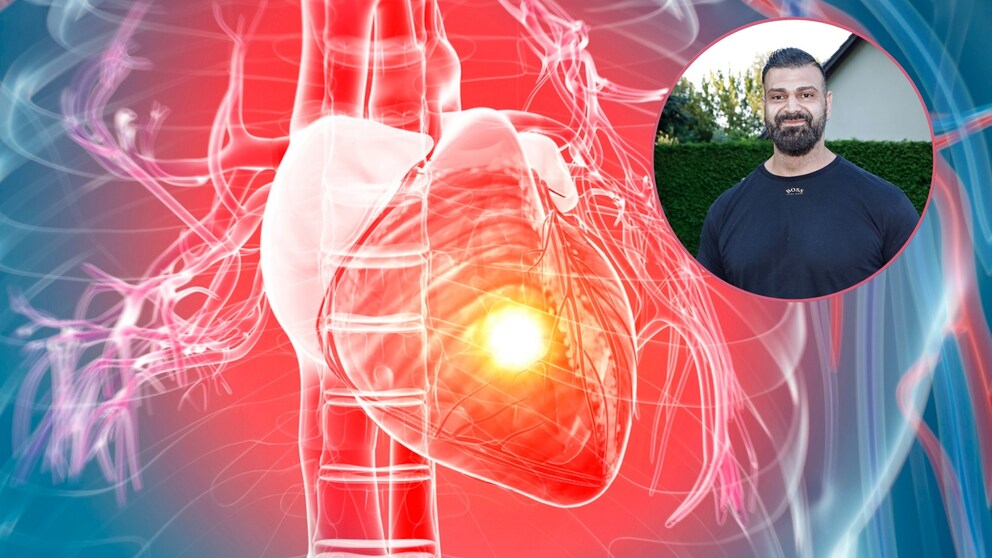
After the death of bodybuilder and actor Vittorio “Vito” Pirbazari (✝44, “Dogs of Berlin”), who reportedly suffered a heart attack during a treadmill workout, the question arises: How can seemingly fit people suddenly die from a heart attack? What signs are often overlooked? FITBOOK examines possible causes and early warning signals.
The news of the death of Berlin bodybuilder, fitness influencer, and actor Vittorio “Vito” Pirbazari (✝44) has shocked the fitness and bodybuilding community. Director Said Ibrahim, a friend of Pirbazari, commented on Instagram about the circumstances: Pirbazari reportedly suffered a heart attack during a treadmill workout at a gym. We often hear or read about such cases—seemingly healthy young people suddenly collapsing, often without prior warning signs. What causes this?
Overview
- Studies Show: More Deposits in Coronary Arteries Among Active Athletes
- Why Do Fit, Young People Suffer Heart Attacks?
- Coronary Heart Disease Most Common Cause of Sudden Cardiac Death
- Heart Attack Doesn’t Necessarily Announce Itself
- Why Did the “Dogs of Berlin” Star Have a Heart Attack?
- Are There Early Signs of a Heart Attack?
- What to Do in an Emergency?
- Prospects with Timely Treatment
- What Are Risk Factors for a Heart Attack?
- Sources
Studies Show: More Deposits in Coronary Arteries Among Active Athletes
Regular physical activity is known to be an effective method for preventing cardiovascular diseases. But could exercise also promote heart events? In fact, several studies indicate an increased number of cases of coronary arteriosclerosis—commonly known as vascular calcification—among well-trained male athletes engaged in physical training.
The work of researchers at Humboldt University Berlin, led by Stefan Möhlenkamp, is considered groundbreaking in this area, highlighting this connection for marathon runners over 50: Compared to control subjects with the same risk factors, they had higher CAC values.1 CAC is a marker for arterial calcification and thus an indicator of heart disease. In another study, the most active participants more frequently exhibited coronary atherosclerotic plaques.2 In 2019, researchers also found more frequent elevated coronary calcifications among very active men compared to less active men.3 Lastly, a study found that subjects who already had signs of deposits in the coronary arteries—and an activity level equivalent to a daily 6.5-kilometer run—had faster increases in CAC values compared to less active or inactive subjects (FITBOOK reported).
Why Do Fit, Young People Suffer Heart Attacks?
What is the reason for this? It is not yet precisely known. Researchers suspect that the increased blood pressure and pulse during exercise can lead to a rupture of the plaque surface. The body then tries to heal the tear by forming a clot, which in turn clogs the coronary artery, resulting in an acute heart attack that can lead to ventricular fibrillation and sudden cardiac death.
However, it must also be said: Increased coronary arteriosclerosis does not automatically mean a higher risk of heart attack. Even though the mentioned studies show that intense physical activity can be associated with an increase in coronary artery calcification. Overall, exercise reduces the risk of cardiovascular diseases: Blood flow is improved, arteries remain more elastic, which reduces the risk of high blood pressure and vascular constrictions. Exercise also positively affects cholesterol and inflammation levels.
Coronary Heart Disease Most Common Cause of Sudden Cardiac Death
On the other hand, it is also true: Just because exercise generally improves the elasticity of arteries, athletes are not protected from a heart attack. Therefore, the possibility of coronary heart disease (CHD) should not be overlooked even in very fit individuals! According to scientific calculations, around five million people in Germany are known to have CHD. And from ages 35 to 40, coronary heart disease (CHD) is the most common cause of sudden cardiac death—also among athletes.4 The most common cause of sudden cardiac death, in turn, is a heart attack—triggered by coronary heart disease.
Coronary heart disease is colloquially referred to as vascular calcification. Cologne cardiologist and FITBOOK expert Dr. Christopher Schneeweis explains in a video in detail about the dangerous disease and its causes.
Coronary heart disease refers to deposits in the coronary arteries that can ultimately lead to either heart attacks or circulatory disorders of the heart. These so-called plaques often show no symptoms; according to Schneeweis, the process occurs in our vessel walls without us noticing. However, the consequences are dramatic: “In the worst case, sudden cardiac death is the first symptom of coronary heart disease,” the cardiologist explains in the mentioned video.
In the worst case, this is the chain: Plaques that suddenly rupture lead to a blood clot, which results in the heart no longer being supplied with oxygen: heart attack. This, in turn, can trigger arrhythmias that, without help, can lead to cardiac arrest and then death within minutes.
Heart Attack Doesn’t Necessarily Announce Itself
“A heart attack doesn’t necessarily announce itself,” explains Schneeweis. Half of the people who suffer a heart attack experience sudden cardiac death. But: Not every heart attack automatically leads to cardiac death—what matters is whether life-threatening arrhythmias occur and whether help is quickly available.
In principle, for sudden cardiac death in athletes over the age of 35, coronary heart disease (i.e., heart attack) is one of the main causes. However, there are other causes: In younger age, these are often structural heart diseases, such as cardiomyopathy or, for example, myocarditis or arrhythmias.
Why Did the “Dogs of Berlin” Star Have a Heart Attack?
Whether the “Dogs of Berlin” star had a pre-existing condition is unknown. According to “BILD“, Pirbazari reportedly resumed training after a long injury break due to a torn chest muscle. He reportedly shared in posts about his physical condition, expressing optimism about being in good shape again by fall.
Whether Pirbazari had an increased risk of heart attack is unknown. We also don’t know if there was another heart condition or if any substances were consumed. These can also increase the risk of a heart attack.
Are There Early Signs of a Heart Attack?
The most common precursors of a heart attack include:
- Pain and tightness or pressure in the chest
- Pallor and cold sweat
- Burning sensation in the chest
- Upper abdominal pain as well as nausea, vomiting
Especially the latter symptoms are rather nonspecific and occur more frequently in women with heart attacks. Since the heart attack can manifest differently in men and women and in women is more likely to be accompanied by nonspecific symptoms like abdominal pain, it often remains undetected longer in them.
Learn more about the most common cause of a heart attack—the coronary heart disease in the following video:
What to Do in an Emergency?
Do not ignore the signs and take the body’s warning signals seriously! At the signs of a heart attack, which can sometimes occur hours earlier in milder forms of chest pain, you should definitely call a doctor. If a heart attack occurs, the emergency services should be called immediately via 112. The faster a heart attack is treated, the lower the risk of consequential damage.
Until the emergency doctor arrives, place the patient in a gentle position with the upper body elevated. Do not elevate the legs! This relieves the heart. If unconsciousness with respiratory and cardiac arrest occurs, resuscitation should be started as quickly as possible. In the hospital, the blocked artery can usually be reopened with a procedure (cardiac catheter) to restore blood flow.
Also interesting: First Aid in 5 Simple Steps

Cardiologist on Coronary Heart Disease: “Sudden Cardiac Death Can Be the First Symptom in the Worst Case”
Symptoms of Arteriosclerosis – You Should Take These Warning Signs Seriously
Prospects with Timely Treatment
With timely treatment, the chances of successful treatment are good, and depending on the severity of the heart attack, the patient may recover without severe consequential damage. It is important that as little time as possible passes before treatment. Immediate action is required in the event of a heart attack!
What Are Risk Factors for a Heart Attack?
Smoking, overweight as well as elevated cholesterol levels and high blood pressure increase the risk of a heart attack. Additionally, sufficient exercise and a healthy diet should be maintained. Too much stress can also be a trigger. Moreover, age and gender are important factors: The likelihood of a heart attack is greater at an older age. Men are more frequently affected and at a younger age than women.
It is important to understand that coronary heart disease is not an age-related disease but can manifest earlier. For example, affected men experience the event before their 60th birthday in 50 percent of cases.