

August 7, 2020, 6:37 am | Read time: 4 minutes
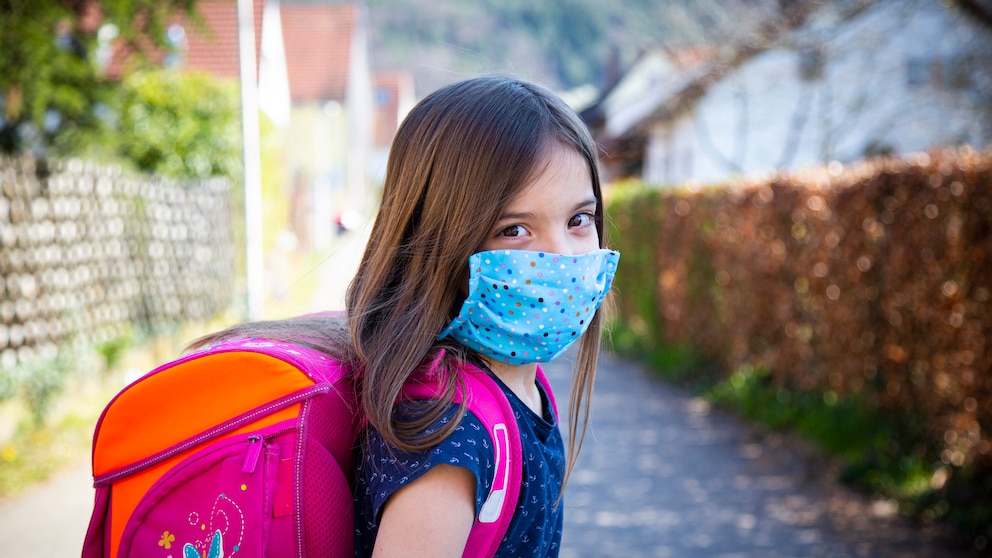
Summer break is coming to an end, the new school year is around the corner–and the education ministers of the federal states are planning various versions of a mask mandate in schools. Many parents feel uneasy about their children having to wear a mask for many hours a day. According to internist Dr. Matthias Riedl, there is no reason for this–and he explains on FITBOOK what parents should know about the right mask for children.
Summer break is ending in more and more federal states. What wouldn’t be the case under normal circumstances: Many children are looking forward to having to go back to school. There, after months of homeschooling, they will meet classmates and friends again–albeit with a prescribed minimum distance. And: with masks!
Mask Mandate for Children in Schools
Children are also affected by the mask mandate to prevent the spread of the coronavirus. In most parts of Germany, it applies from the age of six, in some places only from seven.
In many federal states, the rule is: masks on in the hallways and corridors of the school building and when lining up in the cafeteria. In North Rhine-Westphalia, the mask mandate is even supposed to apply during lessons.
Also interesting: How to prevent glasses from fogging up despite wearing a mask
A Cause for Concern?
Many parents feel uneasy about their children having to wear a mask for many hours a day. According to internist Dr. Matthias Riedl, there is no reason for this. He supports the mask mandate (also) for children in schools. “It’s an exceptional situation,” he tells FITBOOK, “and definitely better than a second lockdown.”
No Dizziness to Fear
We remember: It was long a point of discussion and a supposed argument against wearing a mask that it could increase the CO2 content in the blood. The mask is said to make it difficult to exhale carbon dioxide (= CO2, the waste product in gas exchange). Possible consequences: dizziness and headaches.
Also interesting: Who should not wear a mask now
Dr. Riedl, in any case, gives the all-clear. Without pre-existing health conditions, a CO2 increase in children’s blood is not to be feared. However, wearing a mask for many hours is a matter of getting used to, and parents are encouraged to practice handling it with their children. “It should never be just any mask.”
Which Mask is Right for My Child?
Most models are designed for adults and are far too large for children’s faces. The mask dangles from the face, doesn’t seal properly–and thus logically fails its protective function.

Sewing Masks Adapted to Children’s Sizes
There are some children’s masks available online–but sometimes at exorbitant prices. If you want to sew a mask for your child yourself, you should reduce the pattern size accordingly, according to an article on the “Öko-Test” website. Instructions can be found here at STYLEBOOK or in the following video:

What helps prevent glasses from fogging up while wearing a mask?

How Sick Are Children and Adolescents Getting From the Pandemic?
Parents, Please Pay Attention!
The Right Fit
The mask should fit snugly over your child’s mouth, nose, and chin–but not be uncomfortable. Make sure the straps are not too tightly tied or cutting into the ears.
The Right Fabric
Various plastics can restrict breathing. Choose breathable materials like fleece or cotton.
The right fabric is also crucial for the straps, emphasizes Dr. Riedl: “The straps must be able to tear to prevent possible strangulation while playing or on a climbing frame.”
Teach Handling
Your child must be able to remove the mask independently at any time. Therefore, show them how to put on and take off the mask.
Thoroughly Clean After Use
Important: Dispose of single-use masks that your child has already worn immediately. FITBOOK has already explained how to properly clean your reusable mask. In this regard, adult and child models do not differ.
For more information on masks for children, visit the website of the Federal Center for Health Education (BzgA).
Masks Can Also Be Fun
The whole thing is important and should be taken seriously. Especially because the current situation is often incomprehensible to children, they need to be shown that wearing a mask is sensible. Fashion designer Guido Maria Kretschmer has a tip for this: “Make sure a mask is also a bit fun and doesn’t look too medical.”
And of course, a pretty mask doesn’t protect any less effectively than a plain model.