

September 28, 2026, 11:48 am | Read time: 6 minutes
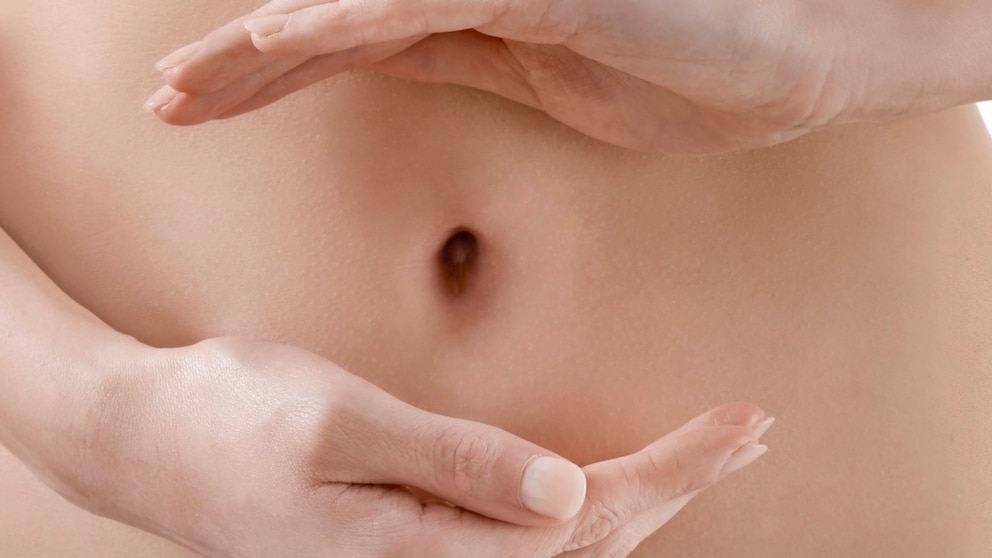
The navel is much more than just a leftover from our birth—it could prove to be an unexpected diagnostic window. Researchers from Germany have investigated what the molecules in the navel can reveal about our health. Could they indicate Parkinson’s, COVID-19, or a precursor to dementia?
Whether we enter a room, exercise, or are stressed, our body continuously emits tiny scent molecules into the environment. Scientists refer to this as the volatilome—the totality of all volatile organic compounds (VOCs). They escape through sweat, sebum, and respiration.
The idea that diseases can alter this individual body odor is not new in medicine. The case of Scottish woman Joy Milne, who detected her husband’s Parkinson’s disease years before the first motor symptoms by the smell of his skin, became famous. But how can this biological warning signal be made measurable and usable for doctors? This is where an unusual body part comes into play: the navel.
Why the Navel?
When thinking of medical samples, blood, saliva, or urine usually come to mind first. However, for olfactory diagnostics, the navel has significant scientific advantages over exposed skin areas like the hands or face:
- Protected cavity: The navel is well protected from external environmental influences.
- No coverage by cosmetics: While the face and hands come into contact with soaps, creams, or perfumes daily, the microbial and chemical environment in the navel remains largely unaltered.
- Rich in sebum and sweat: Natural skin fats and glandular secretions accumulate here particularly stably—ideal for preserving metabolic products.
The Study: When the Laser Hears Body Odor
A research team from the Fraunhofer Institute for Integrated Circuits (IIS) and TU Dresden wanted to know if disease-specific odor patterns could be diagnosed.1 For their pilot study, they took swabs with sterile cotton swabs from a total of 24 people:
- 6 people with Parkinson’s
- 6 people with mild cognitive impairment (MCI, a potential precursor to dementia)
- 6 people with an acute COVID-19 infection
- 6 healthy control individuals
The swabs were taken from three body sites: the nose, the ear, and the navel.
The team then analyzed the samples using a state-of-the-art method: laser-based photoacoustic spectroscopy (LPAS). Simply put, the scent sample is irradiated with infrared laser light. When the molecules absorb the light, they warm up slightly and generate fine pressure waves. This is an acoustic signal measured by highly sensitive sensors, like a tiny sound. The result is a highly precise chemical fingerprint of the odor.
The Results: What the Navel Revealed
The statistical analysis of the spectra brought astonishing insights to light.
- The navel as a dementia warning signal: The navel swabs showed a particularly clear picture. The laser measurement could sharply distinguish between healthy individuals and those with mild cognitive impairments.
- Clear group patterns: Across all four groups (Parkinson’s, COVID-19, cognitive impairment, healthy), the odor patterns from the navel showed distinct disease differences. The nasal swabs also provided a clear picture.
- Confirmation upon repetition: To rule out random results, the researchers tested three more Parkinson’s patients two weeks later. Their samples seamlessly fit into the previously determined Parkinson’s pattern.
Still Far from a Diagnostic Test
As interesting as the results are, the study was very small. With only 24 participants, no reliable statements can yet be made about whether Parkinson’s or other diseases can actually be detected by navel odor. Additionally, the age of the subjects also influenced the measured odor patterns. The researchers could not clearly determine how much of the differences were due to the disease and how much to age. Moreover, the measurements were conducted under strictly controlled laboratory conditions. In everyday life, factors like perfume, shower gel, personal care, or environmental influences could affect the results.
The 5-Wavelength Trick: Is a Pocket-Sized Mini-Scanner Coming Soon?
An exciting technical discovery of the study lies in the simplification of the process. To distinguish between different diseases, the scientists did not need a large, complex laser spectrum.
Through targeted calculations, they found that just five specific laser wavelengths are sufficient to separate the diagnoses with almost the same accuracy as the complete spectrum. This is a real milestone for practical application. Instead of expensive, bulky laboratory equipment, this insight makes the development of handy, portable diagnostic scanners possible. In the future, doctors might be able to recognize risk patterns within minutes with a simple cotton swab sample and a compact handheld device.
Science Check: Why Researchers Still Advise Caution
As fascinating as the results are, the authors of the study emphasize that it is a first proof-of-concept under controlled laboratory conditions:
- Small participant number: With only six people per disease group, the sample size is still too small to derive clinical routine tests.
- Age as a factor: Since diseases like Parkinson’s or cognitive decline primarily affect older people, the patients were, on average, older than the healthy comparison group. Whether the odor differences are purely due to the disease or partly due to natural aging processes of the skin must be clarified in larger follow-up studies with precisely age-matched groups.
- Everyday influences: In real life, factors like diet, shower habits, hygiene products, or skin flora play a role that needs further investigation in larger studies.

How Tears Could Indicate Serious Illnesses

Researchers have deciphered a potential trick of melanoma.
Expert: Why the Idea Isn’t So Far-Fetched
The idea that navel odor could actually provide clues to Parkinson’s is considered possible by neurologist Prof. Dr. Kleinschnitz: “The notion that our navel could one day help in the early detection of Parkinson’s sounds curious, but it is scientifically quite plausible.” Parkinson’s not only affects the movement centers in the brain but also the autonomic nervous system and metabolism.
This can change the skin’s sebum production, among other things. Changes in fat metabolism are also known in Parkinson’s. Both could influence the characteristic odor, which is created by certain volatile organic compounds. “Similar results have also been found for the composition of earwax in Parkinson’s patients,” explains the director of the Department of Neurology at the University Hospital Essen. The current results are therefore quite exciting, although still far from a reliable Parkinson’s test.
The Navel is an Underestimated Biotope
The pilot study from Germany impressively demonstrates that our body odor leaves valuable biochemical calling cards—and modern laser technology is capable of deciphering these tiny scent traces. It will surely take a few more years before a practical check in the doctor’s office, but the navel has the potential to help revolutionize the painless early detection of diseases.