


July 23, 2025, 1:48 pm | Read time: 7 minutes
In early July, a person in France—just a few kilometers from the German border—contracted the Chikungunya virus. According to the Robert Koch Institute (RKI), the affected individual stayed exclusively in Lipsheim and Fegersheim, south of Strasbourg. Now, the World Health Organization (WHO) warns of a global spread of the virus. FITBOOK explains how experts from the Robert Koch Institute (RKI) assess the situation for Germany, as well as the symptoms by which Chikungunya fever can be recognized.
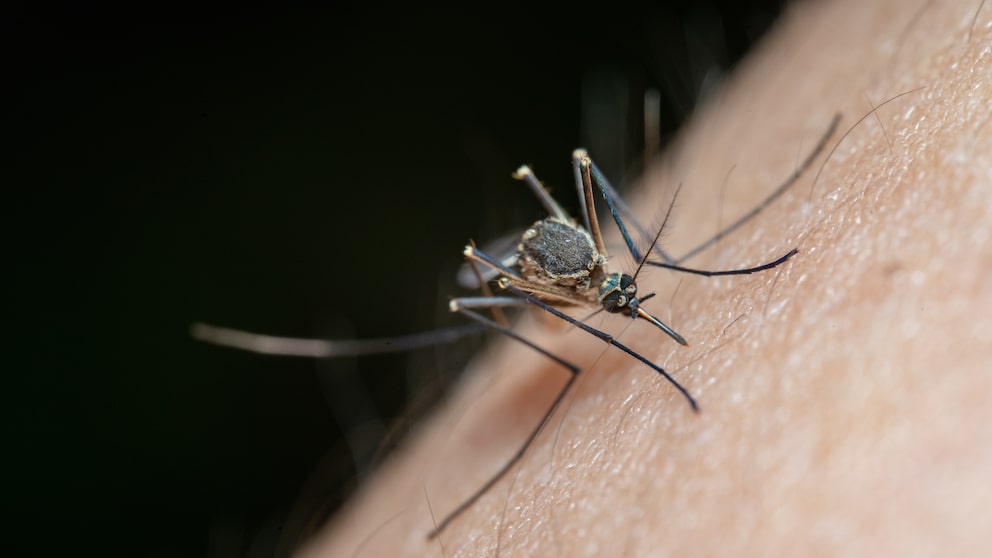
The Chikungunya virus, which causes the fever of the same name, is transmitted by the Asian tiger mosquito—a species of mosquito originally from Southeast Asia that has now spread to Germany. In addition to the bites of the Asian tiger mosquito, those of the yellow fever mosquito (Aedes aegypti) are also dangerous in this regard. The most important measure to prevent the disease is, therefore, protection against mosquitoes. While this was relatively easy for us in the past because the insects are native to subtropical and tropical regions, this has now changed.1 The reason is the increasing spread of mosquitoes in Europe. This was particularly severe in the summer of 2023 in Italy. Due to exceptionally high temperatures, there were true mosquito plagues in various regions, ultimately leading to cases of Chikungunya fever.
How Does Chikungunya Fever Manifest?
Most often, the first symptoms appear two to seven days after the bite—in rarer cases, only after up to twelve days. The symptoms affect almost all infected individuals. A sudden, high fever that lasts several days is typical. In some cases, it subsides briefly, only to rise again—a so-called biphasic fever course.2
Very often, there are severe, usually bilateral joint pains—especially in the ankles, hands, fingers, knees, shoulders, and elbows. Additionally, the affected joints can be swollen, tender, and stiff in the morning. In many cases, the pain eventually leads to significantly reduced mobility.
The term “Chikungunya” comes from the Makonde language in Tanzania and means “the bent one”—a reference to the typical stooped posture of many patients.3
Other Possible Symptoms
- Headaches
- Chills
- Conjunctivitis
- Itchy or red rash
- Pain behind the eyes
- Small skin hemorrhages (petechiae)
- Swollen lymph nodes
- Nausea and vomiting (especially in children)
The acute symptoms last seven to ten days. Skin changes can leave brownish spots after they subside.
In up to 95 percent of cases, symptoms occur—much more frequently than with dengue. Joint pain is particularly common (up to 98 percent) and can last for weeks, months, or in rare cases, years.
Since there is no medication against Chikungunya fever, the symptoms that occur are treated. Recovery can take months and, in rare cases, even years, accompanied by joint pain. Those who have overcome the fever are subsequently immune to the Chikungunya virus for life.4
Possible Complications
In rare cases, the Chikungunya virus can lead to severe consequences. Known complications include:
- Encephalitis (brain inflammation)
- Meningitis (inflammation of the meninges)
- Guillain-Barré syndrome (nerve inflammation)
- Myocarditis (heart muscle inflammation)
- Prolonged fatigue
- Minor bleeding, such as petechiae or gum bleeding
- Severe hemorrhagic courses with heavy bleeding are rare.
Current Global Situation: WHO Sounds the Alarm
To date, the Chikungunya virus has been detected in 119 countries.5 According to the WHO, about 5.6 billion people live in regions with potential risk. The organization warns of a worldwide spread and urgently calls for measures to prevent major outbreaks.6 The WHO notes parallels to an epidemic in 2004 and 2005. At that time, Chikungunya initially spread to islands in the Indian Ocean and then internationally—nearly half a million people fell ill.
Similar Patterns Emerge in 2025
Mayotte, Réunion, and Mauritius report severe outbreaks. On Réunion, a third of the population is said to be affected. At the same time, the virus is spreading to other countries in the region—such as Madagascar, Somalia, and Kenya.
In Europe, numerous imported cases have been reported, linked to the current outbreaks. In France, several local transmissions occurred, and suspected cases were reported in Italy.7
The WHO also warns that the symptoms—fever, joint pain, rashes—are difficult to distinguish from dengue fever or Zika. Although the mortality rate is below one percent, thousands of deaths could occur with millions of infections. The goal is, therefore, to prompt countries to act early to prevent larger epidemics.
What Does This Mean for Germany?
Between April and June 2025, a total of 75 Chikungunya cases were reported in Germany. According to the Robert Koch Institute, all affected individuals were infected abroad—primarily in Mauritius, Réunion, or Sri Lanka.
In Switzerland, 30 imported cases were registered during the same period—more than twice as many as the previous year. Despite the increased numbers, no autochthonous transmissions have been detected in Germany or Switzerland so far—meaning infections that occurred directly on site through local mosquitoes.8
Numerous European countries reported imported cases linked to the outbreak on the islands in the Indian Ocean. In France, authorities publicly announced several local transmissions.
The Asian tiger mosquito, the main transmitter of the virus, is now found in large parts of France, partially up to the German border. In Germany, it has been detected in Baden-Württemberg, the Rhine-Main area of Hesse and Rhineland-Palatinate, and sporadically in Bavaria, Thuringia, Berlin, and North Rhine-Westphalia.
Review: Chikungunya Cases in Italy
As early as 2023, the Italian news portal “V:Notizie” reported several Chikungunya cases. At that time, five confirmed infections were reported—three in the Veneto region, one in the province of Arezzo (Tuscany), and another again in Veneto, in the city of Trieste.
The first major European Chikungunya outbreak also occurred in Italy in 2007—around 200 people fell ill. In 2010 and 2014, there were also smaller outbreaks in France with two and twelve reported cases, respectively.9
Against this background, the German Foreign Office includes specific information on Chikungunya fever on its travel and safety advice page for Italy (as of Oct. 18, 2023).10

How Dangerous Is West Nile Fever

Sick Leave Regulations in Germany Further Relaxed
Protection Options: Vaccines and Mosquito Protection
Given the spread of the virus, those traveling to tropical or subtropical regions can now protect themselves specifically. Two vaccines against Chikungunya are now approved in the EU:
- Ixchiq (live vaccine): recommended for people between 12 and 59 years old
- Vimkunya (inactivated vaccine): approved from age 12, also suitable for older risk groups
Both vaccines are administered once. The Standing Committee on Vaccination (Stiko) recommends vaccination for the following groups:
- People with occupational risk who work specifically with Chikungunya viruses, such as in research facilities or laboratories, according to the Biological Agents Ordinance
- People aged 12 and older traveling to regions with a current Chikungunya outbreak
- People aged 12 and older with planned stays of over four weeks or with repeated short trips to endemic areas, provided there is an increased risk of a severe or chronic course, such as those aged 60 and older or with serious pre-existing conditions (e.g., heart, lung, kidneys)11
Important: At least two weeks should pass between vaccination and travel to build full protection.12 Additionally, mosquito protection remains crucial. The CRM Center for Travel Medicine advises:
- Wear light, long clothing (preferably impregnated)
- Use mosquito repellent with at least 30 percent DEET
- Use mosquito nets and screens
Worldwide Spread: Figures from the ECDC Situation Report
According to the European Centre for Disease Prevention and Control (ECDC), around 220,000 Chikungunya cases were registered worldwide between January and early June 2025—including about 80 deaths. Most occurred in Africa, South America, and South Asia:
- Brazil: 141,436 cases
- Argentina: 2,521 cases
- Bolivia, Peru, India, Sri Lanka, Pakistan: several thousand cases
- Senegal: confirmed transmissions
High case numbers were also reported in the French overseas territories:
- Réunion: over 51,000 cases
- Mayotte: over 560 cases
No autochthonous cases have been reported on the European mainland so far—meaning no infections transmitted locally by mosquitoes and not linked to travel.13
Assessment of the Situation in Europe: ECDC Evaluation
According to the ECDC, there is an increased risk of local Chikungunya outbreaks in Europe if infected travelers return to regions where transmitting mosquito species are already active. Additionally, the Asian tiger mosquito (Aedes albopictus) is now native to many parts of Europe, while Aedes aegypti is mainly found in Cyprus, Madeira, and along the eastern coast of the Black Sea.
Especially in the summer months, the climatic conditions are favorable for the spread of mosquitoes and the transmission of viruses. The risk of local infections with Chikungunya or dengue, therefore, increases significantly, especially from June to November.
With material from dpa