

July 14, 2026, 5:02 pm | Read time: 4 minutes
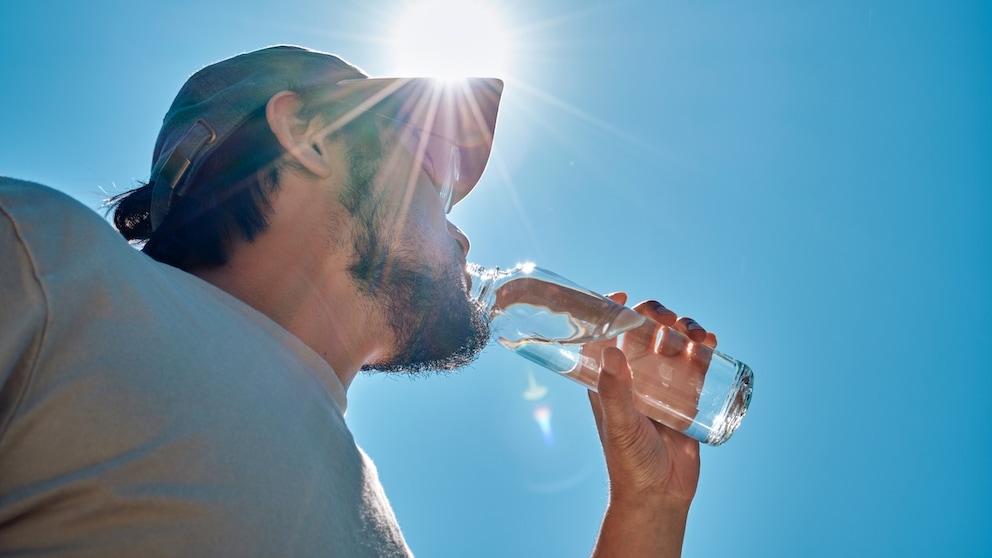
When the thermometer climbs to 95 degrees Fahrenheit and above, the advice is often to drink lukewarm beverages. However, in such heat, a cold drink can be the smarter choice. Uwe Schröder, a nutrition scientist and board member at the German Institute for Sports Nutrition (DiSE), explains why.
In extremely high temperatures, the advice is: Cold drinks are unfavorable in great heat; lukewarm ones are better. The usual reasoning is that the body must warm cold liquids first, while warm drinks stimulate cooling through sweating. This sounds plausible. But when the air is hotter than the skin, it’s only half the truth.
What Happens in the Body During Extreme Heat
Our skin surface is around 95 degrees Fahrenheit. As long as the surroundings are cooler, the body releases heat through radiation and to the surrounding air—like a warm oven in a cool room.
Once the air temperature approaches or exceeds skin temperature, this relationship reverses. Radiation and air contact hardly cool anymore—in fact, the body can even absorb heat this way. This applies on extreme days in Germany as well as during summer or sports vacations in the south. Then, especially during physical exertion, one effective way remains to lose body heat: the evaporation of sweat. How well this works, however, strongly depends on humidity, clothing, air movement, and the amount of sweat already present.
The Cold Drink as Internal Cooling
This is where the cold drink comes into play. A cold drink must be warmed to core body temperature—this is true. But this is not a disadvantage; it’s actually the main advantage. Because in doing so, excess body heat is used up, without additional sweat.
An example calculation makes it tangible: Half a liter of water at refrigerator temperature removes about 16 kilocalories of heat from the body when warmed—energy that the body would otherwise have to release through the skin, which hardly works in great heat. Athletes use this principle deliberately: Ice-cold drinks or ice slurries before and during exertion are an established method to keep the body at operating temperature in the heat.
And What About the Warm Drink?
There is some truth to the widespread idea that a warm drink can cool—but the drink itself does not cool. On the contrary, it initially brings additional heat into the body. The supposed cooling effect occurs indirectly: The warm drink stimulates increased sweating, and only this additional sweat cools—and only under a clear condition. The sweat must evaporate as completely as possible, because only the evaporated amount removes heat from the skin. This condition is often not met in great heat.
In humid air, covered skin, or already heavy sweating, the additional sweat no longer evaporates completely—some simply drips off. In everyday life, sweat is also wiped off with a towel, dabbed, or absorbed by sweatbands. In these cases, it is lost as a cooling agent instead of evaporating on the skin. In all these cases, the warm drink leaves only one thing: water loss without cooling gain. Under dry conditions with good air movement, the additional sweat can evaporate and actually cool—but in the heat, this is rather the exception.

How Do the Different Types of Saunas Differ?

When Does Sweating Become Dangerous?
Keep an Eye on the Minerals Too
There is another reason not to unnecessarily stimulate sweating. With sweat, the body loses mainly water, sodium, and chloride, and in smaller amounts, the electrolytes potassium, calcium, and magnesium. Those who stimulate additional sweating with a warm drink increase these losses further—over a long heat period, electrolyte losses add up.
Sodium is particularly relevant for short-term balance during long physical exertion and very high sweat losses. Calcium- and magnesium-rich mineral water can make a calorie-free, sensible contribution to compensating for sweat losses. This is especially important for people who do not reliably consume these minerals in sufficient quantities through their diet. In Germany, the intake of both calcium and magnesium is not optimal in all population groups.
Conclusion
In detail, the balance depends on humidity, clothing, and one’s own sweat capacity. Additionally, the difference between drink temperatures is smaller in very dry heat. But as soon as the air becomes as warm as the skin, much speaks for the chilled drink and not against it. So, if you reach for a chilled drink on the next hot day with 95 degrees Fahrenheit and above, you’re doing nothing wrong—quite the opposite.