


April 26, 2026, 4:18 pm | Read time: 4 minutes
Who says supplements always have to come from a bottle? Some basics can be easily made at home with just a few ingredients–affordable and with the good feeling of knowing exactly what’s inside. FITBOOK nutrition expert Sophie Brünke presents three simple recipes.
No mineral is needed more by the human body: Calcium
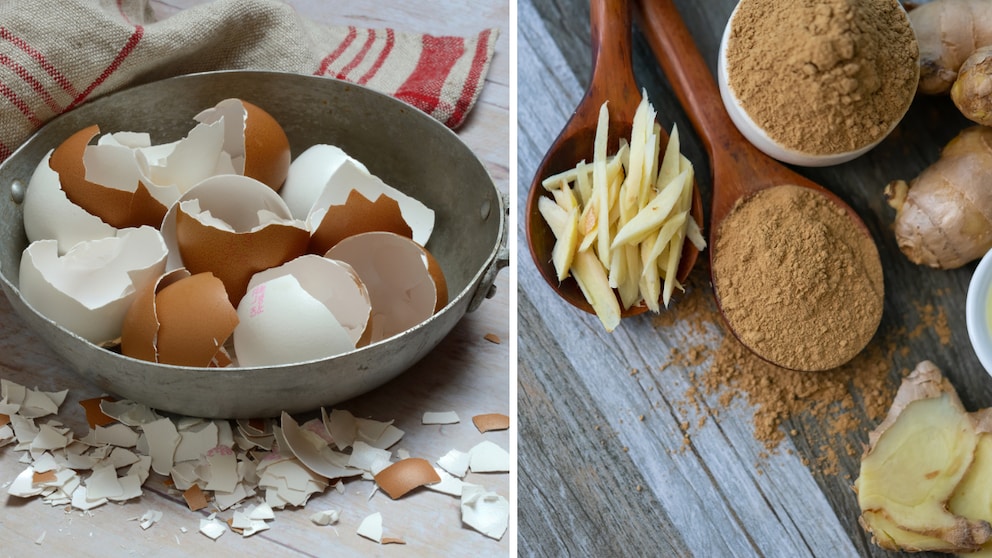
Calcium is essential for the body: The mineral not only contributes to the stability of bones and teeth but is also needed for blood clotting, nerve signal transmission, and normal muscle function. The German Nutrition Society recommends adults consume 1,000 milligrams daily–more than any other mineral.1 To meet the daily requirement, eggshells can help. This kitchen waste is an amazingly rich source. The shells are about 95 percent calcium, mostly in the form of calcium carbonate.
Properly Process Eggshells
- Rinse shells thoroughly to remove residues and dirt.
- Boil: Place the shells in boiling water and cook for ten to 15 minutes to reduce germ contamination.
- Remove eggshells from the water and let them dry completely.
- Then heat the eggshells in the oven at 100 degrees Celsius (about 212 degrees Fahrenheit) for about 15 minutes. This ensures additional hygiene and makes the shells drier for grinding.
- Let the shells cool.
- Place the shells in a blender or spice mill and grind them into a fine powder. Alternatively, use a mortar.
- Store the powder in an airtight container.
The finer the powder, the easier it is to use later. Whenever you want to supplement calcium, you can mix small amounts of the powder into foods or drinks. The powder from half a shell already covers the daily calcium requirement, which is about two grams.
Also interesting: The healthiest way to prepare eggs

Why Cold Drinks Can Be the Better Choice in Extreme Heat

When Does Sweating Become Dangerous?
No Electrolyte Drink on Hand? No Problem!
Whether during sports, on hot days, or after heavy sweating, the body loses not only water but also important electrolytes. Per liter of sweat, this includes about 40 milligrams of calcium, 20 milligrams of magnesium, 10 to 30 micrograms of iodine, and a lot of sodium, as ecotrophologist Günter Wagner revealed in a previous FITBOOK article. These minerals are important for fluid balance as well as muscle and nerve function. For minor losses, a homemade electrolyte drink can be a simple way to replenish the body.
For an electrolyte drink that provides good coverage, you only need three ingredients:
- 250 ml orange juice
- 750 ml mineral water
- 1 g salt
One gram of table salt (sodium chloride) provides 400 milligrams of sodium, which is about one-third of the estimated adequate sodium intake according to the German Nutrition Society.2 The juice provides 183 milligrams of potassium per 100 milliliters, which plays an important role in muscle contraction.3 Mineral water contains calcium and magnesium–the label reveals how much. Note: Water can be advertised as “calcium-rich” if it contains at least 150 milligrams of calcium per liter.
Always Ready for Ginger Shots
Ginger shots are primarily known as a quick immune boost. Ginger itself has antioxidant properties, meaning it can protect our cells from free radicals and thus from premature aging. Its positive effect on nausea is particularly well-researched in humans. Many other promised effects are not scientifically proven. However, if you still want to rely on the spicy shots, you can prepare a DIY version as a powder and mix it fresh as needed.
Make Your Own Powder
- Wash ginger thoroughly. If it’s organic, you can leave the skin on; otherwise, peel it.
- Cut into thin slices, ideally about 1 millimeter thick.
- Dry gently: The slices can be dried in the oven at 50 degrees Celsius (about 122 degrees Fahrenheit) for two to four hours with the oven door slightly open. If you have a dehydrator, set it to 40 degrees Celsius (about 104 degrees Fahrenheit) for six to 12 hours.
- Process the fully dried slices into a fine powder using a spice mill, blender, or mortar.
- To prevent the powder from clumping later, spread the freshly ground ginger powder on a tray and let it dry for about ten minutes in the still-warm, turned-off oven.
- Optional: For an especially fine consistency, sift the powder afterward.
- Before storing, ensure the powder is completely cooled to prevent residual moisture from collecting in the container.
- Place the finished ginger powder in a clean, airtight glass jar and store it in a cool, dry, and dark place.
Whenever you feel like having a ginger shot, you can mix a teaspoon of powder with a bit of water. If desired, add some lemon or orange juice for an extra vitamin boost. Stored airtight, dry, and dark, homemade ginger powder lasts for several months.
Note: The intake of supplements should always be discussed with a doctor. In the case of ginger shots, there may be interactions with blood-thinning medications.4