

April 24, 2026, 11:01 am | Read time: 7 minutes
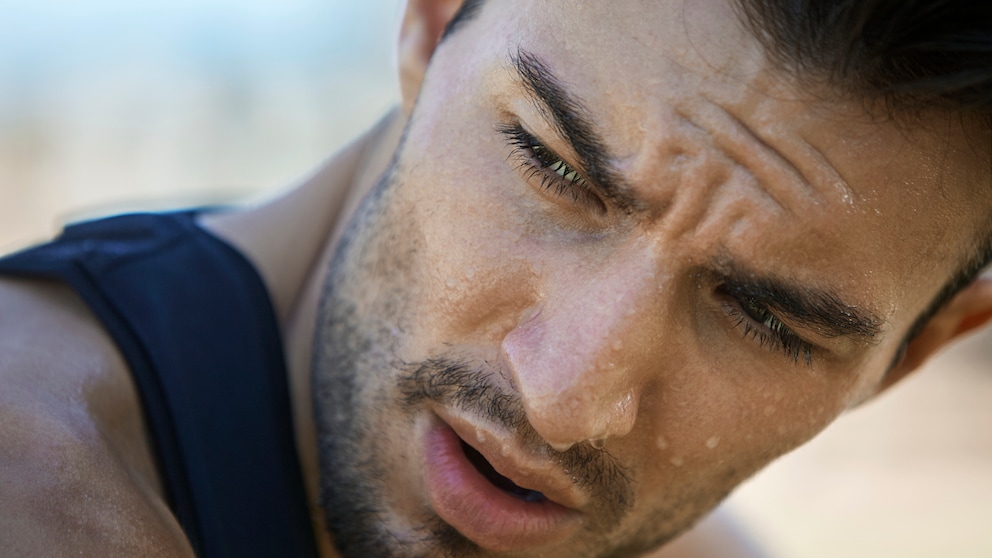
Per liter of sweat, the body loses about 40 milligrams of calcium, 20 milligrams of magnesium, 10 to 30 micrograms of iodine, and a significant amount of sodium. When and how to counteract this is explained by nutritionist and board member of the German Institute for Sports Nutrition, Günter Wagner, at FITBOOK.
What Roles Do Magnesium, Calcium, and Potassium Play in the Body?
Magnesium, for example, has over 300 functions in the body, primarily facilitating the smooth contraction and relaxation of muscles. Calcium plays a crucial role in bone health and is also needed for the activation of muscles and nerves, while potassium is essential for the stable function of nerves, muscles, and cells.
Special Role for the Body’s Water Balance: Sodium
When it comes to sodium (chloride), limits are often discussed. It is the chemical component in table salt, and in certain concentrations, it can raise blood pressure. People prone to high blood pressure are therefore advised to use salt sparingly. However, you can’t do without salts entirely. “Sodium plays an important role in the electrolyte and water balance. Among other things, it is needed for the absorption of carbohydrates (sodium-dependent glucose carrier),” explains nutritionist Günter Wagner.
Mineral Loss Per Liter of Sweat
For electrolytes to do their job well, they must be sufficiently present in the cells. A problem that can arise, especially in summer: “With every drop of sweat, minerals are lost again.” Calculated per liter of sweat, Wagner mentions about 40 milligrams of calcium, 20 milligrams of magnesium, 10 to 30 micrograms of iodine, “and a significant amount of sodium.” You can even notice the latter yourself, as sweat takes on a salty taste. Especially during very sweat-inducing activities, it is important to replenish the mineral balance. This can be achieved “through smart eating and drinking,” says the expert.
Which Minerals Does the Body Need First After Loss?
Calcium and magnesium are among the most important minerals and are also the ones that are lost first by recreational athletes (or sauna-goers) during heavy sweating. Calcium and magnesium must be present in sufficient amounts and in a specific ratio to each other to fulfill their functions in the body. Additionally, an unequal distribution of one substance can block the absorption of the other. This means: If too much magnesium is supplied, relatively less calcium can be absorbed. The longer the imbalance persists, the more likely a calcium deficiency becomes. To restore a good balance, it is usually sufficient to choose the right mineral water after heavy sweating.
The Ideal Calcium-Magnesium Ratio in Mineral Water
The labels on water bottles usually indicate the amounts of the contained ingredients. For manufacturers to label their mineral water as calcium-rich and include a corresponding note, it must contain at least 150 milligrams of the electrolyte per liter. This is regulated by the so-called Mineral and Table Water Ordinance of the Federal Ministry of Consumer Protection. According to Wagner, this is the case with mineral waters from the brands Gerolsteiner and Rosbacher. The expert recommends a calcium-magnesium ratio of two to one. The bioavailability of calcium and magnesium is slightly higher in mineral water than in milk.
When Should You Replenish Sodium?
According to the nutritionist, sodium reserves are only tapped when the active exertion lasts longer than two hours. How many electrolytic salts are lost through sweat is absolutely dependent on the duration and intensity of physical exertion. In most cases, it is sufficient to replenish sodium only after the run or soccer match in the blazing sun. However, there are exceptions—and in the worst (and very rare) case, they can be fatal.
Beware of Sodium-Free Water With Immense Water Loss
The sports nutrition expert talks to us about water intoxication, which has led to accidents in recent years during extreme sports competitions. As reported by Welt, for example, a participant died at the Iron Man in Frankfurt am Main in 2015 because he drank too much water. He had tried to compensate for his immense water loss from sweating with large amounts of sodium-free water. To explain: Very large amounts of water without minerals and low-sodium soft drinks can lead to symptoms such as dizziness, nausea, headaches, or even seizures after drinking, which are a result of cerebral edema, Wagner explains. “Cerebral edema occurs because the sodium deficiency lowers the osmotic pressure in the blood. The water is therefore absorbed by the brain cells, whose volume cannot increase in the skull.” The result is increased intracranial pressure.
Does Tap Water Contain Minerals?
Tap water in Germany is generally considered safe. Groundwater, river water, and the like are filtered and thus freed from most pollutants and pathogens. Additionally, tap water is actually “mineralized” and can, depending on the location, also contain significant amounts of minerals, according to Wagner. Incidentally, the more mineral-rich the water is, the harder it is. You can inquire with local waterworks to find out how much of which mineral is present.
Note on tap water
On the last stretch from the waterworks to the tap, there is no quality assurance for tap water. This has to do with the pipes in your house. Since early 2026, lead pipes have been banned, so there should be no risk of heavy metals even in old buildings. Sometimes bacteria also make it into the pipes, and there is a particular warning against so-called stagnant water, which has been sitting in the pipes for several days or weeks. Wagner to FITBOOK: “As long as you boil water, there is no danger. If you want to drink it directly from the tap, it may be wise to let the water run for a few minutes. Always make sure that the aerator is clean and does not introduce contamination into the glass.”

3 Supplements You Can Make at Home

How to Recognize an Electrolyte Deficiency
When Does Sweating Become Dangerous?
During intense physical activity of long duration and at high outdoor temperatures with correspondingly high sweat loss, it may be advisable to supply electrolytic salts during exertion. The goal is to prevent excessive loss of sodium chloride. Sports drinks with a sodium content of 400 to 500 milligrams per liter are recommended.
The Pinch of Salt Trick
To make up for the missing amount, you don’t need an isotonic drink—these are generally overrated and contain unnecessarily high amounts of sugar. As the expert explains, one gram of table salt consists of 400 milligrams of sodium. So you could help yourself with some fruit juice, mineral water, and a pinch of salt. Mineral water labeled as “sodium-rich” must contain at least 200 milligrams of sodium per liter according to the MTVO.
By the way, the counterpart to sodium is potassium. However, no special intake is necessary for the potassium balance during physical activity, according to Wagner. The body takes care of this itself: using so-called glycogen stores, from which potassium is released.
What Should You (Not) Eat in the Heat?
We should all make sure to eat a balanced diet during hot summer temperatures—this automatically brings the necessary electrolytes into the system. Especially in summer (but generally for fitness enthusiasts), Wagner advises fresh foods with a high mineral density, primarily vegetables. While fruit contains vitamins, it also has plenty of fructose. A prime example: bananas, which boast some valuable nutrients but are about 22 percent sugar.
Not at all clever during hot, sweaty temperatures is “a pork knuckle.” Even if you eat a healthy salad as a side dish, says Wagner. “Heavy meals sit in the stomach for a long time and take time to digest.” Meanwhile, blood flow to the extremities is hindered, and important nutrients reach their destinations much later.