

September 26, 2025, 2:33 am | Read time: 3 minutes
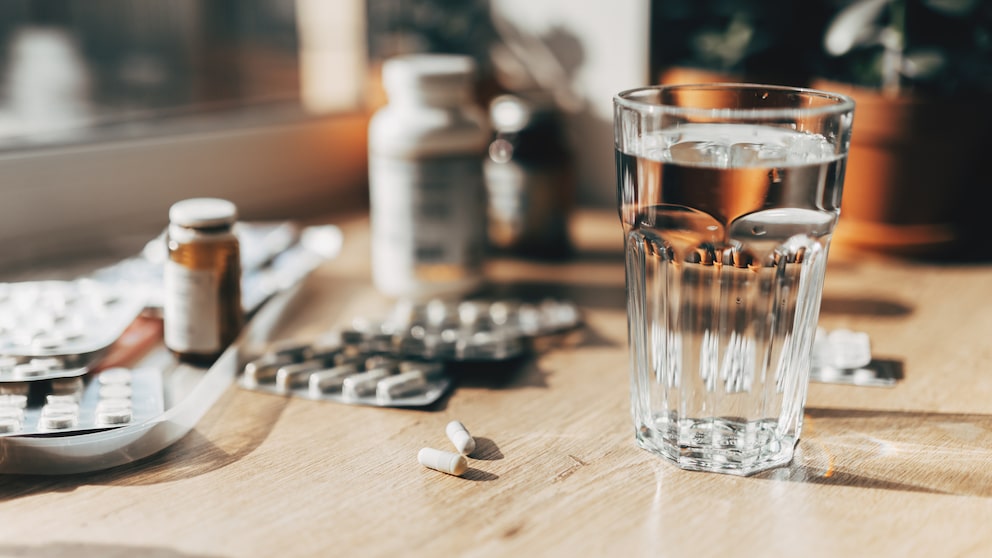
Many people store their dietary supplements, such as vitamin tablets, in the bathroom cabinet or on open shelves in the kitchen. Here’s why you should avoid doing that.
Store Vitamins Like Medications
“Dietary supplements are food,” writes the “German Federation for Food Law and Food Science (BLL).” So, it would theoretically make sense to store vitamin tablets and the like in the refrigerator, or at least in the kitchen. In reality, however, they belong there just as little as they do in the bathroom, a common place for storing supplements and medications. Do you do that? In that case, you might as well not take them at all…
In terms of storage, dietary supplements are more comparable to medications than to food. And these should be stored “in a cool and dry place”—as is usually stated in the package insert. Vitamin C, as an antioxidant, is particularly sensitive to light and heat, but other vitamin preparations, supplements, and medications (except those that need to be refrigerated) should be stored at moderate temperatures of about 59 to 77 degrees Fahrenheit.

For many supplements, sunlight, heat, and moisture can significantly impair stability and shelf life. Water-soluble vitamins, such as vitamin C and B vitamins, are particularly prone to “deliquescence”—a process where the supplements can dissolve under the influence of moisture.
Storage in the kitchen is particularly critical: Cooking generates heat, and proximity to the sink adds extra humidity. The refrigerator is not automatically a suitable place either—opened containers can draw condensation, leading to moisture inside, which shortens shelf life.
The bathroom is also an especially unfavorable storage location due to steam from showers or baths. And: Places like handbags or cars are also unsuitable, as strong temperature fluctuations and direct sunlight can jeopardize the stability of the supplements.1
Blisters Packs Aren’t Completely Sealed
It’s also important to know that the blister packs (i.e., visible packaging) of tablets, capsules, and the like are not 100 percent waterproof. Through potential micro-cracks, another major problem can enter: moisture, which is released into the air through cooking and washing or showering and bathing. Moisture can trigger chemical processes in medications and vitamin tablets, which can result in the effect diminishing, eventually completely. A more suitable room climate can be found, for example, in the bedroom.
FITBOOK was professionally advised by Felix Morawski, owner of the Kreuzberg Pharmacy. To prevent your vitamins from turning into “useless gray powder,” as he calls it, we recommend storing them (of course, in a child-safe manner!) according to the respective package insert.