

May 10, 2025, 6:37 am | Read time: 7 minutes
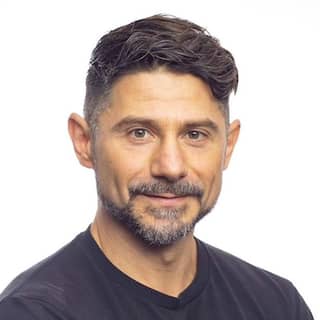
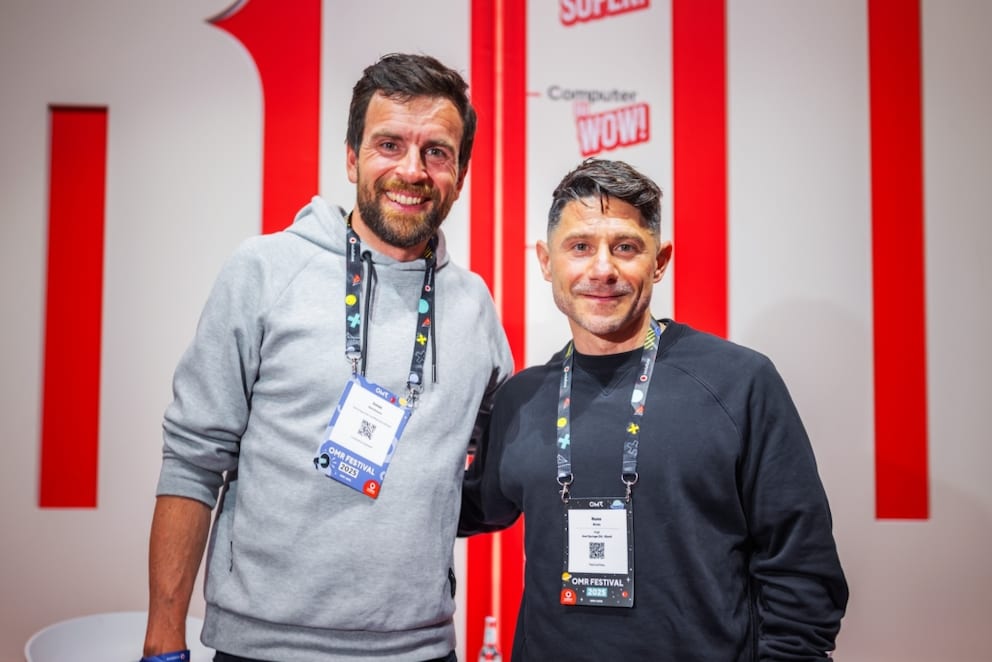
Exactly one year ago, Jonas Deichmann (38) embarked on an incredible challenge in Roth: 120 long-distance triathlons in 120 days. He succeeded—and set another world record. But Deichmann is not just an endurance athlete—he’s also an adventurer who circumnavigated the globe in a triathlon. At OMR 2025, he spoke with FITBOOK editor-in-chief Nuno Alves at the BILD booth about mental strength, recovery, and why life begins outside the comfort zone. Here, Nuno Alves summarizes the most exciting quotes from the conversation—and describes the feeling when Deichmann suddenly pulls him out of his comfort zone.
“Because I Can”—that’s the title of the book Jonas Deichmann wrote about his “Challenge 120.” One might almost say: Because only he can. Some people can’t even run ten kilometers at a stretch, let alone a full marathon. Jonas accomplished this feat daily for 120 days—after swimming 3.8 kilometers and cycling 180 kilometers each day. It’s a masterful achievement that makes him not just an endurance athlete but an endurance artist. For 120 days, Jonas Deichmann was outside the comfort zone. Incredible!
Before my talk with Jonas, I delved deeply into his challenges and was, frankly, overwhelmed by his resilience. During his triathlon world tour, he swam 460 kilometers unaccompanied through the Adriatic (world record), then cycled to the Russian Pacific coast through the Siberian winter—and jogged from Tijuana through all of Mexico to Cancún. I asked him if some people think he’s crazy: “Life would be boring without crazy people. Someone has to do it. And it’s fun. For me, these are experiences.” He doesn’t feel lonely when he pitches his tent alone in the Sahara or on Lake Baikal. “I don’t miss anyone. It’s beautiful.”
Also interesting at TRAVELBOOK: Extreme athlete Jonas Deichmann: “They chased me with machine guns in hand”
Jonas Deichmann: “I’m proudest of inspiring thousands to do more sports”
During his Challenge 120 at the triathlon hotspot Roth, the focus was purely on the athletic challenge. But why? “I just wanted to know what was possible,” Jonas explains to me. And the Ironman distance is the supreme discipline in endurance sports. “So I quickly came to the question: How many can I do in a row? And there was a world record.” It stood at 105. “I didn’t just want to do one more; I wanted to do significantly more.”
And many accompanied Jonas in this endeavor. The challenge became an event. “On day 120, there were about 3,000 to 4,000 people there. And many did their first long distance with me, their first marathon. And that’s what I’m proudest of: not the world record, but simply inspiring thousands to do more sports.”
Jonas’ Secret: “Unconditional Optimism”
Nevertheless, Jonas’ body also had to adapt to such a strain. He battled knee and Achilles tendonitis, had a slipped disc, caught a cold twice, and continued running—under strict medical supervision. This required incredible mental strength. A key factor: “Unconditional optimism,” says Jonas, and the firm belief that he could do it. Despite setbacks, he never doubted.
Jonas Deichmann breaks seemingly insurmountable distances into small stages. “I run from aid station to aid station or from chocolate bar to chocolate bar,” he told me in the talk. He focuses on the now and the daily routine.
Eight Months After Challenge 120: “The Body Has Stabilized”
Are 120 long-distance triathlons in a row still healthy, I wonder. He is currently a guinea pig for science, Jonas replies. Someone at the University Hospital in Nuremberg is writing a dissertation on his project. He was thoroughly examined—before, during, and after the challenge. He recently went for a follow-up at the clinic. Result: “As of now, I’m doing great. No signs of wear and tear, nothing. The body has stabilized.”
He attributes this to several factors: good genetic predispositions, no pre-existing conditions, no injuries—and consistent balance training. “I also do yoga and stability training—things many cyclists or triathletes neglect.”
One value highlights the incredible adaptation of Jonas’ body: the CK value. It measures how damaged the muscles are. After intense exertion, the values are usually very high. Not so with Jonas. A lab value makes the extent clear: Most would have a CK value of about 10,000 after an Ironman and about 5,000 to 8,000 after a marathon. “After long distances 50 or 80, I had a value of under 200.” Is it genetic or adaptation? “Probably a bit of both.”
Also interesting at BILD: Jonas Deichmann: “Every healthy person can run a marathon”
Jonas Deichmann’s Routine for Better Sleep
Recovery played a crucial role in the challenge—this included sleep after about 14 to 15 hours of sport a day. “And it’s not about the hours,” says Jonas, “but about the quality of sleep!” He paid attention to several details: Important conversations were held during the lunch break, “so I simply have nothing on my mind when falling asleep that might bother me.” Additionally, he naturally avoided any type of screen before bedtime. And Jonas uses a food for better sleep that I had already discovered for myself: kiwis. “45 minutes before falling asleep,” he eats them. “There are several studies that prove this. It helps both with falling asleep and staying asleep,” Jonas explains. I can only agree!
After the challenge, a new phase began for Jonas. “On day 122, I then went to the lake near Salzburg for three days of vacation.” When he arrived at the hotel, the fatigue hit “with full force,” Jonas recounts in the talk. “I slept over 15 hours that day. I couldn’t get up the stairs alone and was as tired as never before in my life.” That was a day when it was “really intense.” And then he had to start tapering off. “You don’t want to make a full stop, but rather a gentle landing,” Jonas explains.
“Life Begins Outside the Comfort Zone”
Anyone who watches Jonas’ Netflix documentary “The Limit Is Only Me” or reads the book of the same name feels the mental strength he possesses. He deliberately exposes himself to incredible hardships. “I always say life begins outside the comfort zone,” Jonas explains in the talk. “No one has ever developed mental strength on the couch.” You develop it by facing challenges, experiencing setbacks, and fighting through them. “What you learn there can be applied to everything in life.”
What does he advise people who can’t take the first step? “Think about what’s holding you back?” It doesn’t have to be a world tour. “Every healthy person can run a marathon if they want to. Maybe not in three hours, but that’s not the point.” It’s about pushing your own limits.

30 Marathons in 30 Days! Next Challenge for Jonas Deichmann

Extreme Athlete Jonas Deichmann: “4 Months Without a Rest Day–and in 3.5 Weeks, I’m Running a Marathon Again”
“It’s nice to have a partner who can keep up with any sport and adventure discipline”
Of course, I wanted to know how things are going for Jonas in a relationship. His girlfriend Josefine is an ultra-athlete herself. Does his girlfriend have to handle long distances in principle? “In practice, yes,” Jonas replies. “That’s my life.” He trains 37 hours a week himself. “If you don’t share that, the passion for it—well, then we just don’t see each other. So it’s nice that I have a partner who can keep up with any sport and adventure discipline.”
And Then Jonas Pulled Me Out of My Comfort Zone…
Next year at the end of April, Jonas Deichmann’s next big project is set to begin, lasting four and a half months. “It’s still top secret, of course.” Until then, he does a long-distance triathlon every month with friends in 2025. And then he asks me: “Have you ever done a long distance?” Inspired by Jonas Deichmann, I had actually run my first marathon alone along the Spree in Berlin the previous Saturday. It was an experience—and not an easy one. And then Jonas extended his fist and convinced me to swim 3.8 kilometers, cycle 180 kilometers, and run 42.195 kilometers with him—in one day.
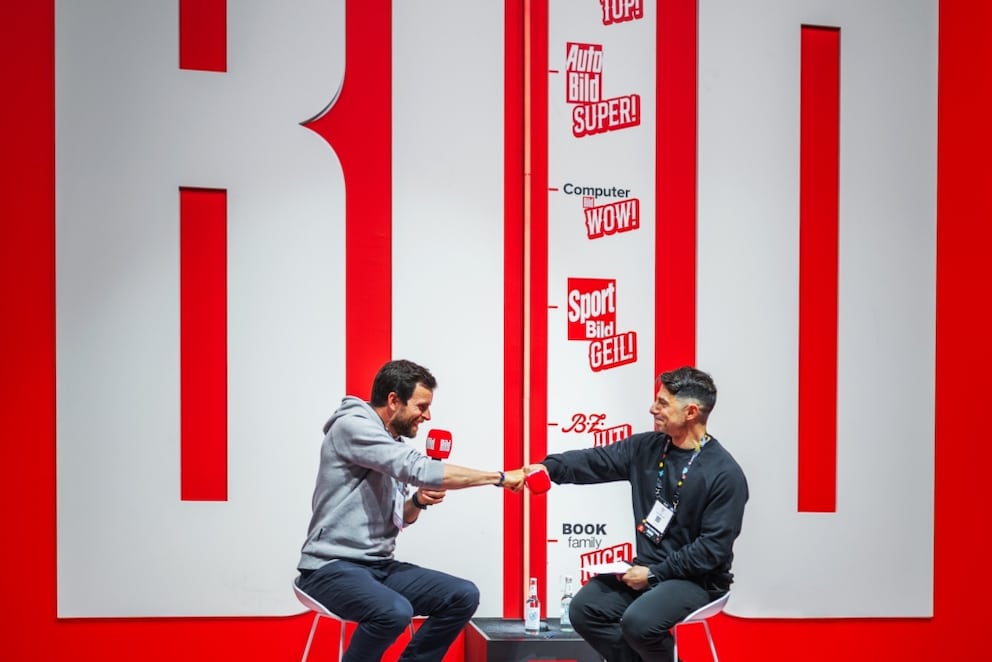
“You can choose the date and you can ride in the slipstream. You just have to hang on behind.” Sealed. Fist to fist. Now I have a goal outside my comfort zone. Thank you, Jonas.