


June 8, 2026, 9:11 am | Read time: 5 minutes
Lack of sleep can weaken concentration, make one irritable, and affect reaction time. This can not only impact interpersonal relationships and job productivity but also become particularly dangerous in traffic. Keyword: microsleep. Researchers have now apparently found a way to test whether sleep deprivation has already reached a physically critical threshold. They detected sleep-related biomarkers in saliva. So, is a saliva test that can indicate the risk of impending microsleep coming soon?
Can a metabolic product (metabolite) be found that changes due to sleep deprivation? And if so, is it measurable in saliva? Researchers at the University of Zurich in Switzerland have sought answers to these questions–and apparently found them.
The metabolic composition in saliva was examined after three different sleep scenarios, which each participant went through in random order. There was a one-week interval between each condition. The three scenarios were:
- Sleep deprivation: a complete night without sleep.
- Sleep restriction: four nights with two hours less sleep than usual each night.
- Rested state: about eight hours of sleep.
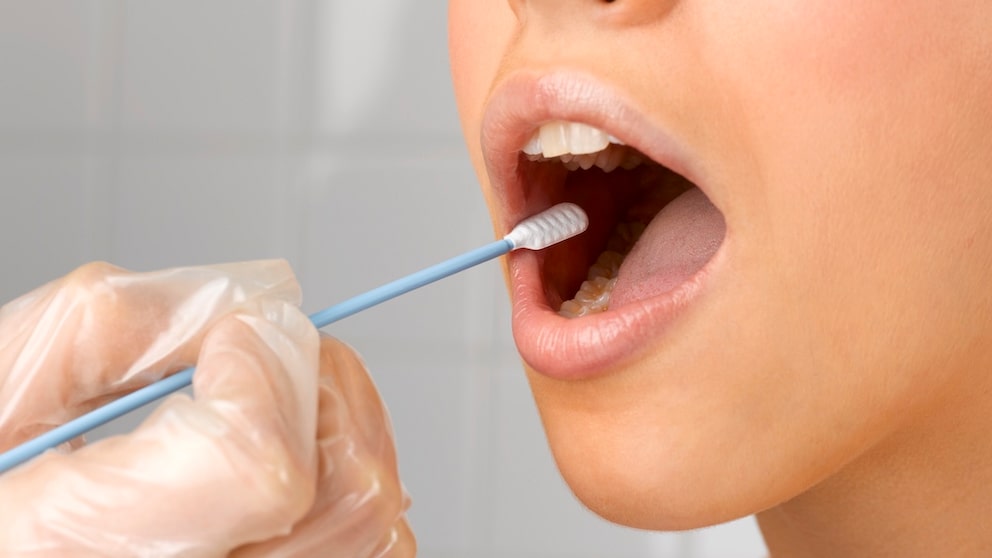
Before and after each sleep condition, researchers collected saliva samples. They then analyzed the metabolites contained within. Metabolites are the aforementioned metabolic products that arise from chemical processes in the body and can provide insights into a person’s current physical state–in this case, possibly indicating restfulness or exhaustion.
Using statistical methods, scientists compared the metabolic profiles of the different states. They also developed a machine learning model. Such models recognize patterns in large datasets and can make predictions based on them. The model was trained with the saliva data to determine whether the measured metabolites could indicate if a person is acutely sleep-deprived.
Sleep Deprivation Leaves a Biological “Fingerprint”
The analyses showed clear differences between the rested state and a night of complete sleep deprivation. Researchers identified around a dozen molecular differences in the saliva samples of participants who had to go a whole night without sleep. It was different with sleep restriction. Although participants slept two hours less than usual over four nights, scientists found no statistically significant metabolic differences compared to the rested state. This suggests that severe sleep deprivation or fatigue–as in the case of a completely sleepless night–leaves measurable traces. Moderate sleep deprivation, like in a “shorter” night, cannot be reliably detected in saliva.
Saliva Test That Shows How Tired the Body Is
Based on the altered metabolic products, researchers developed a prediction model. This model was able to correctly identify saliva samples from sleep-deprived individuals with a 94 percent accuracy rate.
Interesting: The model also made some misclassifications. According to the authors, individual differences in metabolism could be responsible. The data suggested that some participants did not fully return to their original metabolic profile even after a subsequent night of eight hours of sleep. This could mean that eight hours of sleep after a prolonged wakeful state may not be sufficient for everyone to completely reverse all biological effects of sleep deprivation.
The test worked particularly well in the morning hours–in the late evening, it became more challenging for the algorithm to clearly assign the traces of fatigue.
Overall, the results suggest that sleep deprivation leaves a characteristic metabolic “fingerprint” in saliva that can indeed be detected.

Why Heart Blood Values Can Be Misleading After a Bad Night

Even One Night with Too Little Sleep Can Promote Inflammation
Significance of the Results
So far, assessments of fatigue often rely on self-reports, observations, or performance tests. The present study shows that an objective, non-invasive method like a saliva test can provide information about the acute effects of sleep deprivation. The method could be used in sleep medicine and sleep research or–thinking further–in traffic. Perhaps at some point, a sleep saliva test will accompany an alcohol test during a police check. However, with the current model, this would likely not be reliably feasible, as the test assessed fatigue differently depending on the time of day.
Study Evaluation
Further research is necessary before this can happen. A significant limitation of the study’s validity is the small sample size of only 20 men. There is also no diversity in terms of age, gender, origin, or general health status. Further investigations must show whether the study results can be applied to women, older people, and sick individuals.
Additionally, only the acute effects of a few days of sleep deprivation or a night of sleep deprivation were examined. It remains unclear whether the effects of chronic sleep deprivation–such as due to insomnia–could also be detected in saliva and how accurate the measurement would be in this case.
The strength of the study lies in the fact that it did not rely on data from previous studies but collected and analyzed data under controlled conditions, considering different sleep scenarios. The molecular differences discovered provide a good basis for further research until a reliable saliva test can be developed.