



August 22, 2025, 3:43 pm | Read time: 5 minutes
You simply don’t want to keep torturing yourself with push-ups, or need new training impulses to bring some excitement back into your monotonous strength training? Maybe push-ups are no longer a challenge for you, and you need a new one. We say: No problem! There are numerous exercises that are perfect alternatives to push-ups.
They are an incredibly effective bodyweight exercise and are among the multi-joint basic exercises that train several muscles at once: We’re talking about push-ups. Learning the exercise isn’t easy, as proper execution requires not only a strong chest but also trained shoulders, muscular triceps, and core tension at the least. Good conditioning and a low body fat percentage (so you have less weight to lift) are also advantageous. If you’re still lacking strength, find out here how to learn push-ups with a resistance band. But there are also great alternative exercises. We’ve gathered eight suggestions here for beginners, advanced, and professionals.
Please choose the exercise or exercises according to your fitness level and ability. Ideally, get support from a trainer to avoid injuries.
Also interesting: This Many Push-Ups Per Day Will Build Visible Muscles
What Makes an Exercise an Effective Push-up Alternative
To be a comparable alternative, the eight exercises must have roughly the same effect on the body, meaning they must train the following muscles:
- Pectoralis major/minor (chest)
- Deltoideus (front and middle) – front shoulder
- Triceps brachii – back of the upper arm
- Core stability – especially core muscles like abs and lower back
- Secondary: Serratus anterior, forearms, and back
Fortunately, there’s quite a bit in the exercise archive. The exercises we find to be the best alternatives to push-ups are:
1. Incline Push-up: Light Variant

Muscle Target: Like the standard push-up—focusing on the upper and middle chest and front shoulder.
Description: Place your hands on a table or bench, with your feet on the ground. Engage your core and slowly lower your body. Keep your body straight. Push back up.
Advantage: The load can be easily varied, ideal for beginners.
2. Burpee: Push-up at Speed

Muscle Target: Chest, shoulders, core, legs—a true full-body activation (perfect for HIIT training)
Description: The burpee is a combination of squat, plank, push-up, and jump. Jump from standing into a plank, optionally add a push-up, then explosively jump up.
Advantage: High calorie burn, integrated push-up element, effective interval training that also challenges conditioning.
Disadvantage: As a full-body workout, it offers less targeted muscle work for the chest than a push-up. The push-up portion is often technically sloppy and can stress the body overall.
3. Dips (Triceps Dips / Chest Dips): Targeting the Triceps
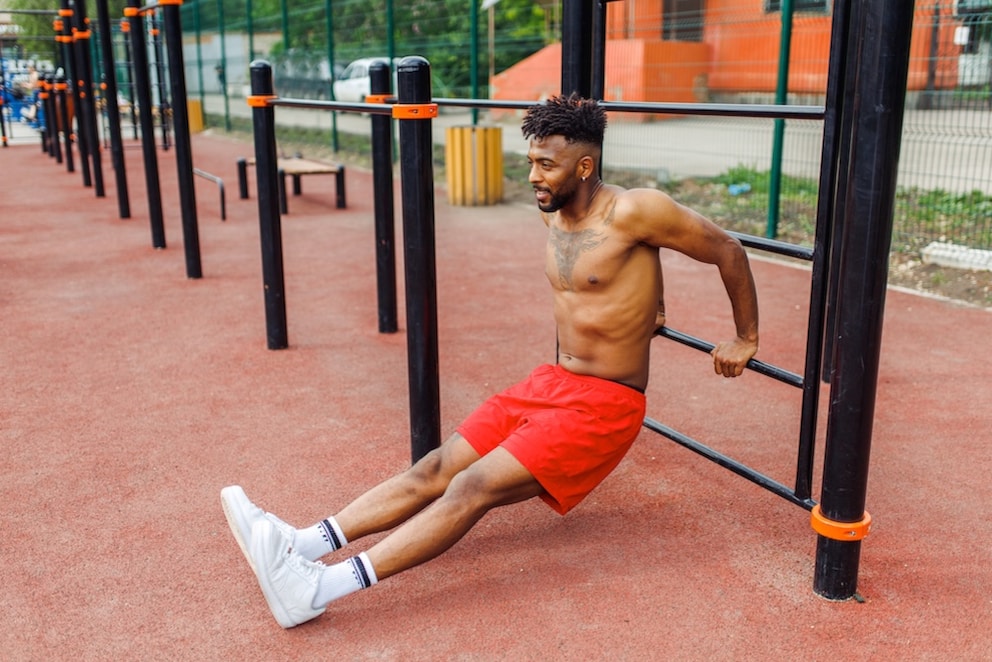
Muscle Target: Triceps, chest, front shoulders
Description: Support yourself with your hands on a bench or dip bar, slowly lower your body until your elbows are bent about 90 degrees, then push back up.
Advantage: Effective push alternative with strong triceps focus, no floor work needed.
Disadvantage: Puts significantly more strain on the shoulders than classic push-ups; only advisable with proper technique.
4. Diamond Push-ups: For Pros

Muscle Target: Triceps, middle chest, front shoulders
Description: Place your hands together under your chest so that your thumbs and index fingers form a “diamond” triangle. Keep your body in a straight line, elbows close to your body.
Advantage: More triceps focus than regular push-ups, gentler on joints than wide variants.
Disadvantage: Can be uncomfortable for wrist or elbow issues, technically demanding, and not for beginners.
5. Negative Push-ups: For Beginners
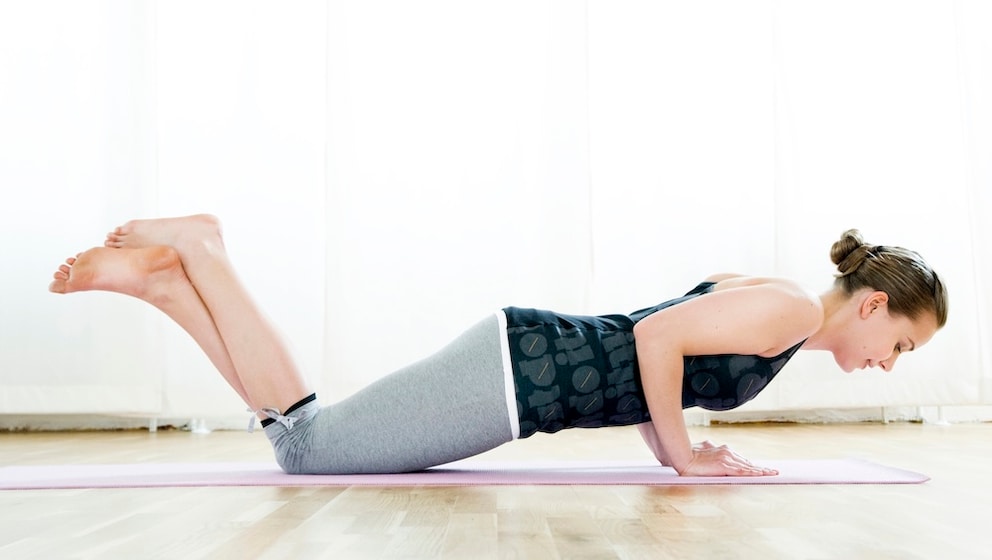
Muscle Target: Chest, triceps, core—focusing on eccentric control
Description: From the plank, slowly and controlled lower down (four to five seconds), optionally push up over the knees.
Advantage: Ideal for beginners with strength deficits to prepare for push-ups. Focus on muscle control.
Disadvantage: Not a full movement—less volume, the exercise is more of a technique building block than a full replacement.
6. Mountain Climbers: For a Strong Core
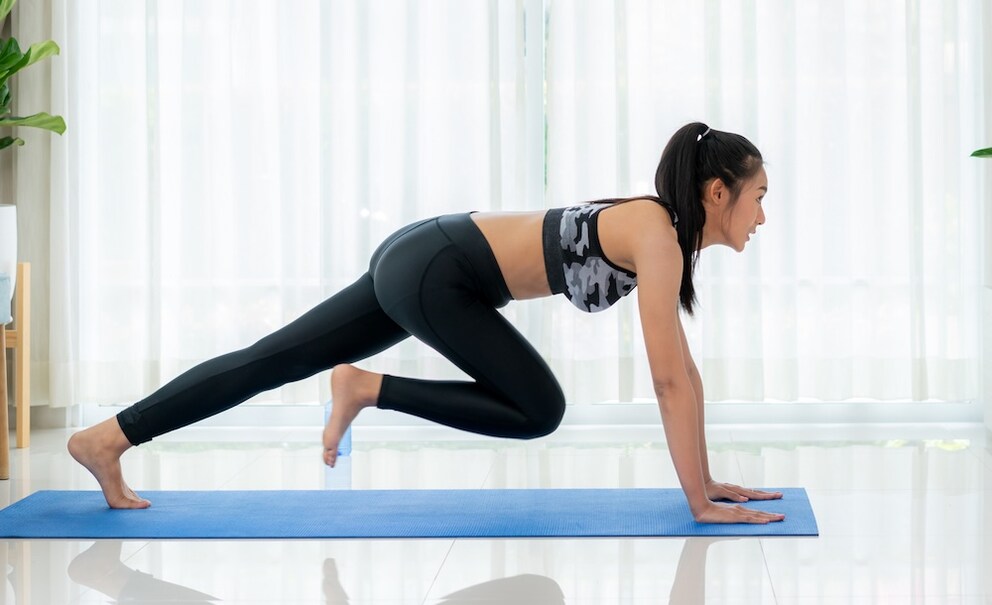
Muscle Target: Core, chest, shoulders, triceps (isometric)
Description: From the high plank, quickly alternate pulling knees to the chest; core remains engaged.
Advantage: Cardio boost with push-up-like plank load, ideal for variety.
Disadvantage: No real push impulse like push-ups, focus is on core and speed, not strength.
7. Up-and-down Planks: For a Strong Core and Strong Shoulders
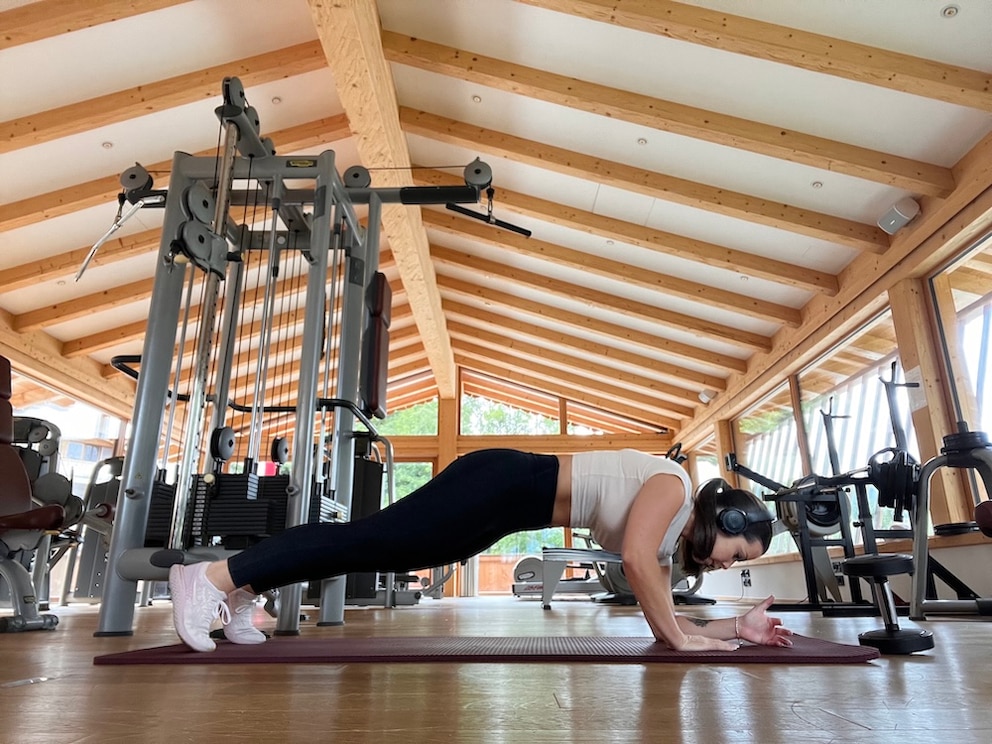
Muscle Target: Core stability, shoulders, triceps, chest (isometric).
Description: Start in a high plank position (push-up position). From here, alternate pressing into a forearm plank with one arm, followed by the other arm. Then press back into the starting position. The core remains engaged throughout the movement, and the hips should swing as little as possible.
Advantage: Dynamic exercise that trains the core and shoulders simultaneously. Improves stability and endurance in the plank position.
Disadvantage: Requires good core control—improper execution can cause the hips to sag, leading to lower back issues.
8. Handstand Push-up: For the Acrobats Among Us
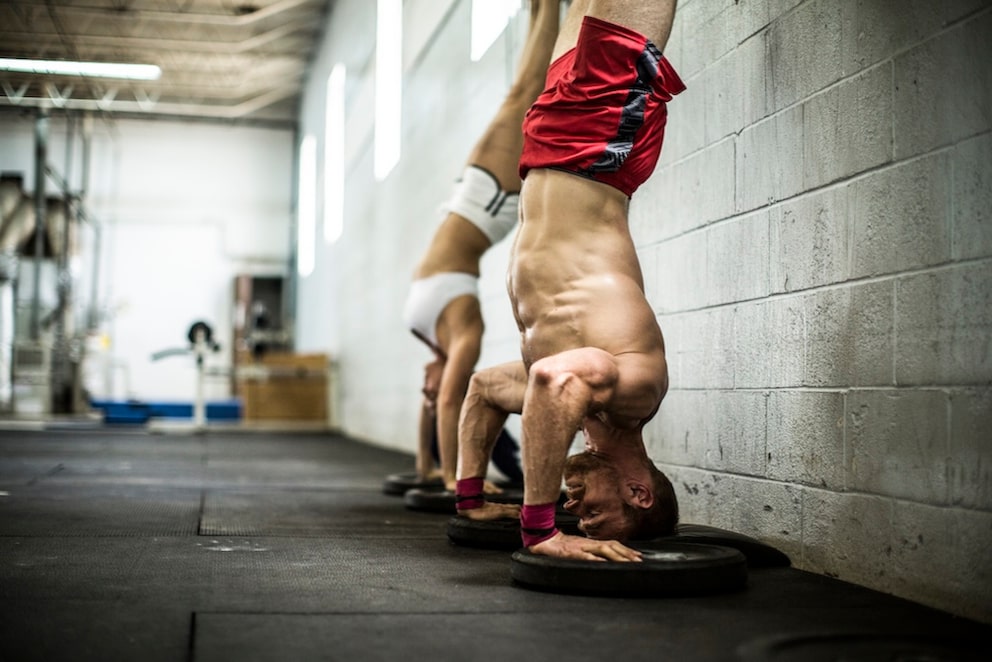
Muscle Target: Front shoulders, triceps, core, upper chest
Description: In a handstand against the wall, slowly lower until your head almost touches the ground, then push back up.
Advantage: Extremely challenging, massive shoulder activation, ideal for advanced practitioners.
Disadvantage: High entry barrier, risk of injury—not a beginner alternative to push-ups.