


August 21, 2026, 4:14 pm | Read time: 5 minutes
While scrolling through TikTok or Instagram feeds, we inevitably encounter perfectly defined bodies, flawless skin, and meticulously planned workouts and diets. It seems as if fitness influencers have no body fat and perfectly visible muscle mass in all the right places. What may be inspiring to some often leads to frustration about one’s own body and discipline for most. But how much reality is there behind the perfectly staged fitness images on social media? Trainer and FITBOOK expert Alina Bock sheds light on the issue.
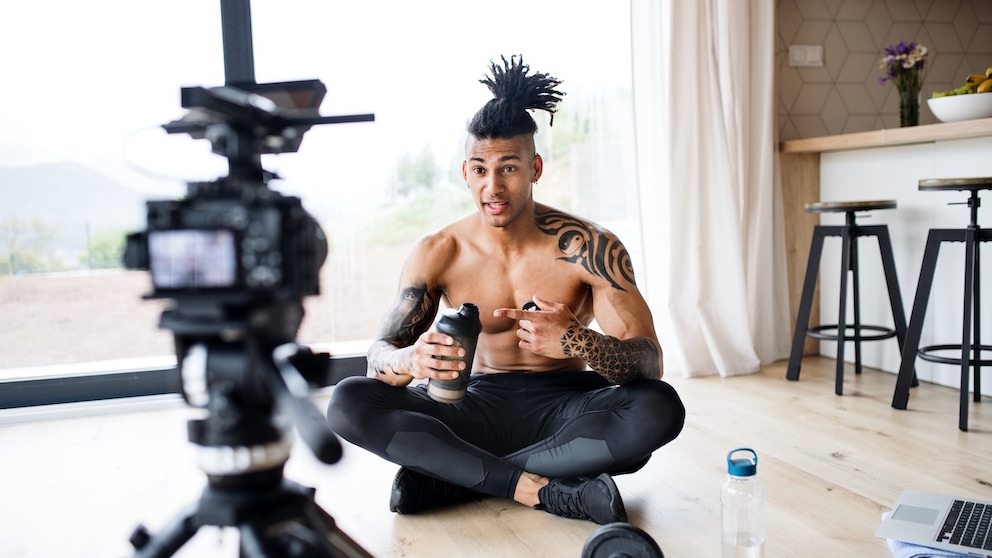
The supposed dream bodies of social media fitness stars are mostly the result of perfect camera angles, skillful posing, and professional lighting. Additionally, the line between reality and fiction blurs with the increasing use of filters and photo editing apps. Nevertheless, there is no question that the individuals shown undoubtedly have an above-average physique, which is based on hard discipline, years of training, and a healthy, sometimes very restrictive diet.
More Illusion Than Reality: The Impact of Lighting, Posing, and Camera Angles
Posing works wonders when it comes to emphasizing muscles and concealing “weak spots.” For example, arching the back and sticking out the butt suggests a much more pronounced gluteal muscle than is actually present in a relaxed state. Similarly, lighting conditions, shadows, and camera angles influence the overall image by making the body appear more muscular or defined. In the right combination, these factors can distort the visual appearance so much that the photograph hardly resembles reality.
Behind the Scenes of the Fitness World: How Doping and Surgical Procedures Create Ideal Bodies
It is no longer a secret that some athletes in the fitness scene, especially bodybuilders, resort to certain aids to maximize their muscle mass. This is no longer a phenomenon that only applies to male athletes. In female fitness and bodybuilding classes, assistance is also used. However, since substances other than classic testosterone are primarily used in the women’s sector, typical male attributes or striking visual changes often do not occur. The female aesthetic is thus preserved, making it extremely difficult for the layperson to recognize artificial assistance.
The use of performance-enhancing substances for muscle maximization is not always the end of the story. In the social media fitness scene, surgical interventions are increasingly being used. A Brazilian Butt Lift (BBL), hip dip injections, targeted liposuction, or surgical skin tightening are just some of the methods used for artificial body shaping.
The Problem: When Transparency Is Lacking
Basically, everyone should be free to decide how to shape their own body. However, it becomes problematic when the community is not transparently informed that artificial assistance was used. When fitness programs and diets are then sold with the promise of achieving a similar figure to that of the respective athlete, it borders on deliberate deception. Competitive athletes often speak transparently and honestly about their lifestyle. In contrast, the line between illusion and reality often blurs significantly with fitness influencers.
Not Just an Illusion: Why It’s Wrong to Deny Fitness Influencers the Hard Work on Their Bodies
Even though posing, lighting, camera angles, and artificial aids can significantly influence the visual appearance, one should not deny the discipline behind the athletes and influencers in the fitness scene. Their bodies are hard-earned and the result of hours of training sessions and ideally balanced nutrition. Aids, lighting, and posing generally serve only to optimize rather than completely deceive, to better showcase already well-trained bodies. For example, professional bodybuilders train harder than most other athletes in the fitness scene, despite the intake of certain illegal substances. Aids are not “magic tools” that transform the body into the desired state overnight. Instead, factors such as nutrition, training, and recovery must continue to be permanently optimized and aligned at the highest level.
“Cardio Alone Often Isn’t Enough for Weight Loss”

Study Reveals Shocking Heart Death Rates Among Bodybuilders
Career vs. Hobby: The Unequal Time Commitment in Daily Life
A key aspect that argues against a direct comparison with fitness influencers is the factor of time. Especially well-known fitness figures and influencers earn their living with fitness content and advertising partners. Their body is thus their capital–and training is an integral part of their daily work. If one pursues a regular job, training understandably has a different priority in everyday life. A direct comparison is therefore simply unrealistic, as the time constraints are completely different. While for some, body optimization is at the center of their professional life, for most people, it is a hobby that must find its place alongside everyday obligations.
Conclusion
If we are interested in fitness content, we will sooner or later come into contact with social media fitness images. This often creates the desire for a comparable visual appearance. However, the misconception lies in the fact that many fitness figures on social media achieve this look primarily through factors such as posing, camera angles, and editing apps–and they don’t even look like that themselves.