


August 10, 2026, 12:39 pm | Read time: 6 minutes
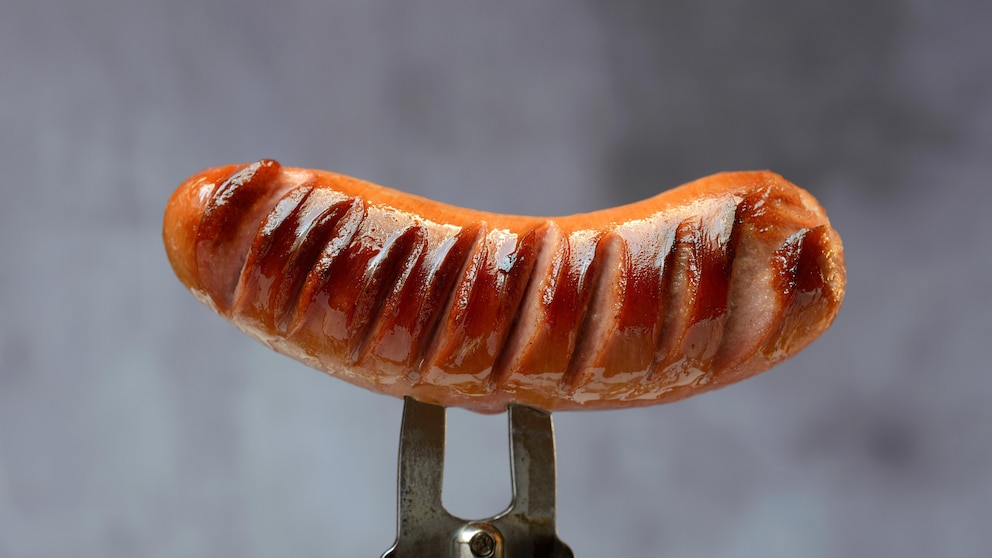
Germany is the sausage world champion: Nowhere else in the world are there as many types of sausage as here—over 1,500 varieties! As a child, you get a slice of Lyoner for free over the butcher’s counter, and later it’s bratwurst with friends. But unlike filet, sausage goes through several processing steps and contains other ingredients besides meat. FITBOOK nutrition expert Sophie Brünke has taken a close look at which sausages are actually healthy—and which are not.
How Much Is Too Much?
In 2025, consumers in Germany ate 54.9 kilograms of meat and sausage, a little over a kilo per week.1 By far, most of it comes from pork, followed by poultry and beef in second and third place. The numbers don’t specify how much of that is sausage. Either way, it’s too much according to the German Nutrition Society (DGE). For a healthy diet, 120 grams of meat and 30 grams of sausage per week are sufficient to provide essential nutrients. The DGE sets an upper limit of 300 grams weekly, as red meat and sausage increase the risk of cardiovascular diseases and colon cancer. Those who stay below this limit can freely choose between white and red meat.2
Just last year, a study from the University of Washington made waves by showing that even the smallest amounts of sausage could pose health risks. As little as 50 grams daily were associated with a higher risk of type 2 diabetes, cardiovascular diseases, and colon cancer. Perhaps the question is rather which sausage is the lesser evil and which should definitely be avoided.
Which Sausages Are Particularly Unhealthy
First of all, sausage is among the ultra-processed foods (UPF). A study published in the Lancet journal linked animal UPFs to a higher cancer risk and cardiometabolic multimorbidity (multiple diseases).3 The World Health Organization (WHO) classified processed meat as “carcinogenic to humans” back in 2015. Examples include sausages, ham, salami, hot dogs, and bacon.4
The studies, of course, did not examine individual sausage types in detail. However, cured sausages are considered particularly unhealthy. Nitrite curing salt (E 250) is added to many sausages to enhance flavor, preserve them, and maintain their pink color. Otherwise, they would turn gray. This is known from bratwurst, which usually does without curing salt. The salt is more commonly used in raw sausages (like salami and Mettenden, Teewurst) and most cooked and boiled sausages (e.g., Wiener, Frankfurter, Schinkenwurst). But what’s the problem with cured sausage? When the sausage is grilled or fried and heated above 150 degrees Celsius, carcinogenic substances called nitrosamines form. Regardless of the salt, high heat can also produce potentially harmful substances like PAHs and HAAs (polycyclic aromatic hydrocarbons and heterocyclic aromatic amines).5
Even if you avoid heating sausage, there are two other issues: fat and salt. Sausages mainly contain saturated fatty acids, the “bad” fats. Eating too much of them can lead to higher cholesterol levels, which is a risk factor for cardiovascular diseases and diabetes. Too much salt can raise blood pressure and harm the heart. According to the DGE, you should not consume more than six grams of salt per day.6 Table 1 shows the fat and salt content in popular sausage types.
Table 1: Fat and Salt Content
| Fat | Saturated Fat | Salt | |
|---|---|---|---|
| Salami | 31 g | 12 g | 2,9 g |
| Fleischwurst/Lyoner | 28 g | 11 g | 2,4 g |
| Jagdwurst | 16 g | 6 g | 2,0 g |
| Leberkäse | 27 g | 9 g | 1,5 g |
| Wiener/Frankfurter | 26 g | 9 g | 2,0 g |
| Bratwurst | 26 g | 7 g | 2,0 g |
| Leberwurst | 32 g | 13 g | 2,0 g |
What the Better Choice Is
If you don’t want to give up a sandwich with sausage, you can switch to low-fat varieties. The DGE suggests options like poultry sausage, turkey breast, roast or aspic slices, and ham without a fat edge. However, the issues with heating and high salt content are not resolved by this. Table 2 shows the fat and salt content of affordable alternatives.
Table 2: Fat and Salt Content
| Fat | Saturated Fat | Salt | |
|---|---|---|---|
| Poultry bratwurst | 16 g | 4 g | 2,0 g |
| Poultry hunting sausage with pork | 6 g | 2 g | 2,0 g |
| Sliced turkey breast | 2 g | 0,6 g | 2,5 g |
| Sliced roast pork | 3 g | 1 g | 2,0 g |
| Veal in Aspic | 2 g | 0,7 g | 2,8 g |
| Pork ham without the fat rim | 2 g | 0,7 g | 5,6 g |
| Cured salmon-style pork loin | 2 g | 0,7 g | 2,8 g |

How Harmful Just One Slice of Sausage a Day Can Be

3 High-Protein Chicken Recipes for the Air Fryer
What to Look for When Buying
When you’re at the supermarket, your first glance should be at the nutritional table of the sausage. How much fat and salt does it contain? Sometimes you can find reduced-fat versions of the sausages from Table 1. Manufacturers can only advertise with the term “low-fat” if the sausage contains a maximum of three grams of fat per 100 grams. “Reduced sodium content” can only be claimed if the salt content is at least 25 percent lower than comparable products.7 At the fresh food counter and butcher, you can ask about the nutritional values and whether curing salt is included. In organic variants, the use of curing salt is only allowed in small amounts—the organic seal is thus a quick way to find a healthier sausage.
Is It Worth Reaching for Veggie Sausage?
Meat alternatives have a bad reputation. But veggie versions often provide fewer calories, significantly less saturated fat, and are made without curing salt. They also contain no cholesterol, unlike animal sausage. The protein content is also surprising: A market survey by the Giessen Institute for Alternative and Sustainable Nutrition shows that meatless sausage can indeed compete. In the study, vegan bratwurst even contained about 70 percent more protein than comparable meat products. However, the authors emphasize that protein content varied greatly within individual product groups. For organic bratwurst, for example, protein content ranged from 13.5 to 33 grams per 100 grams. So it’s worth checking the nutritional information.8
Moreover, these products can also contain additives and high salt levels, as the Giessen analysis shows. And they are also considered highly processed products. However, the aforementioned UPF study showed no link between meat substitute products and health risks. Overall, moderate consumption and a nutritional check are advisable here as well. But occasionally swapping animal sausage for plant-based ones can positively impact the total meat amount per week and fat intake—and thus also health.