


April 16, 2025, 11:01 am | Read time: 5 minutes
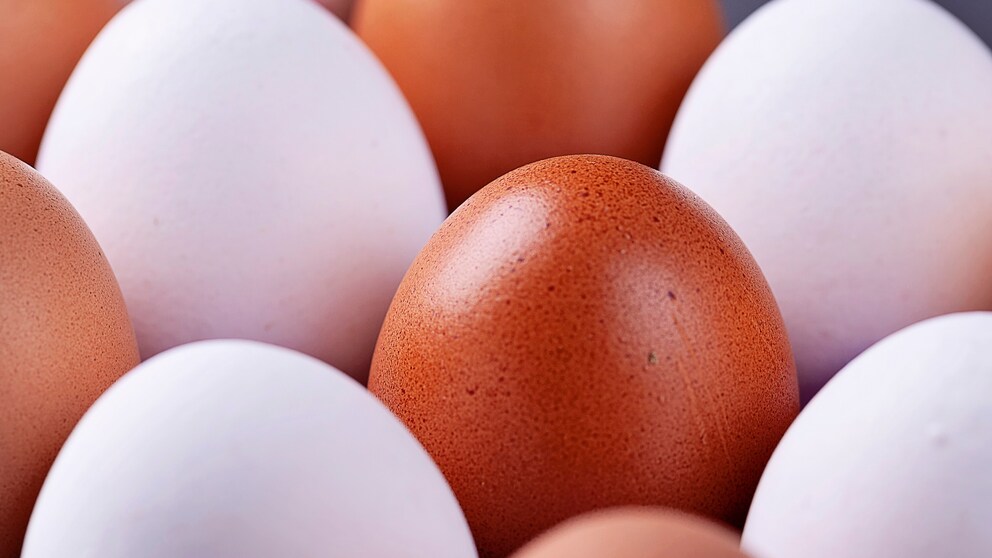
Brown eggs seem more natural–and many therefore consider them healthier. But is that really true? What the color of the shell and yolk actually reveal about nutrients, and what they don’t, is explained by a nutritionist at FITBOOK.
Follow the FITBOOK channel on WhatsApp now!
Nutritionist: Brown or White Doesn’t Matter for Nutrients
Are brown eggs healthier than white ones? No. According to nutritionist Uwe Knop, the color of the shell has no impact on the nutrients in the egg. “Both brown and white, as well as light green eggs, provide high-quality protein and fats,” Knop tells FITBOOK. The feeding of the chickens doesn’t fundamentally change this. While the feed can moderately alter the composition of the egg, such as the fatty acid profile, it doesn’t affect whether an egg is considered “healthy” or not.
Also interesting: The healthiest way to prepare eggs
Why Brown Eggs Are Often Perceived as “Healthier”
Many consider brown eggs more natural–and thus automatically healthier. Similar thought patterns exist with brown bread or sugar. Both are persistent dietary misconceptions: Brown sugar and brown bread (without further specification) are not inherently healthier! With bread, the color can be faked with malt extract or caramel coloring. And brown sugar contains just as many calories and has the same carbohydrate content as white sugar.
Eggshell Color Is Genetic–You Can See It on the Chicken
The color of the eggshell is purely genetic. It doesn’t depend–as some believe–on the diet, but on the chicken breed. You can tell which “color” chickens lay by looking at their feathers. Specifically, by the earlobes located behind the eye. “If the earlobes are white, the chickens usually lay white eggs, while hens with red earlobes lay brown eggs,” explains Knop.
The rare light green eggs are laid by only one breed, originally from South America and introduced here around the 19th century: the Araucana. These chickens are also called green layers.
Related: Learn from our PETBOOK colleagues how to recognize a chicken’s egg color before it lays.
Why Organic Eggs Are Often Brown
Packaging for brown eggs often shows green meadows, chickens outdoors, and other nature images. This makes brown eggs appear more natural, and many organic farms cater to this expectation. In supermarkets, organic or free-range eggs are often brown, while the “cheapest”–usually eggs from barn or even non-humane cage farming–are often white. This creates the association: Brown = Organic = Healthy.
Additionally, “brown chickens” are often more stress-resistant and cold-tolerant, including breeds like “Brown Leghorns” or “Orloff.” They can handle changing weather conditions–an important trait for free-range farming.
“White chickens” are “more efficient,” laying more eggs and requiring less feed. Lower costs result in cheaper eggs–and many consumers focus more on price than on the type of farming. This leads to more white eggs from barn farming on the shelves.
Also interesting: How many eggs per week are healthy?
Farming Method Is the Most Important Criterion for Consumers
An organic egg–whether brown, white, or green–comes from humane farming–and this at least indirectly affects quality. Even if the feed, according to Knop, doesn’t influence whether an egg is healthy, it’s important to note: Organic eggs contain fewer residues of pesticides or medications. The use of antibiotics is permissible in barn farming if needed, but strictly regulated in free-range farming. And chickens that are outdoors and get sunlight are happier anyway. This should make the decision easier for us consumers.
If you want to have a clear conscience when buying eggs in terms of animal welfare, environment, and sustainability, you should focus not on the color of the egg but on the farming method.
Organic eggs perform better in several areas. “They contain fewer residues of pesticides or medications,” says nutritionist Uwe Knop. Additionally, stricter guidelines apply to feed, outdoor access, and animal welfare.
What to Look for When Buying Eggs
- Best option for animal welfare and the environment: Organic farming (Code “0”). Fewer animals per square meter, guaranteed free-range, organic feed, no genetic engineering. Such eggs are naturally a bit more expensive–but fairly produced.
- Good choice: Free-range farming (Code “1”). The chickens have daytime access to the outdoors (at least 4 square meters per chicken)
- Only conditionally recommended: Barn farming (Code “2”). The chickens live in halls, but without outdoor access and often many thousands of animals in a confined space.
- Not recommended: Cage farming/small group housing–these eggs are marked with Code “3”. Hens producing these eggs live in tight cages, have little space, and no outdoor access. In Germany, this cage farming is banned. However, imported eggs–such as in processed products like boiled, colorfully dyed Easter eggs from the supermarket–can still come from cage farming.

What Does the Number on the Egg Mean?

The Healthiest Way to Prepare Eggs
Are Eggs with Darker Yolk Healthier?
According to Knop, the yolk color doesn’t reliably indicate nutrient content. While green feed, corn, or dandelion often lead to a more intensely colored yolk–this is often the case with free-range farming. However, conventional farms can also produce a strong yolk color by adding dyes to the feed. The color alone is therefore not a reliable indicator of quality or farming method.
No Fear of Cholesterol in Egg Yolk
No one needs to fear the cholesterol contained in egg yolk, emphasizes Knop. “First, the body of healthy individuals regulates cholesterol levels independently according to its actual needs, regardless of intake levels. And second, there is no evidence that cholesterol-containing foods harm health.” So it’s not healthier to eat only the egg white.
An average chicken egg contains 12.8 percent high-quality protein, 11.3 percent fat, and 0.7 percent carbohydrates. Eggs also contain vitamins A, D, K, B2, B6, B12, choline, folic acid, phosphorus, sodium, potassium, and calcium.