


March 15, 2026, 8:59 am | Read time: 5 minutes
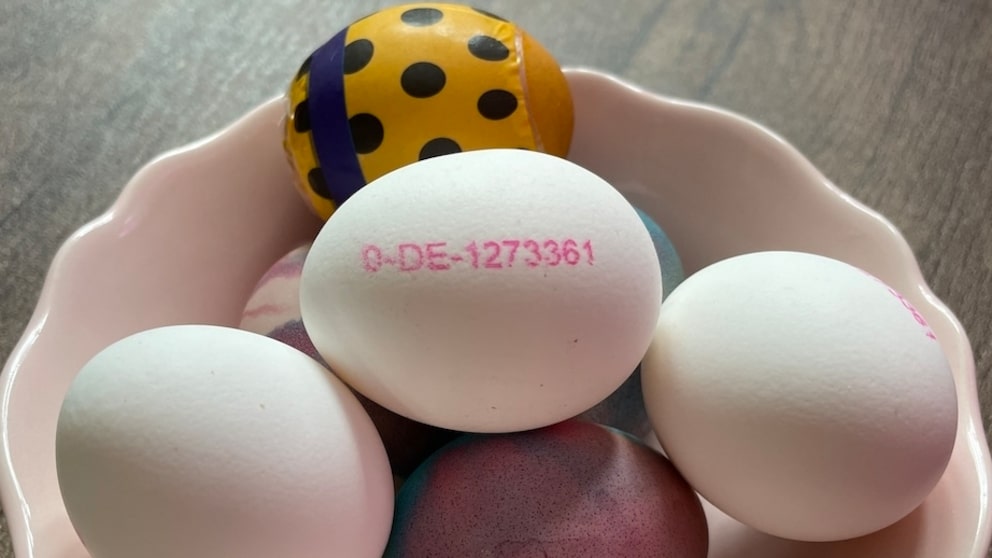
Eggs are a perfect source of protein and are very popular among athletes. But just before cracking the egg, your eyes might catch the long, cryptic number on the shell. FITBOOK nutrition expert Sophie Brünke knows what it means.
A proud 249 eggs per person were consumed in Germany in 2024—ten more than the previous year.1 After all, these small protein providers are versatile: scrambled eggs for breakfast, a fried egg on bread, or hard-boiled eggs as a snack to go. But what does the long number on the egg actually mean? If you can crack the egg code, you’ll discover a lot about its origin and production. Some information is important for consumers, while others are for regulatory authorities. And: Does the number also say something about how healthy the egg is?
Overview
The First Number Indicates the Type of Housing
The first digit of the code is a number between zero and three. The lower the number, the higher the standards of housing conditions.2
- 0 = Organic farming
- 1 = Free-range farming
- 2 = Barn farming
- 3 = Cage farming
Since 2004, the number on the egg has been mandatory. As a result, consumers increasingly avoided eggs from cage farming, which are now rarely found in stores. In 2008, 60 percent of eggs produced in Germany were from cage farming; today, only four percent come from so-called small group housing. Cage farming is now completely banned in Germany. Even small group housing, where each hen lives on a base area of 0.08 square meters, is only allowed until the end of 2025.3
Which Country Is the Egg From?
The second part of the code consists of letters, not numbers. These reveal which EU country the eggs come from. For example:
- DE = Germany
- AT = Austria
- BE = Belgium
- NL = Netherlands
- FR = France
By the way, over half of the eggs produced in Germany come from barn farming (58 percent), while organic eggs make up 14 percent of the supply.
Important for Regulatory Authorities: The Producer Number
Moving on: After the producer country comes the farm number. This is crucial for regulatory authorities to identify the exact farm from which an egg originates. You might recall the “dioxin egg” scandal in 2011, where contaminated feed was given to laying hens.4 The code allows for secure traceability in such cases.
The first two digits of the farm number indicate the federal state:
- 01 = Schleswig-Holstein
- 02 = Hamburg
- 03 = Lower Saxony
- 04 = Bremen
- 05 = North Rhine-Westphalia
- 06 = Hesse
- 07 = Rhineland-Palatinate
- 08 = Baden-Württemberg
- 09 = Bavaria
- 10 = Saarland
- 11 = Berlin
- 12 = Brandenburg
- 13 = Mecklenburg-Vorpommern
- 14 = Saxony
- 15 = Saxony-Anhalt
- 16 = Thuringia
Following this, there are five more numbers indicating the farm and barn number.
The Quality Class is on the Carton
Not on the egg, but printed on the carton, is the quality class. There are two classes: A and B.
Quality class A means “fresh”: the eggs must not be washed or otherwise cleaned. They have not been preserved or refrigerated. Retailers only offer eggs of this class.5 Quality class B is also called “second quality or downgraded” eggs. These are intended exclusively for the food and non-food industries.
If you’re curious about which barn your purchased eggs were laid in, you can enter the number on the website “What is on the egg?“.

Are Brown Eggs Actually Healthier Than White Ones?

Is It Better Not to Store Eggs in the Fridge?
How Healthy is My Purchased Egg?
Don’t worry, there are only minor health differences between eggs from different housing types. The nutrients in the egg remain largely the same. Even if only barn farming is affordable, eggs provide high-quality protein, with a biological value of 100. On top of that, eggs are full of fat-soluble vitamins like vitamins A and D, as well as B vitamins.
Organic Eggs Score With Taste and Nutrients
Indeed, there are some subtle differences. Poultry scientist Prof. Dr. Michael Grashorn from the University of Hohenheim compared conventionally and organically produced eggs: Organic eggs came out on top. In short, they had a better aroma and were slightly healthier, but contained more germs and less yolk. The aroma is due to the essential oils from plants that free-range organic chickens peck on meadows. Additionally, increased consumption of plants leads to higher amounts of omega-3 fatty acids in the egg. However, the differences in feed also mean that the organic variant provides slightly less energy and essential amino acids—resulting in a smaller yolk portion. The expert explains in a press release from the university: “In general, the germ load is somewhat higher. More frequent infections of organic laying hens also lead to more variable shell color. Eggs from conventional barn farming have a more uniform shell color.”6
No Fear of Salmonella—If You Follow These Rules
To ensure you don’t get a Salmonella infection from a raw egg, you should always use fresh eggs for dishes containing raw or not fully cooked eggs (such as pudding, creams, tiramisu, and homemade mayonnaise). It is also advisable to eat these dishes soon after preparation (within two hours) or store them in the refrigerator for up to one day before consumption.