


August 20, 2026, 8:46 am | Read time: 5 minutes
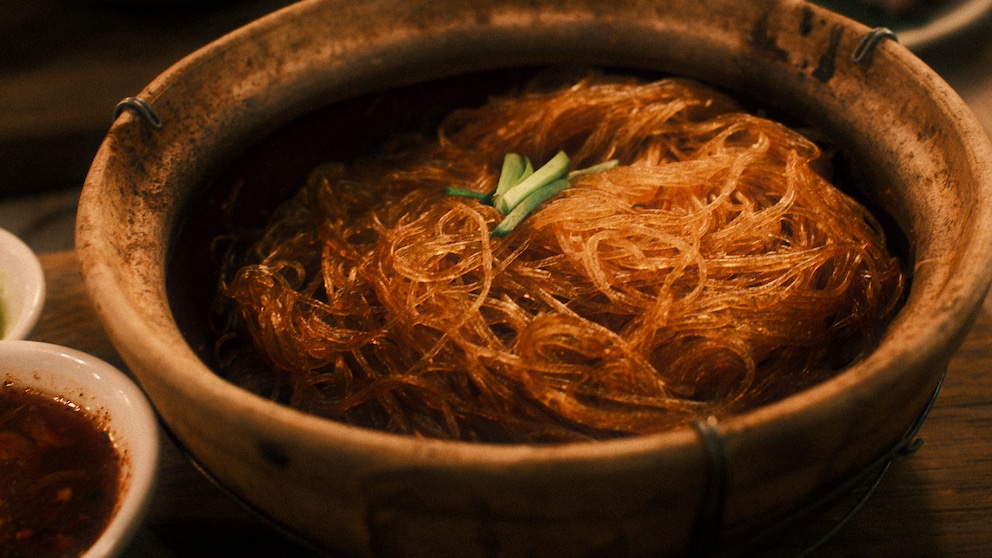
My entire feed is filled with glass noodles. At first, I thought it was a coincidence because I recently felt motivated to diversify and was looking for a bit of variety in the kitchen. But when I saw several influencers holding a pack of glass noodles, I knew: This is a trend. And it’s one where glass noodles are currently being marketed as the healthier and lighter alternative to regular pasta. As a nutrition expert, I couldn’t just let that stand and did some research. Let’s just say: Anyone switching to glass noodles for the calories might be disappointed.
What Exactly Is in Glass Noodles?
Strictly speaking, glass noodles aren’t real noodles. Regular pasta is usually made from durum wheat or grain flour. Glass noodles are different: They are typically made from the starch of mung beans or soybeans, sometimes rice starch. This gives them their unique texture, which you either love or don’t. When dry, the noodles are white; after soaking, they become almost transparent and a bit gelatinous. That’s where the name “glass noodles” comes from.
In Asian cuisine, they are far from a new food trend. Glass noodles have been on the menu for centuries and are used in soups, salads, summer rolls, or stir-fry dishes.1
No Advantage in Nutritional Values
And now we come to the part that really surprised me during my research. Despite their light appearance, glass noodles don’t differ much in calories from regular pasta.
One hundred grams of dry glass noodles have about 350 kilocalories. Reishunger states that 100 grams of uncooked wheat noodles have an average of 351 kilocalories.2 So, replacing the same amount of pasta with glass noodles doesn’t save any calories. In terms of carbohydrates, glass noodles aren’t necessarily better either. They contain about 85 to 86 grams per 100 grams of dry product, while wheat pasta has around 71 grams according to Reishunger.
The difference is even more pronounced with protein. While glass noodles provide only about 0.5 grams of protein per 100 grams, uncooked wheat noodles offer around 13 grams. Glass noodles also contain only about one gram of fiber.
I found this quite sobering. Especially when glass noodles are presented as the healthier alternative to pasta, I expected a more significant advantage in nutritional values. But there isn’t one.3

Other Types of Noodles Have Different Strengths
And when you start comparing noodles, it gets really interesting. Besides classic wheat pasta and glass noodles, there are now many alternatives that offer different benefits depending on dietary goals.
Lentil noodles, for example, stand out for their high protein content. According to Reishunger, 100 grams of cooked lentil noodles contain about 12.5 grams of protein. In comparison, cooked classic durum wheat pasta has around five grams. Whole grain pasta provides about 4.8 grams of protein and 23 grams of carbohydrates per 100 grams when cooked.
Rice noodles are also a gluten-free alternative. Reishunger states that 100 grams of cooked Asian rice noodles have 96 kilocalories, 22 grams of carbohydrates, and 1.6 grams of protein.
With such numbers, you have to look closely. The values for these types of noodles refer to the cooked product, while the previously mentioned values for glass noodles and wheat pasta are for the dry or uncooked product. You can’t directly compare these numbers. Noodles absorb water during cooking and become heavier, so the calories are distributed over a higher weight.
For me, this comparison shows one thing above all: There is no single healthiest noodle. Depending on whether gluten-free, protein content, or something else is important, a different type might be more interesting.
Why Glass Noodles Still Seem So Light
The impression isn’t entirely wrong. What’s crucial is how much actually ends up on the plate. With glass noodles, you often only use about 40 to 50 grams of dry product per serving. They also absorb a lot of water during preparation. This can result in a lighter portion, even though the calories per 100 grams of dry product are similar to regular pasta.4
And then there’s how we eat glass noodles. They often end up with lots of vegetables, herbs, tofu, fish, or poultry in a bowl, salad, or soup. Such a dish can have fewer calories than a large plate of pasta with a rich sauce. But that’s not because glass noodles are suddenly a diet product.
Glass Noodles Do Have One Advantage
I don’t want to make glass noodles sound worse than they are. They do have a real advantage: They are naturally gluten-free, making them an alternative to wheat pasta for people with celiac disease.
They also contain very little fat and are really easy to prepare. Usually, it’s enough to let them soak in hot water for two to three minutes. But you should know what you’re getting: mainly starch or carbohydrates and relatively little protein and fiber.
Lose Weight Thanks to Spaghetti? What Konjac Noodles Can Do
4 Protein-Rich Salmon Recipes for Strength Athletes
Conclusion: Is It Worth Switching from Pasta to Glass Noodles?
If I like the taste better or I’m in the mood for an Asian dish: sure. But for health reasons or weight loss? Probably not. That’s the point that gets lost in the glass noodle hype: In their dry state, they have about as many calories as regular pasta. At the same time, wheat pasta provides significantly more protein and fiber. Glass noodles aren’t unhealthy. They’re just not automatically the much healthier noodle that they often appear to be on social media.
This Noodle Is Actually Extremely Low in Calories
If you’re looking for a noodle alternative to really cut calories, you should check out konjac noodles or shirataki noodles.
And that’s where the difference becomes clear. Konjac noodles are mostly water and contain the fiber glucomannan. Depending on the product, 100 grams of ready-to-eat konjac noodles have less than ten kilocalories and practically no digestible carbohydrates. Of course, you won’t automatically lose weight with konjac noodles. Ultimately, it’s always the total calorie intake that matters. But if the question is which noodle can save the most calories in a meal, then konjac noodles are the much more interesting alternative.5