


June 29, 2026, 8:30 am | Read time: 5 minutes
Eggs are among the most popular breakfast classics–and they regularly end up on my plate too. Sometimes I eat them boiled, sometimes as creamy scrambled eggs or a classic fried egg. But is there really a preparation method that is the better choice from a nutritional standpoint? As a nutrition expert, I took a closer look at the differences.
First off: All variants provide high-quality protein as well as many vitamins and minerals. However, there are differences in calories, fat content, and the method of preparation. Which form of egg comes out on top, I will show you in this comparison.
Why the Egg Is One of the Most Nutrient-Rich Foods
From a nutritional science perspective, the egg is one of the most nutrient-rich foods out there. After all, it contains nearly everything a chick needs during its development.
Particularly noteworthy is the high biological value of the protein. This means that the body can utilize the protein it contains exceptionally well. Therefore, protein from chicken eggs even serves as a reference value for other protein sources in nutritional science.
Many people also only consume the egg white. However, the majority of vitamins, minerals, and fats are found in the yolk. It also contains choline, which is important for the brain and nervous system, as well as the egg’s cholesterol.

Boiled Egg: Few Ingredients, Many Benefits
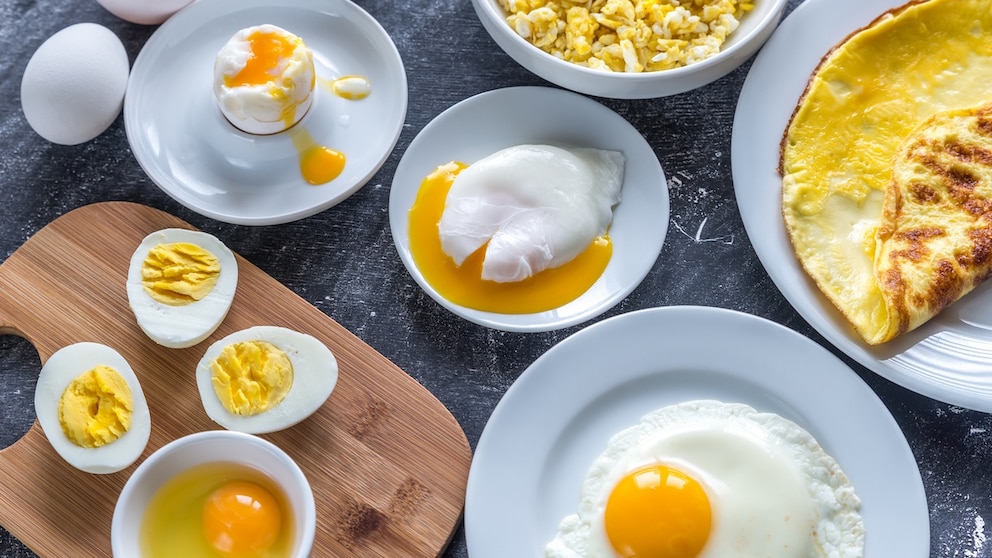
The boiled egg is the simplest form of preparation–and that’s precisely its greatest advantage. It requires no butter, oil, or other ingredients and provides only the nutrients naturally found in the egg.
A boiled egg of size L provides about 98 kilocalories, 7.1 grams of fat, about eight grams of protein, and 0.7 grams of carbohydrates.1
From a nutritional physiology perspective, there are also many arguments in favor of this preparation method. Soft-boiled eggs are cooked a bit more gently than hard-boiled eggs, so heat-sensitive vitamins are somewhat better preserved. The differences are not large, but the boiled egg is generally considered a particularly nutrient-preserving variant.
However, it’s important to note: Pregnant women, young children, the elderly, or people with weakened immune systems should always cook eggs thoroughly. The Federal Center for Nutrition points out that raw or insufficiently heated eggs can contain salmonella.2
Scrambled Eggs: Healthy or a Calorie Trap?
Scrambled eggs, like a boiled egg, provide high-quality protein as well as numerous vitamins and minerals. How healthy it ultimately is, however, depends primarily on the preparation and the ingredients used.
A simple scrambled egg made from one egg, prepared without milk or cream and with only a little fat, provides approximately 90 to 110 kilocalories, around seven grams of protein, seven to eight grams of fat, and hardly any carbohydrates. Nutritionally, it differs little from a boiled egg.3
However, the nutrient balance can quickly change with additional ingredients. Butter, oil, cream, cheese, or bacon can significantly increase the calorie and fat content. At the same time, scrambled eggs can be enhanced with vegetables like spinach, tomatoes, bell peppers, mushrooms, or fresh herbs. They provide additional vitamins, fiber, and phytochemicals, making it a balanced meal.

The Healthiest Way to Prepare Eggs

The Healthiest Way to Prepare Potatoes
Fried Egg: Nutrient-Rich, but Usually a Bit Greasier
A fried egg also provides high-quality protein as well as numerous vitamins and minerals. The key difference lies in the preparation. Fried eggs are usually cooked with butter or oil, which increases the fat and calorie content compared to a boiled egg. Additionally, at very high temperatures, heat-sensitive vitamins can be partially lost.4
However, if fried eggs are prepared with little fat and at moderate heat, they differ nutritionally much less from the other variants.
Cholesterol in Eggs: Should You Be Concerned?
Eggs were long considered cholesterol bombs. According to the Federal Center for Nutrition (BZfE), the body largely regulates cholesterol levels on its own in healthy individuals. The German Nutrition Society (DGE) also points out that several eggs per week, as part of an overall balanced diet, do not increase the risk of cardiovascular diseases according to current knowledge. The recommendation of about one egg per week was also primarily based on sustainability aspects and not solely because of cholesterol content.
My Verdict: This Egg Form Wins the Comparison
All three preparation methods are nutritionally recommended. Differences arise mainly from the method of preparation and the ingredients used.
If I, as a nutrition expert, had to choose one variant, I would opt for the boiled egg. It provides the same valuable nutrients as scrambled or fried eggs but without additional fat and is cooked particularly gently. Especially for those who want to have a natural and calorie-conscious breakfast, this is the best choice.
Scrambled eggs follow closely behind. Prepared with little fat, they are also a very good choice. Only larger amounts of butter, cream, cheese, or bacon significantly increase the calorie content. Fried eggs come in third because frying usually involves additional fat. However, prepared with little fat and moderate heat, this variant also remains a healthy choice.
My most important tip: The key is not just the preparation method, but the entire breakfast. Combine your egg with whole-grain bread, fresh vegetables, or some fruit. This creates a balanced meal that keeps you full for a long time and provides many important nutrients.