

June 11, 2022, 3:34 pm | Read time: 5 minutes
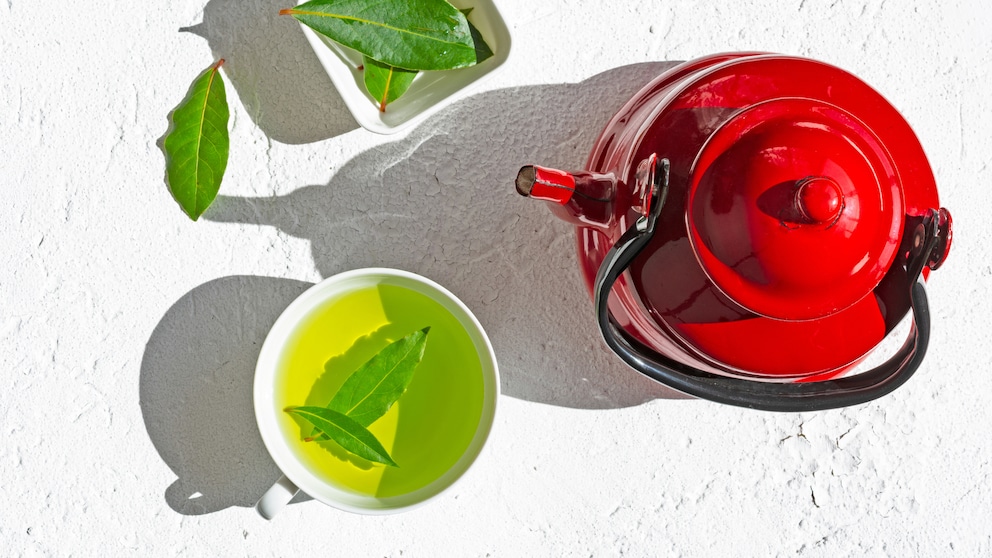
Most people know bay leaves from their use as victory wreaths in ancient times. Today, they are a popular spice in Mediterranean cuisine. But that’s not all the leaves can do: Bay leaves can also be used to make a healing tea.
Bay is an evergreen shrub or tree that primarily grows in Western Asia, Europe, and North America. The bay plant can be as small as a houseplant but can also reach a height of up to 65 feet and blooms in April and May. The dried leaves of the bay can be processed into a delicious bay tea with a variety of health-promoting effects.
Overview
What ailments is bay tea supposed to help with?
Due to its reputed anti-inflammatory properties, bay tea is recommended by bay enthusiasts for drinking and inhaling, especially for colds and inflammations in the throat and pharynx. It is also said to relieve tension, joint pain, and digestive issues, as well as contribute to relaxation and increase concentration. Additionally, bay tea is believed to be beneficial for diabetes prevention and treatment due to its blood sugar-regulating effects and may even aid in weight loss.
Also interesting: Dandelion tea promotes digestion and is good for the liver
What active ingredients are in the tea?
The leaves of the bay tree contain numerous healthy active ingredients that benefit the body. The essential oils in the leaves stimulate the body and mind and can help with respiratory diseases. Additionally, bay has a high content of tannins, which have anti-inflammatory effects and are beneficial for inflammations of the stomach and intestines as well as the mouth and throat. Bay tea also contains bitter substances that aid in fat digestion, and flavonoids, antioxidants, and secondary plant compounds that have been shown to reduce the risk of cancer.1,2
Also interesting: The healthy effects and proper preparation of caraway tea
Is the effect of bay tea scientifically proven?
The research on the effects of bay and bay tea is largely based on animal or in vitro studies, meaning experiments in test tubes or petri dishes. Unfortunately, studies on humans have only been conducted sporadically, so the current state of research is not sufficient to confidently claim a health-promoting effect.
Nevertheless, the sporadic studies provide indications of a potentially healing effect of bay tea. For example, researchers at the University of Agriculture in Pakistan found that taking one to three grams of bay in capsule form daily for 30 days can help lower and control blood sugar and cholesterol levels in diabetics. This finding suggests that bay tea may be beneficial in controlling and preventing diabetes and cardiovascular diseases.3
https://oembed/fitbook/affiliate/89be2c509b57684ffbacd4b8028d2998728454dc25db6056e6cb1355f1edc112/93d6a906-a170-464b-97d3-c296e9d8cb42/embed
Also interesting: Good for the cardiovascular system–have you heard of olive leaf tea?
Are there possible risks and side effects of consumption?
The consumption of bay tea is considered very safe and well-tolerated by most people. However, as always, one should pay attention to their own well-being and see how the tea affects them. Since there is not enough information on the safety of bay tea during pregnancy, breastfeeding, pre-existing conditions, and especially diabetes, it is advisable to consult a doctor and inquire about possible side effects in these cases.
Also interesting: The health effects and proper preparation of rosemary tea
Where can you get bay tea and how is it prepared?
To prepare bay tea yourself, you need a bay tree that is at least two years old for the aroma. The leaves should be harvested and then dried in a dark place for two to three weeks. For a cup of tea (250 milliliters), pour boiling water over two dried bay leaves and let it steep for about ten minutes.
For an even more intense aroma, you can also boil the tea in a pot of water for five minutes and then let the brew sit for three to four hours before gently reheating and consuming it. If all this seems like too much work, ready-made tea can also be found in numerous online shops.
Also interesting: Jasmine tea and its diverse effects on health

How Dandelion Tea Promotes Digestion and Liver Health

Ingredients and Effects of Black Tea
What does bay tea taste like?
The taste of bay tea is herbaceous and spicy. It has a herbal flavor, a slightly bitter note, and an intense aroma. Honey complements bay tea very well and adds a touch of sweetness to the robust flavor.
Sources
- 1. Batool, S., Khera, R.A., Hanif, M. A. et al. (2020). Bay Leaf. Medicinal Plants of South Asia
- 2. Yao, H., Xu, W., Shi, X. et al. (2011). Dietary Flavonoids as Cancer Prevention Agents. Journal of Environmental Science and Health, Part C.
- 3. Khan, A., Zaman, G., Anderson, R. (2009). Bay Leaves Improve Glucose and Lipid Profile of People with Type 2 Diabetes. Journal of Clinical Biochemistry and Nutrition.