


November 28, 2026, 6:34 am | Read time: 4 minutes
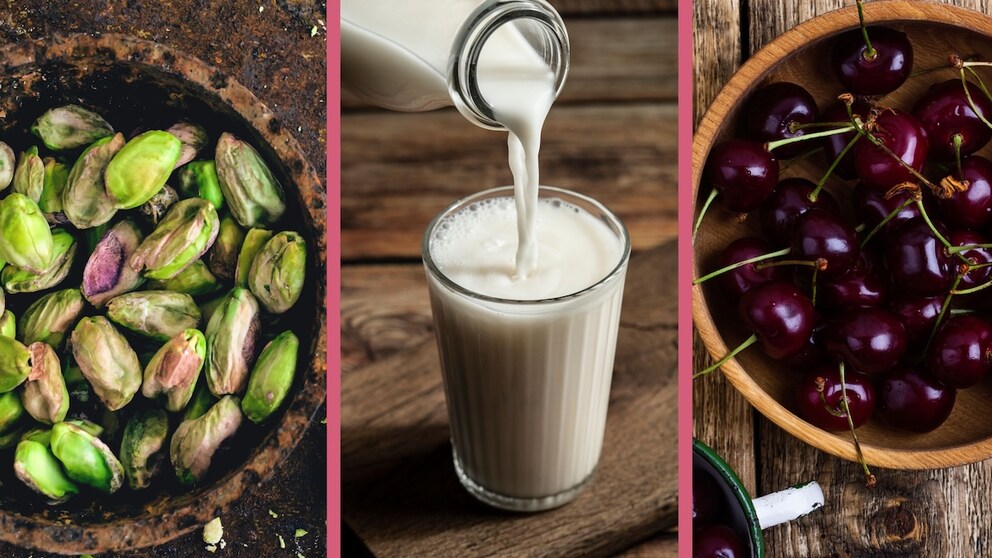
Many associate melatonin with sleep sprays, tablets, and other dietary supplements. However, the so-called sleep hormone also occurs naturally in foods. Pistachios, tart cherries, oats, and even tomatoes contain measurable amounts. But can eating such foods actually help you sleep better?
Melatonin is a hormone produced by the body and plays a crucial role in regulating the day-night cycle. Because its release is closely linked to the sleep-wake cycle, it is often referred to as the “sleep hormone.”
Additionally, melatonin is available as a dietary supplement and in prescription medications. Scientific studies are investigating whether it can help with sleep disorders. However, the benefits and potential risks of taking it are not yet fully understood. The German Heart Foundation, among others, points this out.1
Also interesting: Does melatonin help against obesity? New studies provide clues
Which Foods Contain Melatonin?
Melatonin can also be absorbed through a regular diet. Foods in which measurable amounts of the hormone have been detected include:
- Pistachios
- Oats
- Tart cherries
- Cranberries
- Milk
- Kiwis
- Walnuts
- Bananas
- Pineapples
- Whole grain products
- Oranges
- Tomatoes
- Grapes
However, it is not possible to say exactly how much melatonin a specific food actually provides. According to the Federal Institute for Risk Assessment (BfR), the measured levels can vary greatly. The reasons for this are not yet fully understood. Possible influencing factors include variety, season, harvest time, processing, and regional environmental conditions.2
Moreover, it cannot be ruled out that other foods contain melatonin that has not yet been detected. For example, scientists reported in 2006 the detection of melatonin in grapes.3
Can Foods Containing Melatonin Improve Sleep?
However, it is not only important whether melatonin is present in a food. It is also relevant whether its consumption affects the melatonin level in the human body.
There are initial scientific indications of this. Researchers have studied cherries as well as bananas, pineapples, and oranges. It was found that consuming certain foods might be associated with a temporary increase in melatonin levels in the body.4,5
However, this does not mean that a portion of cherries or a banana in the evening automatically ensures better sleep. How much of a food would need to be eaten and to what extent the possible increase in melatonin levels actually affects sleep is not yet sufficiently clarified.

How the Louwen Diet Aims to Ease Childbirth for Pregnant Women

How Diet Can Affect Menstruation–Positively or Negatively
The Body Also Produces Melatonin Itself
Another interesting aspect of nutrition is that the body is not solely dependent on external sources of melatonin; it can produce the hormone itself.
An essential starting substance for this is the amino acid L-tryptophan. It can be converted into serotonin and eventually into melatonin through several metabolic steps. Various micronutrients are also involved in the corresponding metabolic processes.
Tryptophan is found in eggs, meat, nuts, and seeds. Vitamin B6 is provided by whole grains, red peppers, sardines, pork, and dried fruits. Whole grain products, nuts, and leafy green vegetables are sources of magnesium.
Nutrition Is Just One Factor for Good Sleep
Melatonin-containing foods are scientifically interesting. However, based on current research, their melatonin content does not automatically translate into a sleep-promoting effect.
For example, those who eat tart cherries, pistachios, kiwis, or tomatoes consume foods in which melatonin has been detected. However, how relevant these amounts are for sleep quality is not yet conclusively determined.