

September 10, 2026, 6:01 pm | Read time: 5 minutes
Sausage, ham, or bacon are regular items on the menu for many people. But does the type of meat we eat affect cancer risk? Researchers have examined this question using data from around 450,000 people from nine European countries. The focus was on certain forms of stomach and esophageal cancer.
Differences by Type of Meat and Tumor Form
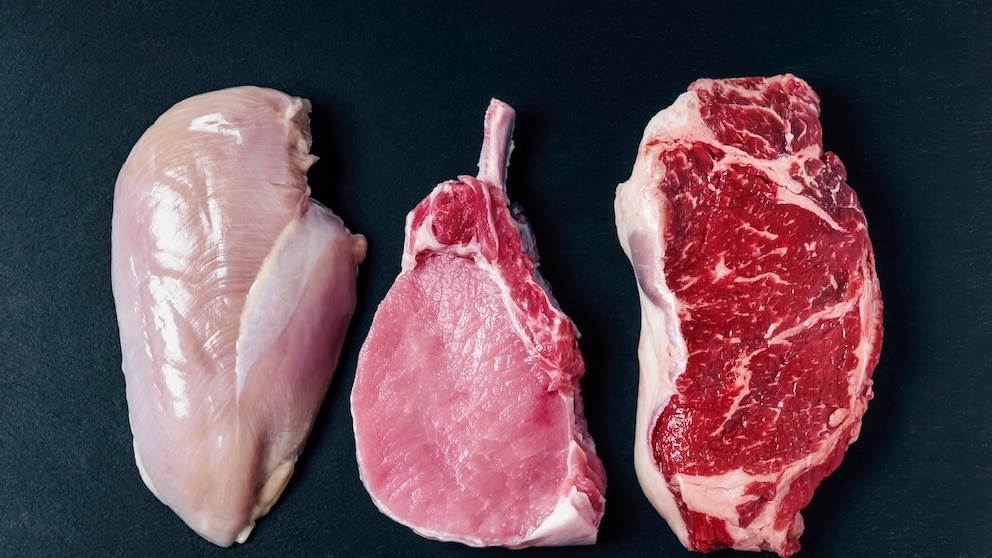
The study clearly shows that processed meat, in particular, poses a risk. The more processed meat participants consumed, the higher their relative risk for an adenocarcinoma (a malignant glandular tumor) of the stomach or esophagus. For every additional 30 grams of processed meat per day–equivalent to about two to three slices of bacon–the relative risk for stomach cancer increased by nine percent and for esophageal adenocarcinoma by 13 percent.
There was a surprising finding with white meat such as poultry and rabbit. Overall, higher consumption was not associated with an increased risk of stomach cancer, but there was a link with tumors that do not occur at the stomach entrance (non-cardia stomach cancer). For every additional 20 grams of white meat per day, the relative risk for this type of cancer increased by 12 percent. In the separate analysis by gender, the connection was particularly evident in women: For them, each additional 20 grams per day was associated with a 20 percent higher relative risk.
For red meat such as beef, pork, or lamb, the researchers found no statistically significant link with these types of cancer. The study results were published in the journal “International Journal of Cancer.”1
How the Study Was Conducted
Previous studies had already suggested that processed meat could increase the risk of stomach cancer. However, the results were not conclusive. There was also little known about whether different types of stomach cancer are differently related to meat consumption.
Therefore, the researchers analyzed data from the large European EPIC study. The analysis included information from 450,112 people from nine European countries. At the start of the study, participants provided information about their diet and lifestyle, including how much red, processed, and white meat they ate. They were then followed for an average of 14.1 years.
During this time, 876 stomach adenocarcinomas and 215 esophageal adenocarcinomas were diagnosed. In their calculations, the researchers considered numerous influencing factors such as age, gender, education level, total calorie intake, smoking, alcohol consumption, and body mass index to largely exclude other causes.
High Consumption Significantly Increases Risk
The risk was particularly evident among participants with the highest consumption of processed meat: They had a 46 percent higher relative risk of stomach cancer compared to the group with the lowest consumption. Their risk for esophageal adenocarcinoma was more than twice as high. For stomach cancer, this connection was seen in both the intestinal and diffuse tissue types. However, when differentiating by tumor location (at the stomach entrance or elsewhere in the stomach), the increased estimates no longer reached statistical significance. The connection remained even when the consumption of other types of meat was statistically excluded.
The scientists also examined men and women separately. In men, higher consumption of processed meat was associated with both a higher risk of stomach cancer and a significantly increased risk of esophageal adenocarcinoma. In women, connections with stomach cancer were seen for both processed and white meat, while no statistical link was found for esophageal adenocarcinoma–likely due to the small number of cases in women. However, the authors cautiously interpret the finding on white meat: Previous studies have shown contradictory results. Further research is needed to confirm the observed connection.
The researchers cite the content of heme iron and the formation of carcinogenic N-nitroso compounds, as well as the high salt content that can damage the stomach lining, as causes for the increased risk from processed meat. For the surprising finding on white meat, the authors suspect that cooking methods at high temperatures (such as frying or grilling) or altered gut bacteria may play a role.
How Diet Is Linked to Cancer Risk
Pancreatic Cancer – Eating This Meat Increases Risk
Study Assessment
The strengths of the study include the large number of participants, the long observation period, and the ability to examine different subtypes of stomach cancer separately.
However, the study also has limitations. Participants self-reported their diet, which could lead to inaccuracies. Additionally, the diet was only recorded at the beginning of the study. The researchers could not account for whether and how participants changed their eating habits in the following years.
Moreover, there was no information on infections with the bacterium Helicobacter pylori–a known major risk factor for stomach cancer, which interestingly is considered protective for esophageal adenocarcinoma. According to the authors, previous studies show that accounting for the infection would hardly have changed the results on meat consumption.
The authors reported no conflicts of interest. The study was supported by scientific institutions and public funders. According to the authors, the funders had no influence on the analysis, interpretation, or publication of the results.
Also of interest: Pancreatic cancer–consumption of this meat increases risk
What Other Studies Show on This Topic
The findings on processed meat fit into a larger picture. A 2019 meta-analysis that combined 43 studies with more than 16,000 cancer cases found similar values: For every 50 grams of processed meat per day, the stomach cancer risk increased by 72 percent. This analysis also found a link for red meat–unlike the current EPIC evaluation.2 For white meat, however, the data is indeed inconsistent. The same meta-analysis observed an opposite effect for poultry and rabbit: People with the highest consumption had a 20 percent lower risk of stomach cancer.
An Italian cohort study from 2025, on the other hand, supports the new observation.3 Among nearly 4,900 participants, poultry consumption of more than 300 grams per week was associated with increased mortality from gastrointestinal cancer, especially in men. However, this finding was based on only 108 deaths, and factors such as body weight and exercise were not included. The authors themselves describe their analysis as preliminary.