

March 11, 2026, 4:32 pm | Read time: 6 minutes
Eggs are a high-quality source of protein and are an indispensable part of a balanced diet. Whether as an ingredient in foods such as pasta or crêpes or as a meal in their own right in the form of omelettes, they are versatile. However, when it comes to fresh, boiled or, at Easter, brightly colored eggs, the question of shelf life and freshness quickly arises. But how can you tell whether an egg is still edible? And what about hard-boiled eggs or those from the supermarket?
Eggs have a shelf life of 28 days from the date they are laid—this is stipulated by the EU. However, depending on how they are stored and processed, they may be edible for much longer. You can find out which tests are available and how to store eggs properly here.
Overview
Legal Shelf Life: Eggs Are Often Edible for Longer
The actual shelf life of eggs is clearly regulated: “An egg can generally be kept for 28 days after laying,” explains Hans-Peter Goldnick, Chairman of the German Egg Association. However, he also clarifies: “This does not mean that the egg is bad on the 29th day.”
Whether from the supermarket or directly from the farm, in the United States, you can purchase fresh eggs that remain usable for several days with proper home storage. It’s important to store them in a cool, dark place. But how do you check whether an egg is still usable? Two simple methods provide reliable information.
Proper Storage: Keeping Eggs Fresh Longer
As a rule, freshly laid eggs only develop their full flavor after a maturing period of three days. Correct storage is important—especially after a certain point in time. Ten days before the best-before date, eggs should always be kept refrigerated.
Eggs also have a natural protective mechanism: an invisible film on the shell and enzymes in the egg white protect them against the penetration and multiplication of germs. However, eggs must not be exposed to strong temperature fluctuations such as direct sunlight or high humidity—otherwise the protection will not remain effective.
Caution!
In general, the fresher the egg, the less likely it is to harbor bacteria. However, it is possible that if the egg is stored too warm, germs can spread explosively. Even later cooling (even freezing) can no longer kill existing bacteria. Only heating to at least 70 degrees Celsius will render salmonella harmless, for example.
For these reasons, you should:
- Buy eggs as fresh as possible and consume them promptly.
- Only use very fresh eggs for dishes containing raw eggs, and store these dishes in a cool place.
- Store in the fridge from ten days before the best-before date onwards (BBD).
- Cook scrambled eggs well and boil breakfast eggs for at least five minutes.
- Use cracked eggs immediately – but only for strongly heated dishes.
- Only consume fully cooked eggs after the best-before date.
This is because fresh eggs can contain Salmonella, which can enter the egg either via the ovaries or via the hens’ droppings. For this reason, refrigerator temperatures of no more than six degrees Celsius are recommended for storage. Although the cold does not kill Salmonella, it does prevent it from multiplying.1
Water Test: Exercise Caution if the Egg Floats
A classic freshness test is the water test. The egg is placed in a bowl of water. “The higher it floats in the water, the larger the air chamber in the egg,” explains Hans-Peter Goldnick. “And the larger the air chamber, the older the egg.”
If the egg even floats on the surface, the expert clearly advises against eating it: “I wouldn’t eat it as a boiled egg, for example. At best, you can still use it for a batter.”

Why You Shouldn’t Prick Easter Eggs Before Boiling

Is It Better Not to Store Eggs in the Fridge?
Egg White Test: Assessing Freshness Upon Cracking
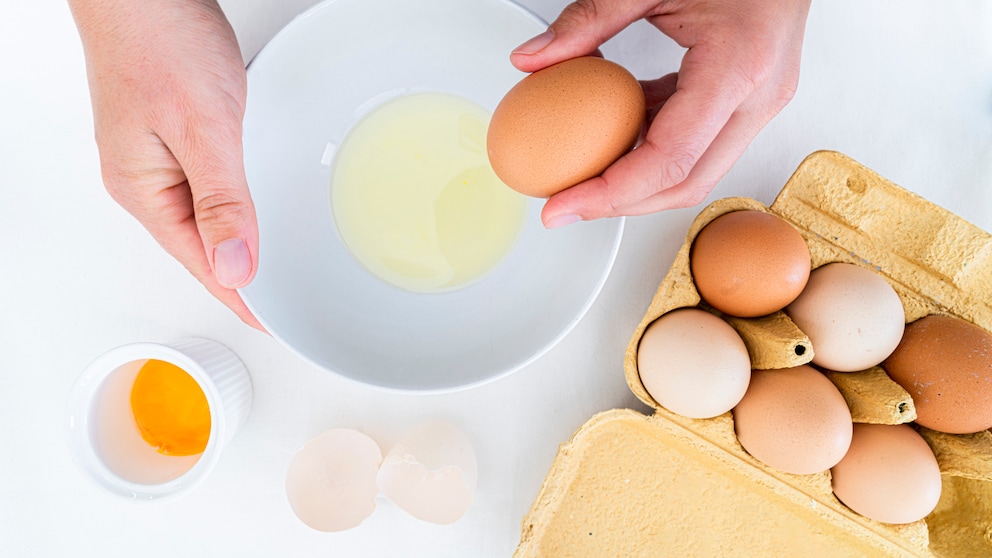
Another indication of freshness is when the egg is cracked—the so-called egg white check. This reveals a clear structure in the egg white of fresh eggs: “The egg white is a little flatter on the outside and slightly higher on the inside, with the yolk sitting on top,” says Goldnick.
This structure changes over time: “The older the egg is, the more the egg white structure changes, and you can no longer distinguish between the inside and outside yolks, which merge into one another.”
If an old egg is cracked into the pan, it spreads out considerably. “With fresh eggs, you can place several eggs next to each other in a pan,” explains the expert.
Recognizing bad eggs
Even though eggs can often still be eaten after the best-before date, there are clear warning signs that an egg may no longer be good. “One sign that an egg should no longer be eaten is if the egg white is no longer clear,” says Hans-Peter Goldnick. The smell is also an unmistakable signal: “The egg also smells bad.”
How Fresh Are Hard-boiled Eggs Really?
The freshness of dyed and hard-boiled eggs in particular cannot be easily assessed, especially if they are sold loose at weekly markets. No best-before date is prescribed for these eggs. As a general rule, however, hard-boiled eggs are not considered perishable food, as any germs are killed during cooking.
On the other hand, industrially produced and packaged boiled eggs are subject to mandatory labeling and must bear a best-before date. However, even after this date has expired, they can usually still be consumed without hesitation for a longer period of time.
Shelf Life of Industrially Cooked and Dyed Eggs
Industrially cooked and dyed eggs from the supermarket have a particularly long shelf life—up to three months, even without refrigeration. This is due to a special coating in the coloring that prevents air from penetrating the egg.
For eggs hard-boiled at home, the situation differs: They should always be refrigerated. Their shelf life depends heavily on how they have been treated after cooking. If the eggs are undamaged and have not been quenched, they can be stored for longer than four weeks without any problems.
However, if the eggs are quenched after boiling, their storage time reduces significantly—they should be consumed within two weeks, even when refrigerated. If the shell is damaged, it is advisable to cool the eggs immediately and consume them quickly.2