


August 29, 2025, 8:10 am | Read time: 6 minutes
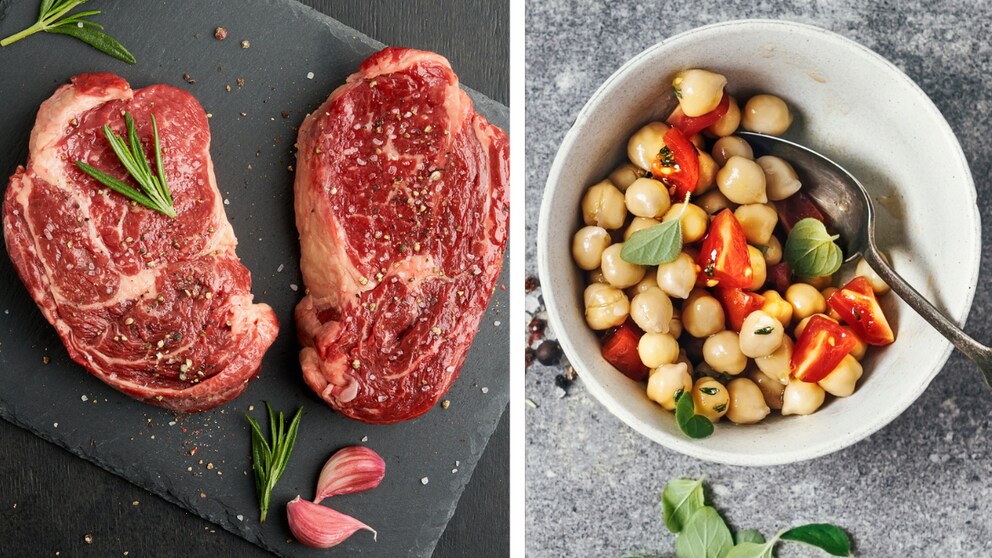
Whether we should eat steak or tofu is apparently no longer just an ethical or ecological question. According to a new global analysis, the type of protein source can influence our life expectancy. And the optimal source changes as early as the fifth birthday. FITBOOK nutrition expert Sophie Brünke presents the study to you.
Scientists at the University of Sydney conducted a large-scale analysis to examine how different protein sources—plant-based or animal-based—are related to age-dependent mortality risk. They used data from 101 countries, combining national food supply information with age-group mortality data.1 Can protein influence longevity? The researchers aimed to understand how shifts toward plant-based diets affect life expectancy—and how these effects vary by age group. The results provide important insights for future dietary recommendations and sustainable food systems.
Overview
The Role of Proteins in Health and Environment
Consuming large amounts of animal protein, especially in the form of processed meat, is associated with a range of chronic diseases such as cardiovascular diseases, type 2 diabetes, and some cancers. At the same time, plant-based protein—including legumes, nuts, and whole grains—is linked to a lower risk of chronic diseases and a lower overall mortality rate. Additionally, countries worldwide are increasingly striving to reduce the consumption of animal products, primarily motivated by the fight against climate change. Dr. Senior, the study leader, explains in a press release: “Protein is an important component of human nutrition, but as dietary habits change and industrialized countries try to reduce carbon emissions, the source of our protein is increasingly being questioned.”2 But how does the shift from animal to plant-based protein affect longevity?
The Aim of the Study
The scientists wanted to determine whether consuming more plant-based protein is equally healthy for people of all ages—or if age plays a crucial role. They used data on national food supply, relying on the statistical database of the Food and Agriculture Organization of the United Nations (FAOSTAT) rather than individual eating habits. This database includes all nutrients available per capita in a country, making it a key factor for the general health of the population. The focus was on the ratio of plant-based to animal protein and the total amounts of fat and carbohydrates in the national diet. The goal was to identify potential risks or benefits of a diet predominantly based on plant or animal protein, depending on age.
However, this was not so simple, as lead author Caitlin Andrews clarifies: “Our study paints a mixed picture when it comes to comparing the health impacts of meat and plant-based protein at the population level.” More on this later.
Dietary Habits from 101 Countries Compared
The study is an ecological analysis, allowing for the examination of the environmental impacts of food systems. The data came from 101 countries over the period from 1961 to 2018. In addition to FAOSTAT, population and mortality data from the Human Mortality Database and economic indicators (GDP per capita) were used. Generalized additive mixed models (GAMM) were employed to model the relationships between nutrient availability, economic power, and age-dependent survival probability.
Mortality probabilities for two key ages were examined:
- the 5th year of life (early life phase) and
- the 60th year of life (later life phase).
All models were calculated separately by gender and considered possible confounding factors such as population size, time trends, and GDP. The analysis also examined the interaction between fat and protein intake to accurately capture age-dependent relationships. Additionally, overall life expectancy was modeled from survival probabilities.
Plant-Based Protein Increases Longevity—Except in Young Children
The study provides evidence that both the total amount of protein and its source are crucially linked to mortality risk—though age-dependent. While young children benefited from animal protein, plant-based protein sources were associated with greater longevity in adulthood.
- Up to the 5th year of life: Higher proportions of animal protein and fat in the national diet were associated with better survival rates in young children. The effect of plant-based protein was significantly weaker in this age group.
- Up to the 60th year of life: Here, the advantages of plant-based protein were evident. Countries with a higher proportion of plant-based protein showed higher survival rates in later life, especially with simultaneously low fat availability.
- Life expectancy at birth: Was highest in countries with a high proportion of animal protein, a low proportion of plant-based protein, and low fat content.
- All age groups: Low total protein amounts were associated with reduced survival probability across all age groups.
Dr. Senior comments on the results: “The finding that plant-based protein is associated with a longer life is really important, as we not only consider how our diet affects our own longevity but also the health of our planet.

Researchers Identify Ideal Eating Window for Longevity

These Plant-Based Foods Can Positively Influence Aging Processes
Study Context and Possible Limitations
The study offers robust insights but is based on ecological data rather than individual dietary habits. This means it captures the nutrient content of the national food supply, not the actual eating behavior of individuals. This can lead to distortions, such as unequal distribution or food waste. Additionally, the study does not account for the exact composition of fats or carbohydrates (e.g., saturated vs. unsaturated fatty acids). Moreover, the study design used does not allow for causal conclusions. Nevertheless, the study permits a nuanced view of complex interactions between macronutrients. The results complement findings from individual-based studies and provide valuable impulses for nutrition policy and global health strategies.
Conclusion
The study suggests that a blanket switch from animal to plant-based protein sources may not be equally beneficial for all age groups. While animal protein in childhood is associated with lower mortality rates, plant-based protein sources improve survival chances later in life and increase life expectancy. Fat also acts age-dependently: beneficial in childhood, more detrimental in older age. Thus, the study underscores the need for age-differentiated dietary recommendations—also in light of global shifts toward environmentally friendly diets.