


September 21, 2025, 5:55 am | Read time: 5 minutes
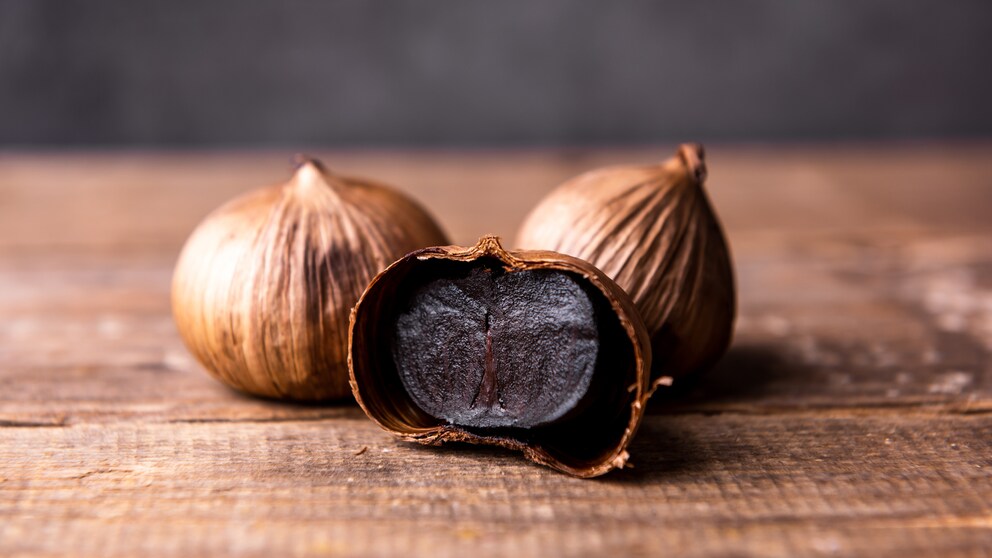
Ever spotted black garlic in a gourmet store? These dark bulbs aren’t a different variety but a special preparation. In Asia, black garlic is regularly used in cooking and is considered a delicacy—without causing bad breath. Moreover, this garlic is said to offer numerous health benefits. FITBOOK nutrition expert Sophie Brünke investigates this claim.
Overview
The Production of Black Garlic Takes Several Weeks
Black garlic takes time. The production process lasts several weeks, usually about three months. During this period, fresh garlic bulbs are stored in chambers where the temperature is consistently between 60 and 80 degrees Celsius, and the humidity is between 80 and 90 percent. Under these conditions, the garlic becomes soft and darkens—this is the same browning reaction that occurs when a slice of bread is toasted or meat is roasted. The sugars and amino acids in the food are chemically converted into melanoidins (nitrogen-containing compounds), which are responsible for the darker color. In technical terms, this is known as the “Maillard reaction.”
Black Garlic is Often Referred to as Fermented–but That’s Not Correct
Anyone looking into the production of black garlic will notice that the term “fermentation” is commonly used in this context. However, this is misleading, as black garlic is not a classic fermentation. Typically, the fermentation process is initiated by adding ferments, such as enzymes or fungi, which are absent in the production of black garlic. Well-known fermented foods include yogurt, sauerkraut, and kombucha.
Does Black Garlic Taste Different From Fresh Garlic?
The typical garlic flavor remains even after the process. However, besides the softer texture, there are other differences from fresh garlic: The taste is described as sweet, with notes of caramel, licorice, plum, and vanilla. Thanks to the production process, the bulb also loses its sharp aftertaste, as the sulfur compounds are reduced. This has another nice side effect: The bad breath after consuming black garlic is less pronounced. Therefore, black garlic is said to be more digestible.
Also interesting: Living to 100! 5 Foods From Japan That Might Make It Possible

These Plant-Based Foods Can Positively Influence Aging Processes

9 Foods That Are Good for the Liver
How the Bulb Can Be Used in the Kitchen
Since black garlic originates from Asia, it’s natural to use it to enhance dishes from those cuisines. Chopped into meals, the cloves add a sweet spice. You can also marinate the cloves beforehand or buy black, ground garlic as a spice—it has a long shelf life. Beyond Asian recipes, black garlic also works well as a side dish for grilling, in Mediterranean recipes as a topping on pasta or pizza. Sauces and chutneys also gain an extra layer of flavor from the dark bulb.
What Health Benefits Does Black Garlic Have?
White garlic has been thoroughly researched. The leek vegetable is said to combat cold viruses or prevent periodontitis. Garlic has also been proven to protect against the onset and progression of cardiovascular diseases.1 It is also considered a “cancer killer,” like leeks, onions, and shallots, with its protective effect against stomach and prostate cancer being particularly noted. But what does the research say about the dark variety?
How the Ingredients of White and Black Garlic Differ
Many studies attribute the described effects to the allicin in garlic, which is also responsible for the characteristic garlic smell. However, in black garlic, due to the production process, it is present in smaller amounts (the reason for less bad breath). Instead of allicin, the main compound in black garlic is S-allylcysteine, which also offers health benefits.2 Additionally, the content of secondary plant compounds increases during the production process. A 2021 review shows that the total phenolic content in black garlic is three to ten times higher than in fresh garlic. Furthermore, the flavonoid content is said to increase three to twelve times.3
Black Garlic Has a Stronger Antioxidant Effect Than Fresh Garlic
Due to changes in the composition of ingredients during production, black garlic has a much stronger antioxidant effect—a 2017 review confirmed this.4 Antioxidants capture harmful free radicals in the body, reducing oxidative stress in cells. This stress is involved in the development of several diseases, such as cardiovascular diseases, cancer, diabetes, Alzheimer’s, and Parkinson’s.
Garlic for the Heart
Initial clinical studies with extracts suggest that black garlic can lower blood pressure—especially the diastolic value—and improve vascular function. Positive effects on the blood lipid profile were also observed, such as an increase in HDL cholesterol and a decrease in apolipoprotein B, which is considered a risk marker for atherosclerosis. In lab and animal models, inhibition of platelet aggregation was also observed, which could theoretically protect against vascular occlusions.
Black Garlic Positively Affects Diabetes Markers
The aforementioned 2021 review presents several experiments on rats and mice. Improvements in various diabetes markers were observed, as black garlic improved insulin sensitivity, lowered blood sugar, reduced oxidative stress, and counteracted the failure of insulin-producing cells.
Black Garlic Could Prevent Liver Diseases
The review also shows positive effects on the liver. In rats, the administration of black garlic powder prevented glycogen formation in the liver and improved fat metabolism. Liver damage from oxidative stress was also reduced, and inflammation was decreased. These results are promising for black garlic as a preventive measure against cholesterol-related liver diseases.