


July 29, 2026, 11:02 am | Read time: 7 minutes
When temperatures soar, it’s grilling weather again. But to all enthusiasts eager to test their new skills: Be careful! High temperatures not only boost good moods but also create ideal conditions for bacteria. If you’re not careful, a pleasant day can quickly end in the hospital with food poisoning.
Why Hygiene Is So Important When Grilling
High temperatures promote bacterial growth, while raw meat can quickly contaminate ready-to-eat foods. Another common mistake: Meat often looks perfect on the outside but isn’t fully cooked inside. This can lead to food poisoning.
These Germs Can Lurk on Grilled Food
Campylobacter: These bacteria are particularly common on poultry. Infection often occurs during preparation—such as when the same knife or cutting board is used for raw chicken and then for salad. Typical symptoms include fever, abdominal cramps, nausea, and diarrhea. The infection usually clears up within a week, but complications can occur in rare cases.
Salmonella: These pathogens can be found in raw or undercooked meat and dishes with raw eggs. Particularly tricky: Freezing does not kill salmonella. Only sufficiently high temperatures make the bacteria harmless. The Federal Institute for Risk Assessment recommends cooking meat thoroughly.1
Don’t Fire Up the Grill Without Cleaning It
Has the grill been outside all winter? Then it should be thoroughly cleaned before first use. Even if the grill was used just a few days ago, it’s advisable to clean the grill grate before each barbecue evening and let it dry completely afterward.
If you’re grilling with charcoal, don’t start too early. The food should only go on the grill once the coals are fully glowing. They should glow red and be covered with a uniform gray ash layer. Only then does a consistent heat develop.
Don’t Underestimate Hands and Kitchen Utensils
Hands should be thoroughly washed with water and soap before preparation and after each contact with raw meat. This also applies after handling fire starters or charcoal. For kitchen utensils, use different cutting boards, knives, and grill tongs for raw meat and ready-to-eat foods. If the same utensils are used multiple times, they should be thoroughly cleaned in between.
A widespread misconception persists: Raw chicken or other meat should not be washed. Doing so can spread germs via small water splashes onto work surfaces, hands, or kitchen utensils.
Let Frozen Meat Thaw in the Refrigerator
Taking the food out of the freezer just before grilling risks uneven cooking. While the outside may darken, the inside can remain raw or even frozen.
Therefore, it’s recommended to thaw meat overnight in the refrigerator. It should be placed on the bottom shelf in a container with raised edges to prevent meat juices from contaminating other foods.
If there’s no time to thaw in the fridge, you can use the microwave’s defrost function. Prepare the meat within 24 hours and eat it promptly.
Also interesting: Chicken Consumption Linked to Higher Risk of Death From Stomach and Intestinal Cancer
Pay Attention to the Use-By Date
Before grilling, it’s worth taking a quick look at the packaging. The use-by date should always be adhered to. Foods past their use-by date can be harmful to health.
The best-before date is different. It mainly provides information about taste and quality. Many foods are still safe to eat after the best-before date if stored properly and show no signs of spoilage.
Don’t Mix Raw and Cooked Grilled Food
A classic grilling mistake is cross-contamination. This occurs when germs from raw meat transfer to cooked foods or foods that won’t be heated further. Separate storage of raw meat, salads, bread, and other ready-to-eat foods prevents cross-contamination. Separate plates, grill tongs, and cutting boards further reduce the risk of germ transmission.
Marinades also pose a frequently underestimated risk. If a marinade has already come into contact with raw meat, it should not be used later as a sauce. Only marinades that have not touched raw meat during preparation can be safely used afterward.2
Don’t Take Meat Off the Grill Too Early
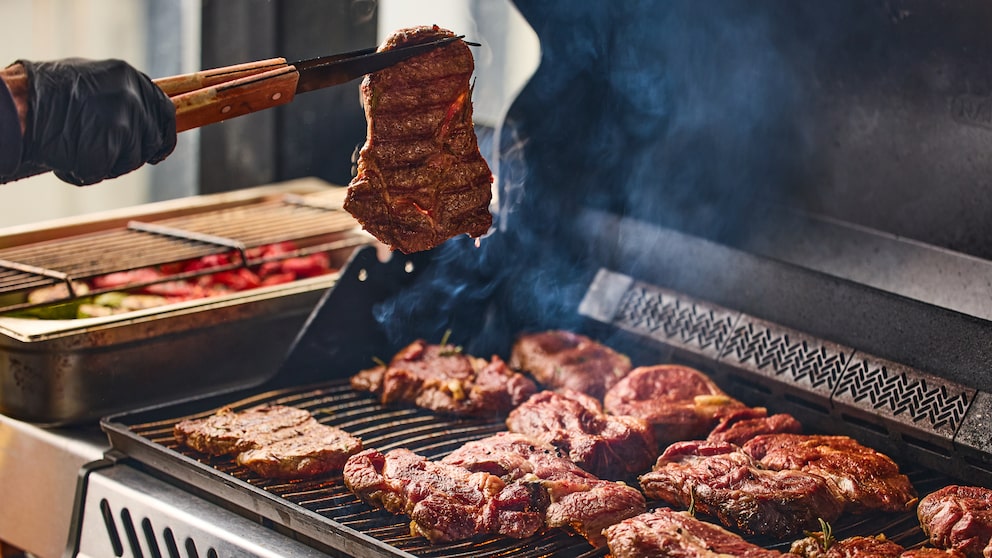
Just because the outside is nicely browned doesn’t mean the meat is cooked inside. Especially at high temperatures, the surface can darken quickly while the inside remains insufficiently heated.
These Types of Meat Must Always Be Fully Cooked
Chicken, pork, and ground meat products like burgers, sausages, or kebabs must be fully cooked. When meat is minced, potential pathogens can spread throughout the product. Beef is an exception. Steaks can be served rare or even bloody if the outside is sufficiently seared.
Combine Oven and Grill
You can also pre-cook chicken and pork in the oven and finish them on the grill. This retains the typical grill flavor while reducing the risk of the meat being raw inside. This method can save time, especially for larger grilling gatherings.
Never Serve Burgers and Sausages Half-Cooked
A juicy burger sounds tempting—but at home, it should never be served rare. The reason: Grinding spreads potential germs from the surface throughout the ground meat. If the burger isn’t fully cooked, the pathogens can survive inside. The same applies to other ground meat products like sausages or kebabs.
Some restaurants intentionally offer rare burgers, but they use additional hygiene concepts and controls. These are difficult to implement in a private household. Therefore, I advise you to always cook burgers thoroughly at home.

Causes and Symptoms of Food Poisoning
Healthy Meal Prep with the Air Fryer: Cook for the Week in Just 2 Hours
Don’t Be Negligent When Serving and Handling Leftovers
With the finished grilled food, the work isn’t over. Germ transmission can also occur during serving.
Don’t Break the Cold Chain
Chilled foods should only be kept out of the refrigerator briefly. Using a cooler bag with ice packs allows salads, desserts, or other sensitive foods to be kept cool until just before serving. Direct sunlight should also be avoided.
Don’t Leave Leftovers Out Too Long
After a barbecue, sausages, steaks, or salads often remain. However, they shouldn’t be left on the garden table for hours. Cooked foods should cool and be placed in the refrigerator or a cooler bag with ice packs within one to two hours—especially on hot summer days.
Grill leftovers should also be brought indoors as quickly as possible to protect them from direct sunlight and from insects and other animals.
Store and Reheat Properly
Leftover grilled food should be consumed within 48 hours. When reheating, only reheat once and ensure the food is thoroughly heated. If you don’t want to eat the leftovers soon, cooked foods can also be frozen.
Special Caution for Children, Seniors, and Allergy Sufferers
Not everyone reacts equally to food germs. Young children, older adults, and people with certain pre-existing conditions have a higher risk of severe food poisoning. Extra care should be taken when preparing food for them.
Before a barbecue, the British food authority also recommends asking guests about possible food allergies or intolerances. Allergen-containing and allergen-free foods should be prepared separately to avoid cross-contamination. By following these simple rules, you can significantly reduce the risk of food poisoning—and enjoy a more relaxed barbecue evening with family and friends.