


October 4, 2025, 6:22 am | Read time: 3 minutes
In Germany, there are thousands of types of bread, and they are consumed on many occasions and in different meals. But which varieties are particularly healthy? FITBOOK nutrition expert Sophie Brünke explains what whole grain actually means and how not to fall for seemingly healthy products.
How Many Types of Bread Are There in Germany?
We consume about 61 kilograms of bread per year.1 According to the German Bread Institute, there are over 300 varieties. Germans prefer mixed breads, which are baked with a mix of wheat and rye flours, at 32.8 percent. Toast ranks second at 20.3 percent, followed by breads with grains and seeds (15.2 percent). Whole grain breads account for only 10.5 percent, while pure wheat and rye breads each make up 5.2 percent of the bread market.2
White Bread, Rye, Multigrain, Mixed Bread? Who Can Keep Track?
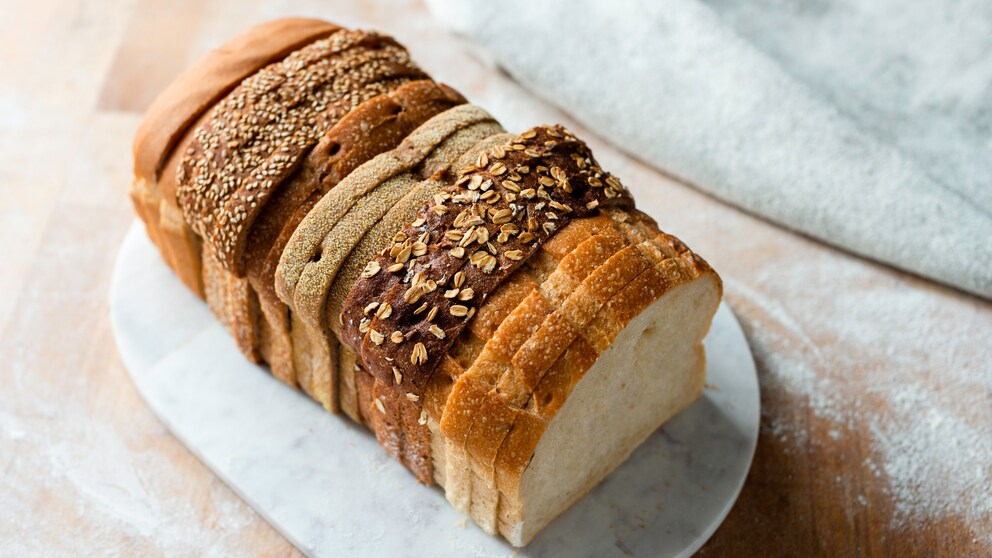
It is indeed a bit complicated. White bread is typically a wheat bread made with at least 90 percent wheat flour. In a wheat mixed bread, more than half must be wheat flour. These quantity requirements apply similarly to rye flour in rye breads or rye mixed breads.3 Unlike white bread, the term “black bread” is not as clear. Some understand it to mean breads made from rye flour, while others refer to whole-grain breads. Or even multigrain breads, which contain at least three types of grains.
Also interesting: How Unhealthy Is Toast Really?

“Valuable Grains”? What’s Really in Children’s Cookies

How Unhealthy Is Toast Really?
What Does Whole Grain Actually Mean?
The term has nothing to do with the grain itself. Whole-grain breads are made from wheat, rye, spelt, or other types. They can even be mixed breads. What matters is that at least 90 percent whole-grain flour is used, which contains the full kernels—germ, endosperm, and bran. This also makes the breads appear darker.
What Makes Whole-Grain Bread So Healthy?
For regular flour, usually only the endosperm is used, which contains the starch necessary for human nutrition. However, the germ contains important fats, and the bran layer contains valuable proteins, vitamins, and minerals such as calcium, phosphorus, and iron—as well as indigestible fiber that ensures smooth digestion and a healthy gut flora. Whole-grain bread contains about three times the amount of minerals and twice as many vitamins and fiber as white bread.