

June 25, 2026, 8:10 am | Read time: 7 minutes
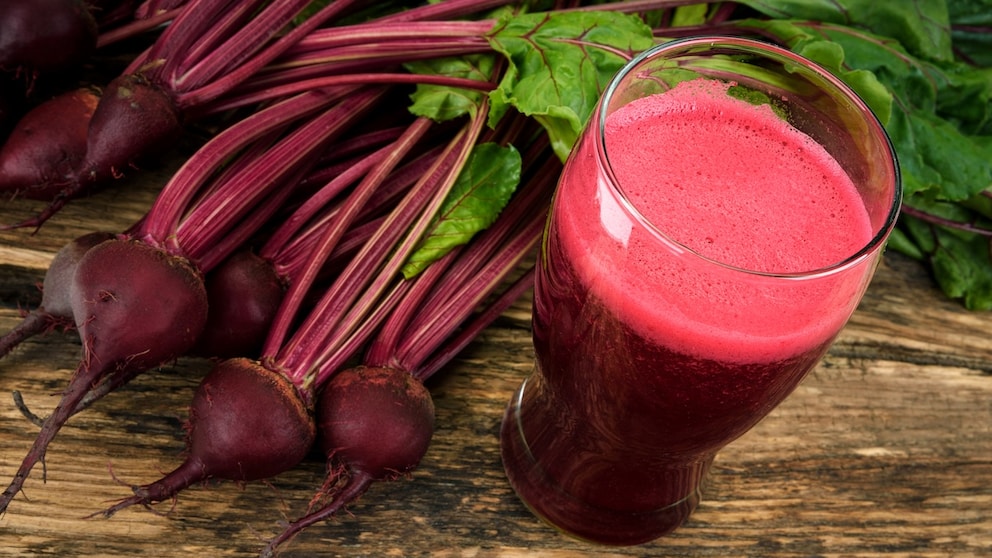
Children generally don’t favor beets due to their earthy taste–athletes, however, appreciate them all the more. Extreme athlete Arda Saatçi, for instance, has sworn by the juice for years and drinks it daily. Beets contain valuable ingredients that can enhance performance and support various bodily functions. FITBOOK author Laura Pomer explains which ones.
Studies Confirm the Effects of Beet Juice
Healthy beet juice is becoming a sports drink in the fitness world, promising more performance during training and improved recovery. Arda Saatçi, who recently ran 600 kilometers across the U.S., drinks it generously to boost his performance and endurance. Whether there’s really something to it has already been the subject of various scientific studies–with positive results.
Researchers at the University of Exeter in the U.K. had 16 athletes (including rugby, football, and hockey players) drink 140 milliliters of beet juice daily for a week.1 On the seventh day, the men were tasked with solving a series of cognitive challenges under time pressure on a cycle ergometer.
Later, the test was repeated. This time, the participants drank beet juice from which the nitrate had been removed. Nitrates, salts of nitric acid, are usually present in large quantities in the beet. The participants were unaware in the blind study that they were dealing with a specially prepared juice on the second attempt.
The results showed that under the influence of nitrate, the test subjects were three and a half percent more efficient and performed three percent better in the perception/cognitive test. “The study results suggest that beet juice improves both physical performance and decision-making, which are important in sports like rugby and football,” explains Professor Andrew Jones in a press release. He attributes the positive effects particularly to the nitrate.
Read more from our colleagues at myHOMEBOOK: The best tips for planting beets in the vegetable garden
More Oxygen in the Muscles
Nitrate naturally occur in the soil and provide a good oxygen source for (crop) plants to form amino acids. But what does it do for humans?
After consumption, the body converts plant nitrate into nitric oxide via saliva. This messenger substance dilates the blood vessels, boosting blood and oxygen flow to the muscles. The muscles work more efficiently, and the heart requires measurably less oxygen under stress, relieving the entire system. Additionally, the mix of vitamins, minerals, and antioxidants in the beet accelerates recovery after a workout.

Positive Effects on High Blood Pressure
Beet juice is also good for the blood in your body–at least scientific studies suggest so. Regular consumption of beet juice seems to lower blood pressure naturally.2, 3
To achieve the reduction demonstrated in studies, you would need to drink about 300 to 500 milliliters daily of commercial juices from the supermarket.4,5 This would lower your blood pressure about half as much as a low-dose blood pressure pill. The effect sets in about two to three hours after drinking and lasts up to 24 hours.6
But beware:
The juice is not a miracle cure that simply replaces prescribed medications or doctor visits. Those already taking blood pressure medication should never change the dosage on their own and should briefly discuss juice consumption with their doctor.
Additionally, beet juice contains oxalic acid, which can cause stomach and intestinal problems in some people. People prone to kidney stones (calcium oxalate) should also not drink large amounts of the juice without medical consultation.
Protection Against Cavities
An Austrian study suggests that beets may protect against cavities.7 According to the scientists, nitrate is converted into nitrite by bacteria in the oral cavity, which could indirectly inhibit the growth of cavity-causing bacteria. For their research, the scientists had 46 participants drink either beet juice or a placebo for two weeks.
However, it should be noted that the study cannot be considered representative due to the limited number of participants.
Beet Juice in Menopause
A 2024 study examined how beet juice consumption affects menopause.8 During menopause, the female body produces less estrogen, which can lead to poorer blood vessel function and an increased risk of cardiovascular disease. To clarify the significance of the vegetable juice in this regard, scientists at Pennsylvania State University recruited 24 healthy women in postmenopause. They were divided into:
- Early postmenopause: One to six years after the last menstrual period
- Late postmenopause: More than six years after the last menstrual period
Under strict dietary guidelines, one group of participants drank nitrate-rich beet juice daily, while the other group received nitrate-poor beet juice as a placebo. Before consumption, the so-called flow-mediated dilation of the brachial artery was measured–a standardized test to determine vessel function. The test was repeated 24 hours after the last intake. About 24 hours after the seven-day juice consumption, a venous blood sample was taken.
Beet Juice Promoted Blood Flow
The researchers observed a greater increase in flow-mediated dilation of the brachial artery in the group that consumed nitrate-rich beet juice. This means: Blood circulation improved in the women, reducing the risk of cardiovascular disease, which is particularly high during menopause. However, the positive effects of consumption only occurred immediately during the seven-day consumption phase–the effect faded just one day after the last intake.
How to Recognize Circulatory Disorders–and What Helps

8 Reasons to Eat Blueberries Every Day
Tips for Purchase, Storage, and Preparation
When buying fresh produce, make sure the beets are firm and plump. The skin should be smooth and unblemished. Beets stay fresh for about two weeks if stored in the vegetable compartment of the refrigerator. The main season for beets is from September to March, but they are available year-round. They are also sold pre-cooked and vacuum-packed, which naturally extends their shelf life.
- As a side dish: Place the beets with the skin in salted water. Ensure the skin is intact, as otherwise, the beets would bleed excessively, according to BZfE. Depending on size, the vegetable needs to cook for about 40 to 60 minutes. If you rinse the skin with cold water afterward, it can be peeled off more easily.
- As oven-roasted vegetables: Peel the beets and cut them into sticks. Then drizzle with a little olive oil and season with salt and pepper. Depending on taste, herbs like rosemary and thyme or curry also go well. Bake the vegetables in the oven at 180 degrees until tender–this takes about 20 to 30 minutes, depending on size. Hummus, herb quark, or a yogurt dip pair particularly well with the finished oven-roasted vegetables.
- As raw food: Clean the beets under running water, cut off the root base, then thinly peel the beets. Depending on use, you can slice, dice, or grate them. Combine with orange, carrots, and apple, for example, and serve as a salad.
- As carpaccio: Fresh beets also taste excellent as an appetizer. Thinly slice the beet and serve as carpaccio with arugula, goat cheese, and walnuts.
Speaking of bleeding: Beets stain heavily, so it’s best to wear gloves and an apron when handling them.
Conclusion
Beet juice has a proven impact on athletic performance and recovery. It is recommended as a sports drink and likely also helps (supportively) in lowering blood pressure–but does not replace treatment by a specialized doctor for severe hypertension.
By the way: Before you get alarmed when looking into the toilet bowl, your urine might turn reddish after consuming beet juice. This is due to the vegetable dye and, in all likelihood, has no serious implications.