

January 26, 2026, 4:21 pm | Read time: 3 minutes
Many people assume that only women can have diastasis recti after pregnancy. However, that’s not true: Women who haven’t given birth and men can also be affected. Often, the causes include being overweight, significant weight loss, chronic constipation, or abdominal surgery. But don’t worry! With some exercises, you can train away the bothersome abdominal gap.
To determine if you have a rectus diastasis—a separation of the straight abdominal muscles—you can feel for it (FITBOOK reported). Lie on your back, bend your legs, and slightly lift your head. Below the navel, you can place your fingers in the gap of the straight abdominal muscles—the more fingers you can press in, the larger the gap. Simple exercises can help close the rectus diastasis.
Overview
What to Watch Out For
With a rectus diastasis, it’s important to choose the right exercises to avoid widening the gap. This means you should initially refrain from training the straight abdominal muscles until the gap is completely closed. Exercises like crunches, sit-ups, and similar should be avoided.
It’s crucial to engage the pelvic floor and strengthen the oblique and transverse abdominal muscles to help close the gap. A variety of exercises are suitable for this. Below, we present four of them.
1. Pelvic Tilt
A good exercise for rectus diastasis is the pelvic tilt, as it also activates the pelvic floor muscles.1 Lie on your back with your legs bent and slightly away from your buttocks. Your arms should be extended alongside your body. Now, engage the pelvic floor muscles—it feels similar to holding back urine. Simultaneously, tilt your pelvis by pulling it toward your chest and pushing your navel toward the floor. Hold this position for a few seconds, then briefly relax before repeating the exercise.
Also interesting: 3 Exercises for Tensing and Relaxing the Pelvic Floor
2. Bridge
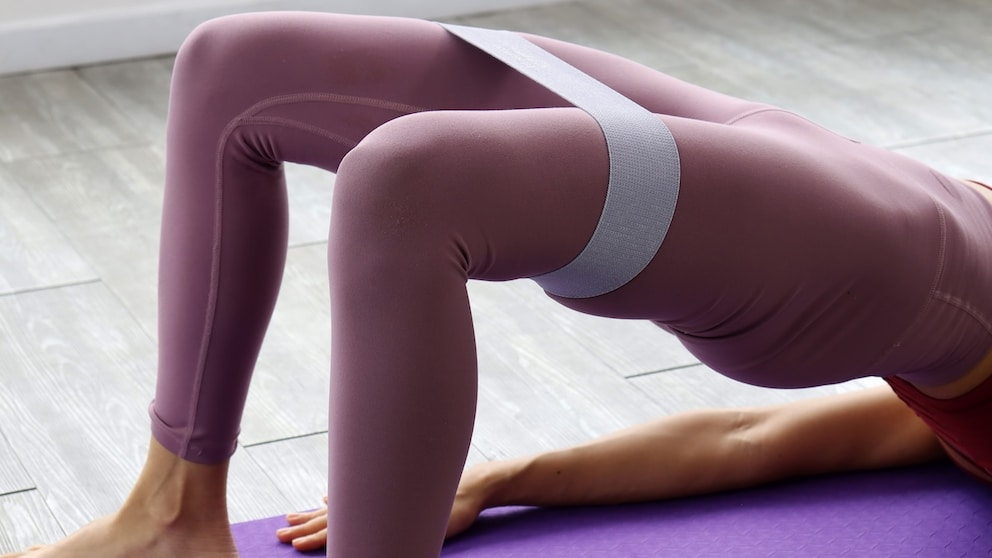
Most people probably know this exercise as the glute bridge. However, unlike the movement that primarily targets the glutes, you hold the top position in the bridge. Lie on your back with your legs bent and slightly away from your buttocks. Your arms should be extended alongside your body. Now, draw in your navel to activate the pelvic floor muscles. As you inhale, lift your pelvis toward the ceiling, vertebra by vertebra, slowly until your body forms a straight line from shoulders to knees. Hold this position for about ten seconds. As you exhale, return to the starting position.

5-Minute Wall Workout: Activate More Muscles Than Walking

Five Exercises That Perfectly Prepare You for Squats, Deadlifts, and Push-Ups
3. Pulling Knees to Chest
For this exercise with a rectus diastasis, lie on your back on the floor, bend your legs slightly away from your buttocks, and keep your arms extended close to your body. Engage the pelvic floor muscles again and first pull the right knee toward your chest while inhaling. As you exhale, extend the right leg so that it is parallel to the floor. It’s important that your back remains on the floor throughout the exercise and the pelvis is aligned straight. After several repetitions, perform the movement with the left leg.
4. Knee Lifts in All-Fours Position
For this exercise, get into the all-fours position, pull your navel upward, and draw your abdominal wall inward.2 As you inhale, slowly lift the right knee slightly off the floor and hold the position for a few seconds. As you exhale, return to the starting position and repeat the movement with the left side.