



July 31, 2025, 5:39 pm | Read time: 5 minutes
The plank is one of the most well-known exercises for the abdominal muscles. However, if done regularly, it can become boring and gradually disappear from the workout routine. That’s unfortunate because there are plenty of plank variations that make the exercise not only more varied but also more challenging. Personal trainer and FITBOOK expert Alina Bock explains how you can adapt the classic plank for even more effective training.
By modifying the forearm plank, you can train not only the abdominal and core muscles but also other muscles throughout the body. Additionally, the combination of multiple movements enhances coordination and thus the interaction of various muscles in the body.
The Effectiveness of the Plank
The plank is one of the most effective abdominal exercises for a reason–unlike crunches or sit-ups, which mostly target the rectus abdominis, the plank works the entire core as well as some back muscles. It also promotes coordination and stability, helping to prevent back pain and injuries.
Different Variations of the Plank
Although the plank already engages a variety of muscles, there are variations that make the exercise even more diverse and incorporate additional muscles. This not only increases muscle activation but also improves the interaction of the engaged muscles.
Alternating: Plank on Knees to Plank on Toes
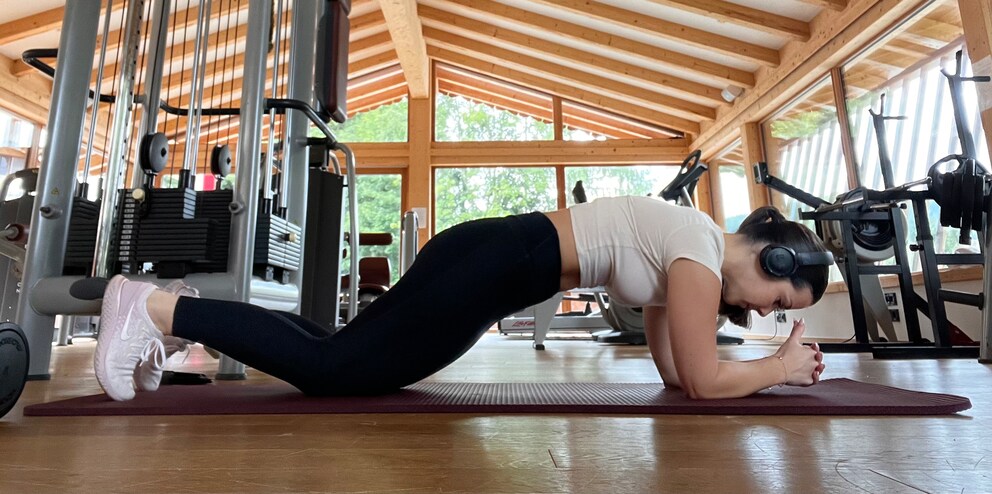
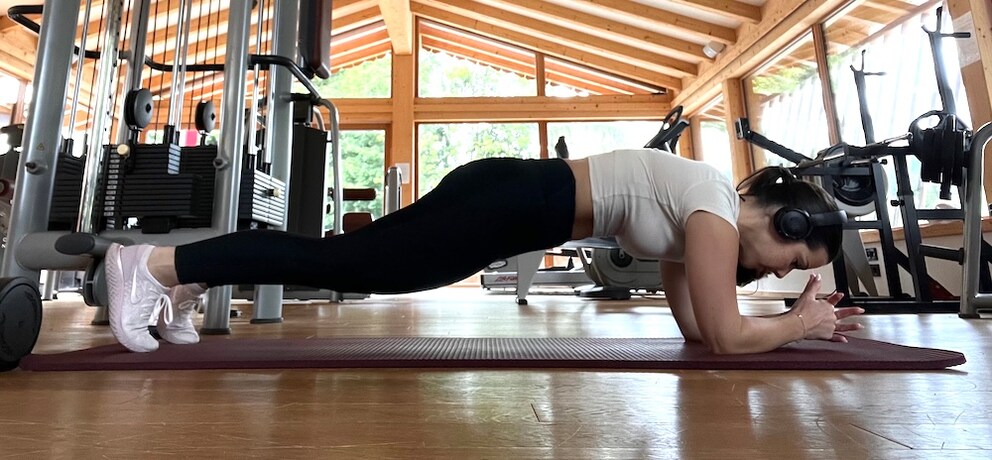
Plank beginners sometimes struggle to maintain the tension and thus the duration of the plank. This plank variation is ideal for them: alternating from plank on knees to plank on toes. This variation distracts from the effort through activity during the exercise and leads to a sense of achievement through the extended duration, thus increasing motivation to perform the exercise.
- Start the exercise on your knees.
- Create abdominal tension by pulling in your navel and tilting your pelvis toward the floor.
- Hold for 15 seconds.
- After 15 seconds, lift your knees off the floor and hold the plank on your toes for another 15 seconds.
- After another 15 seconds, return to your knees.
- Continue alternating until you can no longer maintain abdominal tension.
Plank Up and Downs
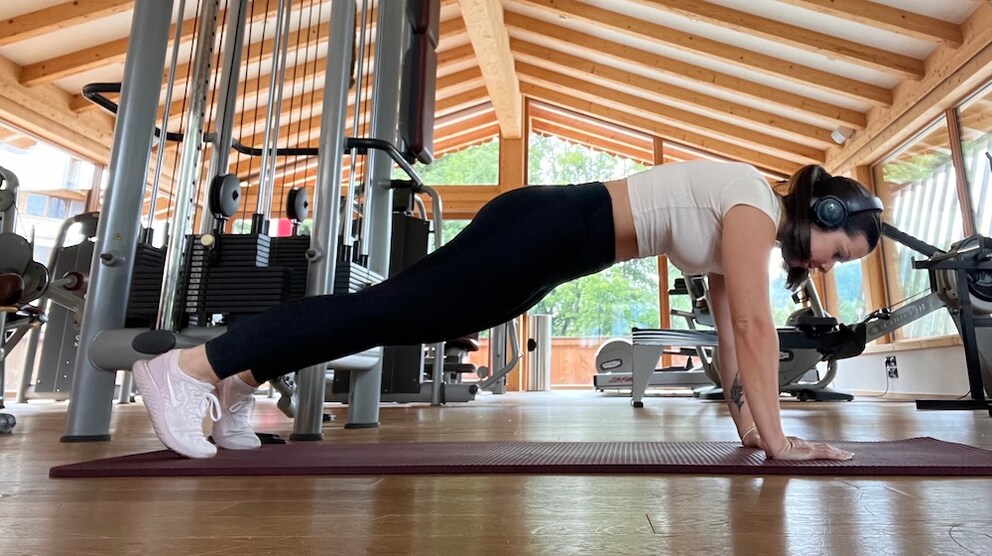
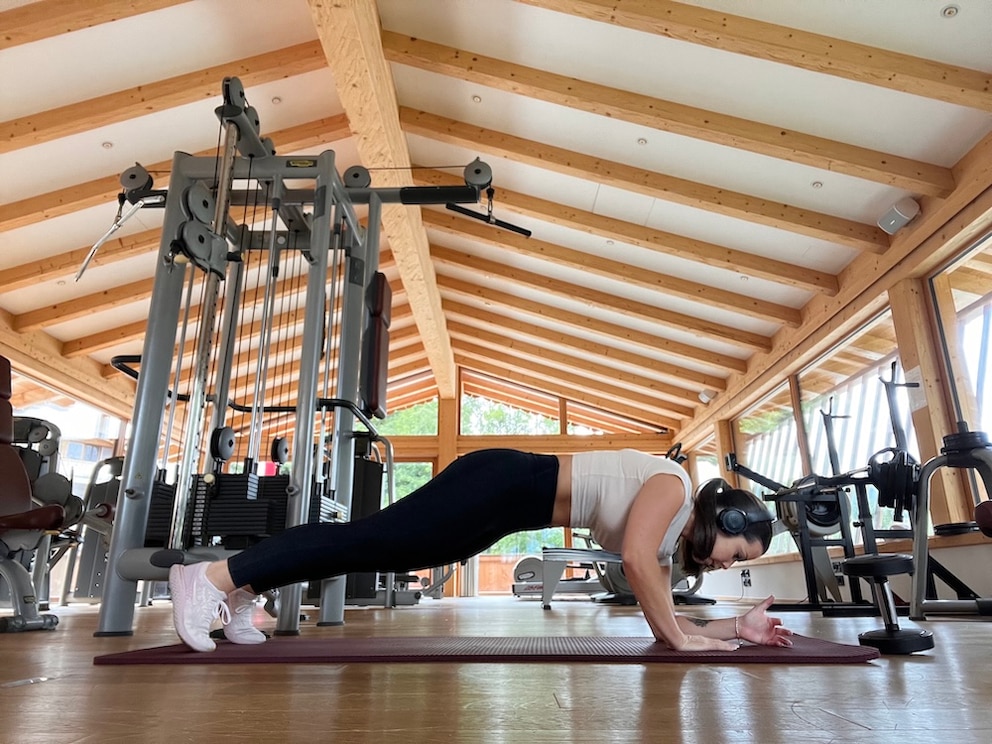
A modification of the forearm plank that involves the shoulder muscles is Plank Up and Downs. In addition to the shoulder and core muscles, the triceps and chest muscles also provide support and stabilization.
- Start in the regular plank position on your elbows and toes.
- From here, place one hand on the floor instead of the elbow.
- Follow with the other hand. Meanwhile, straighten your arms and push yourself up into the push-up position.
- Then return to your elbows.
- To avoid imbalance, switch the leading arm each time you push up.
Knee Lift with Leg Extension
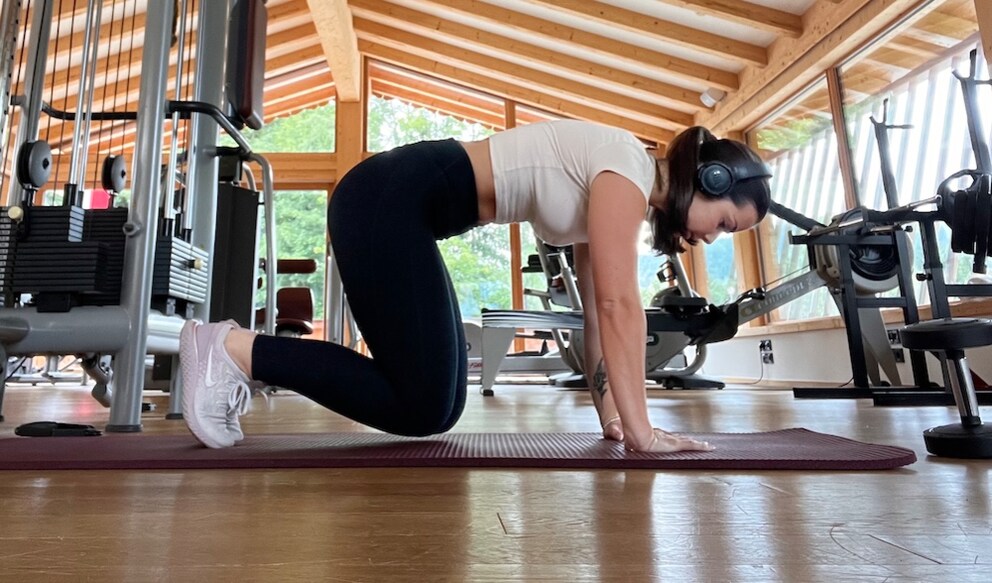
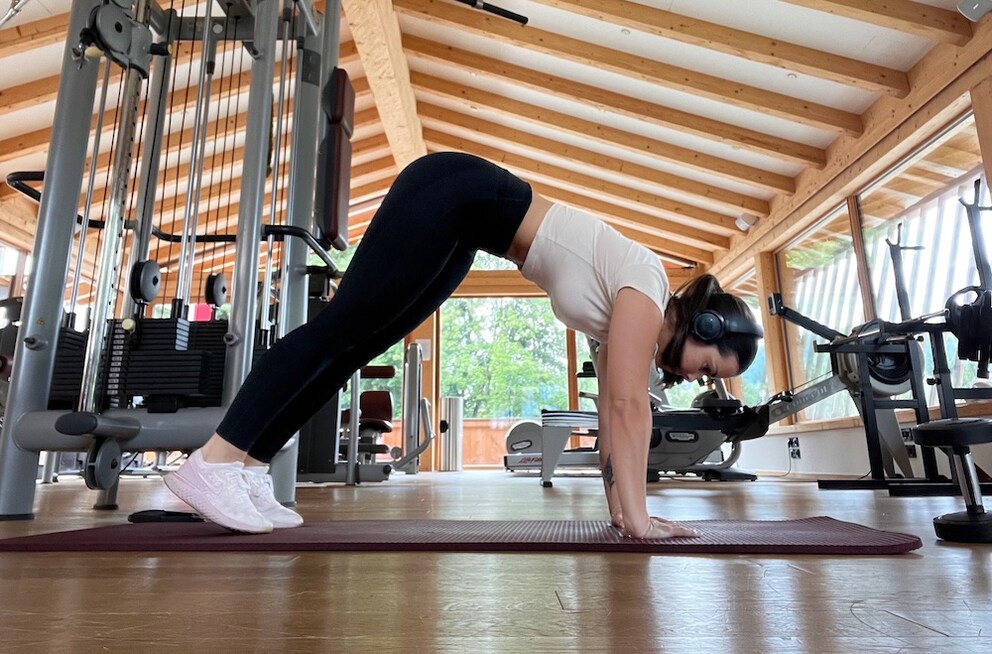
An exercise that involves not only the core but also the leg muscles, particularly the quadriceps, is the Knee Lift with Leg Extension.
- Start in a tabletop position. Position your legs at a slightly smaller angle than 90 degrees.
- Place your toes on the ground and lift your knees slightly off the floor.
- Hold this position briefly.
- Then extend your legs and lift your hips upward–similar to the yoga pose “downward-facing dog.”
- Your thigh muscles should be tightly engaged in this position.
- Now bend your legs again and lower your knees just above the floor.
- At no point should your knees touch the ground. Perform the Knee Lift with Leg Extension 10 to 15 times in your workout.
Plank Knee to Elbow
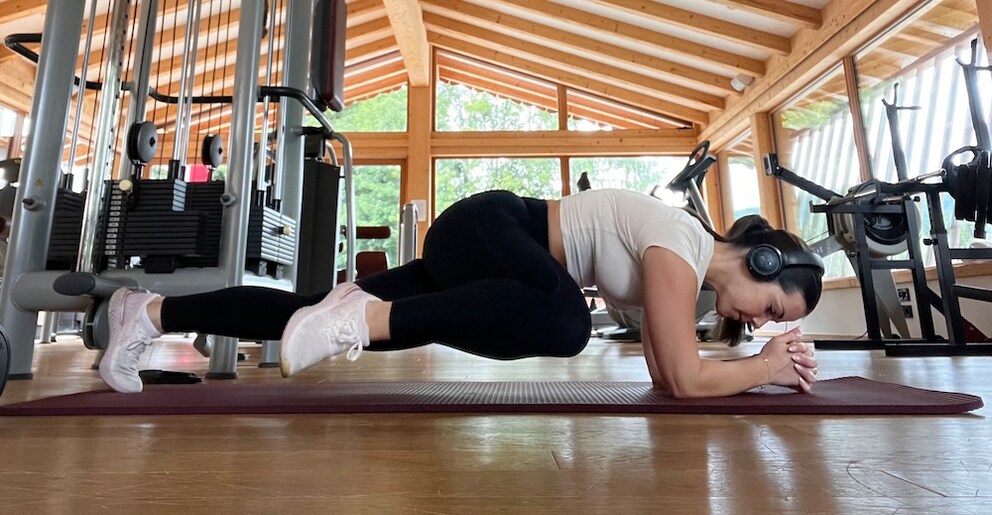
The following exercise is suitable for advanced practitioners who can hold the plank effortlessly for an extended period without losing abdominal tension. The unique aspect of this variation is that the practitioner brings the knee toward the elbow on one side, focusing on the leg muscles. Additionally, this modification of the forearm plank presents a challenge for coordination and balance due to its complexity.
- Begin in the regular plank position. Then bring the right knee toward the right elbow.
- Perform the movement slowly to maintain balance and activate the muscles.
- Then return to the starting position.
- Once there, switch sides. Now bring the left knee toward the left elbow.
- You can perform the exercise 10 to 15 times per side, depending on your endurance.
Plank Row
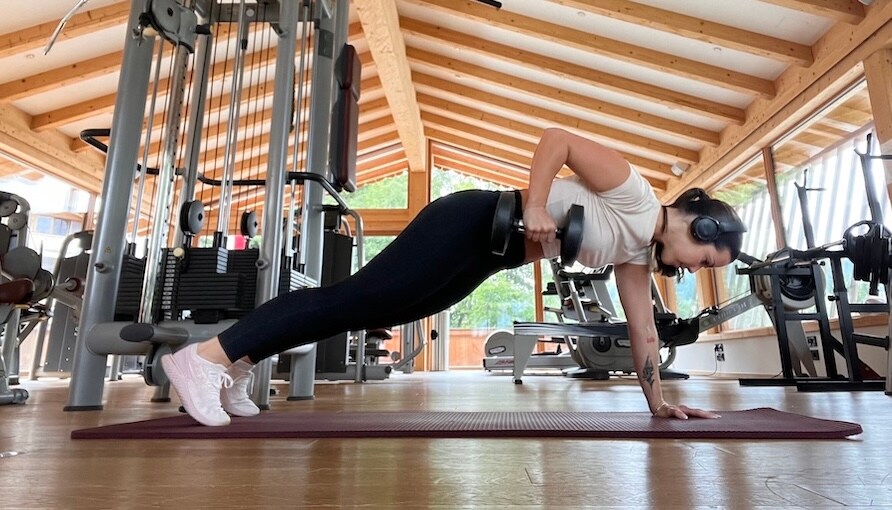
After combining the plank with exercises for the shoulder and leg muscles, it’s now time to include the back muscles.
- Start in the plank position on your hands.
- Place two dumbbells next to your hands. Due to the complexity and balance required, the weight should not be too heavy (do not use the weight you typically use for standing rows).
- Create tension in your abdomen.
- Begin the exercise by grabbing a dumbbell with one hand and slowly lifting it in a rowing motion to the side of your body at navel height.
- Slowly set the dumbbell back down and then switch sides.
- Try to keep your body as still and stable as possible, avoiding rotation.