


July 24, 2025, 9:12 am | Read time: 6 minutes
Squats, also known as knee bends, are among the best strength exercises because they target multiple muscle groups simultaneously. However, mistakes can easily creep into this important exercise. FITBOOK explains what to watch out for when doing squats and how to perform them even more effectively.
The squat hype in gyms remains unbroken. While the exercise was once primarily performed by experienced strength athletes, hobby athletes have long recognized the importance of incorporating it into their training plans. As a compound exercise that trains large muscles, squats boost metabolism and testosterone production, supporting overall muscle growth. They also help improve posture. Of course, squats are most effective when performed correctly. That’s why we have a few tips on how to execute squats more effectively.
1. Pay Attention to Proper Form
Proper form is crucial when doing squats. It not only protects against injuries (such as knee injuries) but also increases the effectiveness of the squats. Even seasoned athletes need to make slight adjustments from time to time. Pay attention to the following:
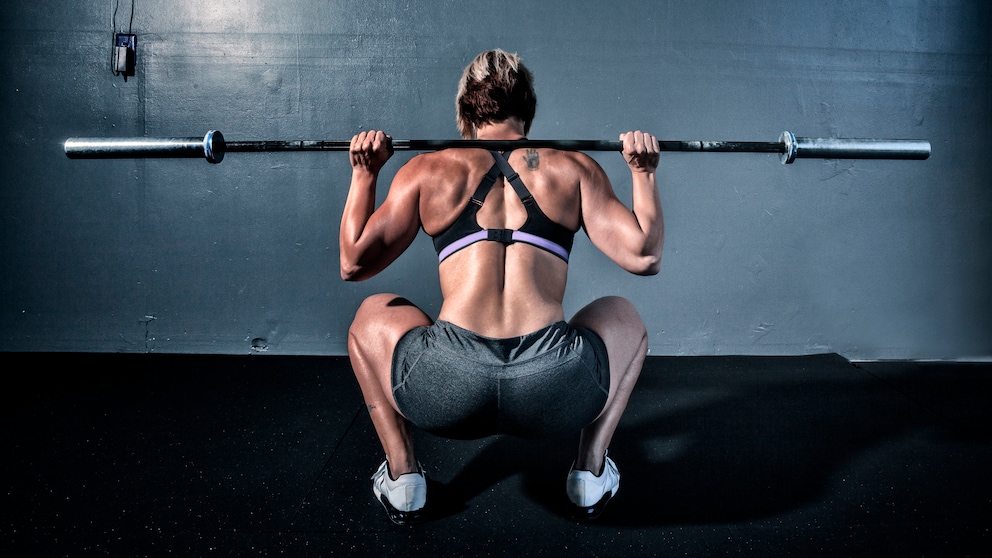
- Perform the exercise with full body tension. A strong core is particularly important to prevent excessive strain on the back. Keep the upper body straight and upright, leaning slightly but not too far forward. When moving downward, push the hips back and down from the hips. When moving upward, maintain tension in the legs (keep knees slightly bent and engage the glutes).
- Avoid lifting the hips too quickly. The body (legs, hips, torso) should move upward simultaneously to prevent overloading individual muscles (such as the lower back).
- Control the exercise by performing squats in front of a mirror.
- Alternatively, you can film yourself to identify posture errors.
- Occasionally train with light weights to focus better on execution.
“Breathe deeply into your belly and keep your abdominal muscles tense throughout the movement,” advises personal trainer Mitch Raynsford in an article from “Men’s Fitness.” “Lower yourself for three seconds, let your knees go over your toes without collapsing inward, and keep your chest up. Then remain in this firm, controlled position. Push your feet into the ground and lift yourself simultaneously with your hips and chest,” says the expert. It sounds simple, but the higher the weight, the more challenging flawless execution becomes.
2. Use Full Range of Motion
Not everyone can go as low as possible in squats due to a lack of flexibility in the ankles and the back of the legs. However, those who can should aim to go as low as possible. Additionally, it’s beneficial to use the “full range of motion” to make the squat as effective as possible. This means performing the entire range of motion, going as deep as possible and then almost completely back up. Almost, because it’s better for muscle tension and the joints not to fully extend the legs at the top of the exercise.
3. Variation Increases Squat Effectiveness
Always performing the same squats is not only boring but also not particularly effective. Muscles quickly adapt to repetitive routines and, as a result, don’t grow as quickly. The solution is variation.
There are several ways to vary squats. You can change your body position, add weights such as a barbell, and alter its position:
- Depending on whether your legs are shoulder-width apart, closer together, or wider apart, different muscles are targeted. A narrow stance primarily trains the knee extensors, while a wider stance (sumo squat) targets the glutes and the back of the legs.
- In addition to the classic placement on the trapezius muscle (on the upper back or shoulder girdle), you should also try placing the barbell in the front rack position on the front shoulder head. This targets the quadriceps and front leg muscles more and relieves the lower back.1
- A significantly higher level of difficulty is achieved with hanging weights or chains on the Earthquake Bar (flexible barbell). The muscles have to work harder to stabilize and balance the wobbly load, leading to greater muscle growth, as studies show.2
Also interesting: What impact do stance width and barbell position have on squats?
4. Strengthen Muscles with Other Exercises
The better developed the muscles are, the easier it is to perform squats correctly. Therefore, the targeted muscles should be strengthened with other individual exercises. Exercises for the thighs, calves, glutes, abs, and lower back are particularly suitable. These include:
- Leg extension machine
- Leg curl machine
- Leg press
- Kickbacks with a straight leg on the machine (for the glutes)
- Hip thrust (for the glutes)
- Hyperextension bench (for the lower back)
Also interesting: Learn Pistol Squats – Guide with Pre-Exercises for Beginners

Why Glute Workouts Are the New Ab Workouts–and My 7 Exercise Tips

Strengthen Your Core: 6 Pro Exercises for Core Power
5. A Strong Core is Essential
To perform squats more effectively, a strong core is necessary. During execution, it’s important to engage the abs and surrounding muscles (the core). However, this is only possible if the muscles in this area are well-developed. Therefore, it’s important to specifically train the core with individual exercises. These include:
- Planks – the classic. They target the legs, glutes, and abs simultaneously.
- Pallof Press – the alternative. The cable machine specifically targets the core muscles.
6. A Training Partner Corrects and Assists with Muscle Failure
“Four eyes see more than two,” goes a saying. And it certainly applies to fitness training. While one might be lenient with their own mistakes, a training partner ideally provides honest feedback.
Additionally, a training partner helps push to the limit. You can only train safely to muscle failure if someone can step in to assist if you can’t complete the last repetition on your own. This also helps with performing squats with heavy weights and contributes to executing squats more effectively–and safely.