


January 8, 2026, 7:53 am | Read time: 5 minutes
Whether in the studio or at home, on the reformer or on the mat: Pilates is the ultimate workout for strength and flexibility. But which of the numerous Pilates exercises are actually the most effective for training the entire body efficiently and without much fuss? FITBOOK author and Pilates trainer Nina Ponath presents her top 7.
For a month now, I have been the proud owner of my own Pilates studio in Hamburg. An experience that is incredibly enriching, yet sometimes pushes me to my limits, because making Pilates classes challenging and varied at the same time is not so easy. How do I create variety while ensuring that my participants truly train their bodies holistically?
You Don’t Have to Reinvent the Wheel. Nor Pilates
In fact, as I described here, there are 34 original exercises that Pilates founder Joseph Pilates developed under the name “Contrology,” alongside the numerous Instagrammable variations and extensions that sometimes barely resemble Pilates at all. Do you have to do them all to get fit? I think: No! Pilates should be fun and challenging. Therefore, it’s perfectly okay for exercises to be developed and varied further. For a challenging workout, however, you don’t have to complete the full program every time. Essentially, a few exercises that you can occasionally vary or slightly modify are enough to challenge your body holistically. In my opinion, a good full-body workout in the Pilates style should address all major muscle groups: the core (the powerhouse), the entire posterior chain, the legs, and the flexibility of the spine.
Which seven exercises form my absolute foundation, I reveal here.
Pilates: The 34 Traditional Exercises
4 Pilates Exercises for Strong Glutes
The Pilates Full-Body Workout: My Top 7
1. The Hundred
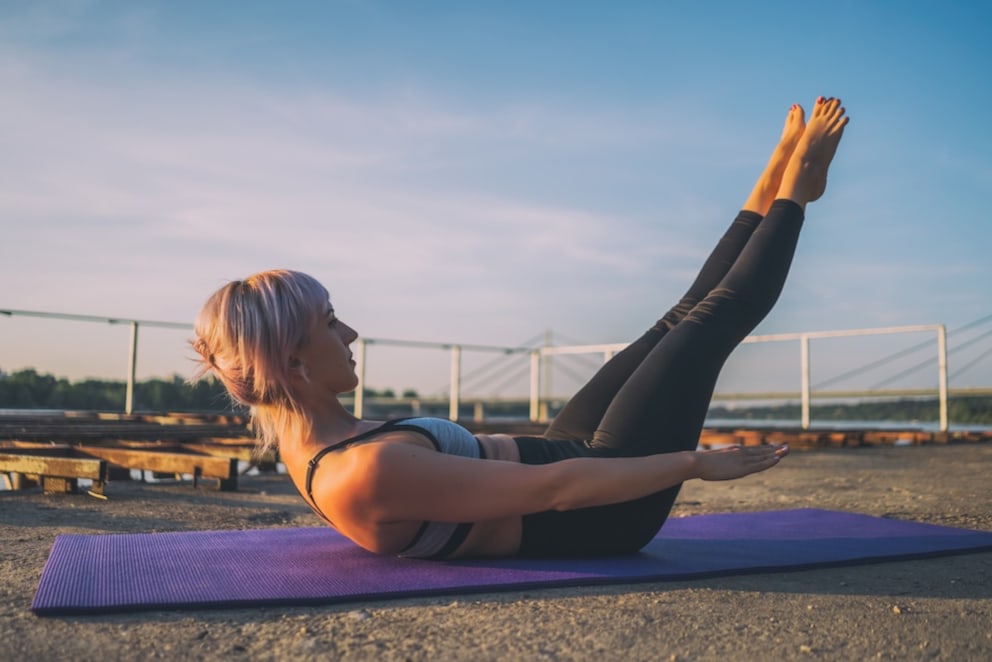
The classic must not be missing in any Pilates class. Why? Because it is the perfect warm-up. The rapid arm movements and conscious breathing stimulate circulation and pulse, and immediately activate the powerhouse.
Here’s how: From a supine position, lift arms and legs (V-position). Move the arms up and down in a controlled manner while breathing deeply in and out–until you reach 100.
2. The Shoulder Bridge
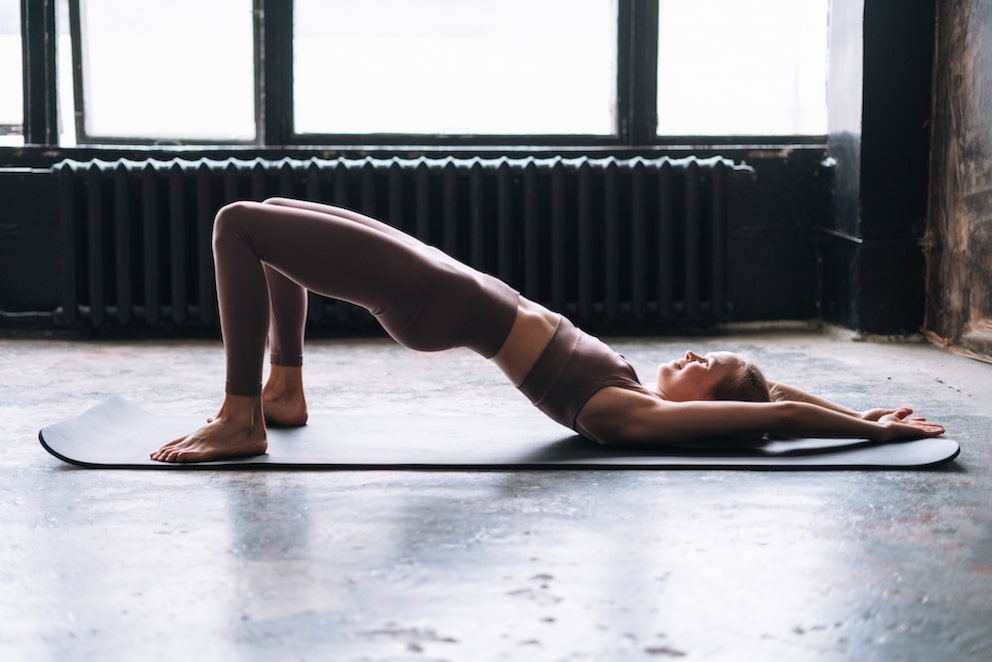
This exercise is essential for a strong posterior body. It not only strengthens the glutes and thighs but also wonderfully mobilizes the spine.
Here’s how: Lift the pelvis from a supine position vertebra by vertebra until a line forms between the shoulders and knees. For more intensity, you can lift and lower one leg straight into the air.
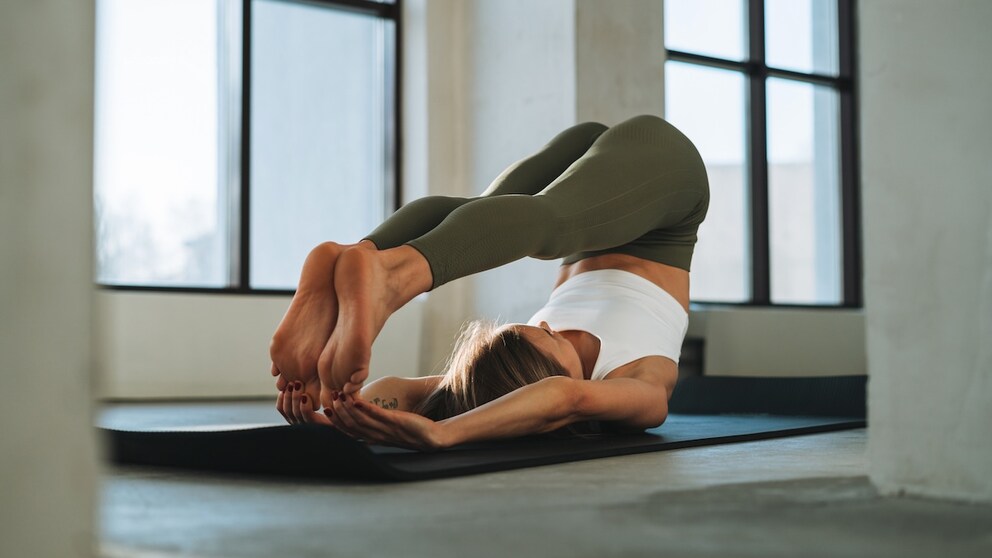
3. Roll-over
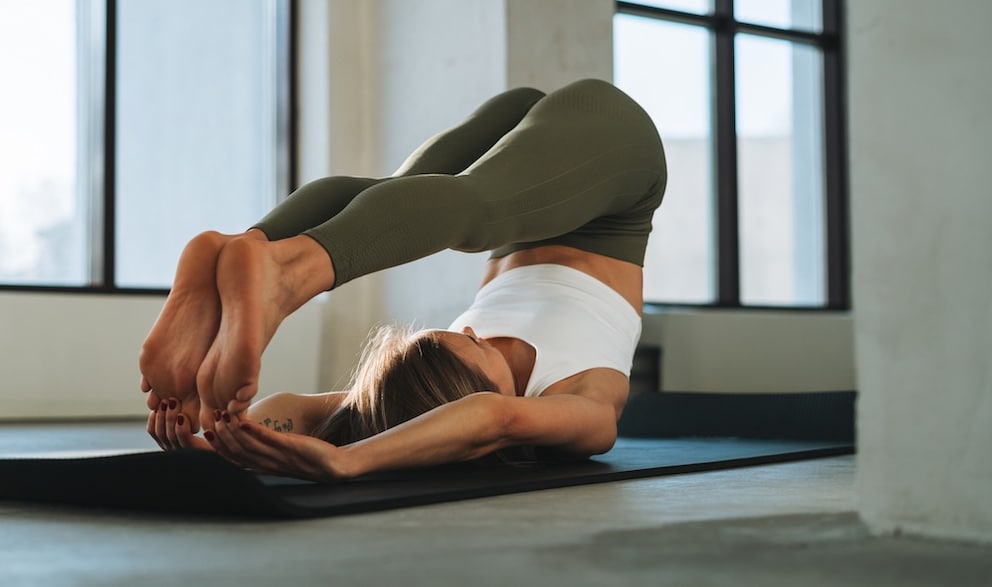
I chose this exercise because it offers one of the best mobilizations for the spine while also extremely challenging the deep abdominal muscles.
Here’s how: Start lying down, legs extended upward. Slowly and controlled, bring the legs over the head backward until the toes almost touch the floor, and roll back down vertebra by vertebra.
4. Single Leg Kicks
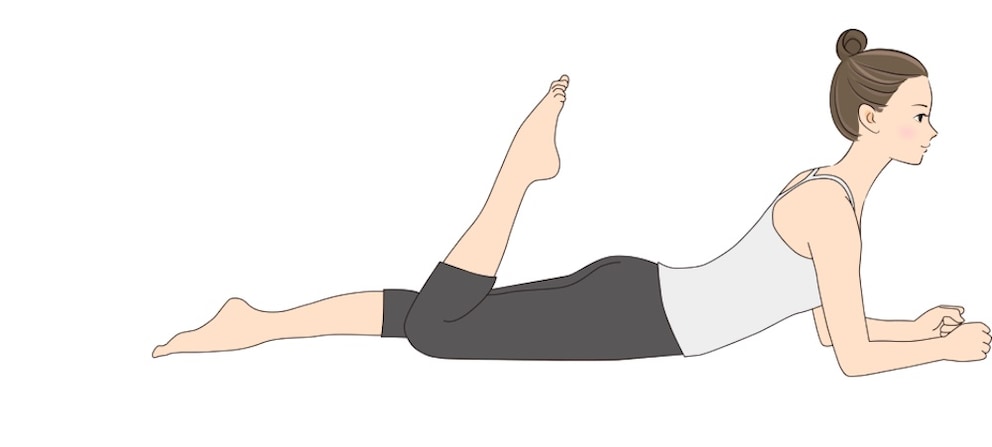
To focus on the back of the thighs and hip extension, this exercise is ideal. At the same time, it trains the stability of the upper body in the prone position.
Here’s how: In a prone position, support yourself on your forearms. Alternately pull one heel twice in quick succession toward the glutes while keeping the upper body stable and proud.
5. Side Kick Series
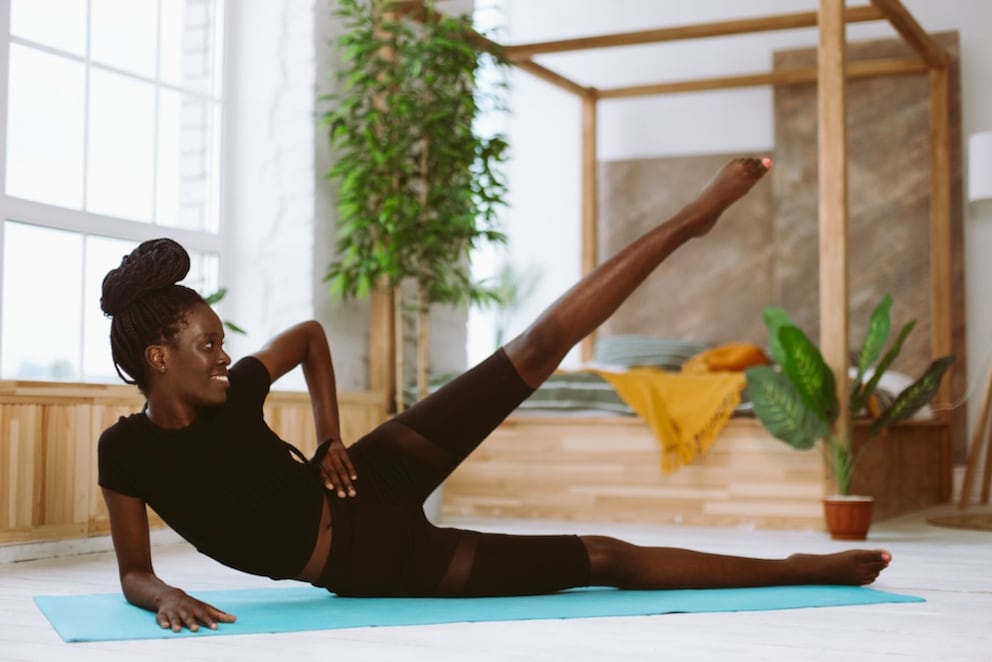
A full-body workout also needs the lateral chain. This series is unbeatable for hip stability and shaping the outer and inner sides of the legs.
Here’s how: Lying on your side, perform controlled movements with the top leg–lifting, lowering, or small circles. Important: The core remains as steady as a rock.
6. Swimming
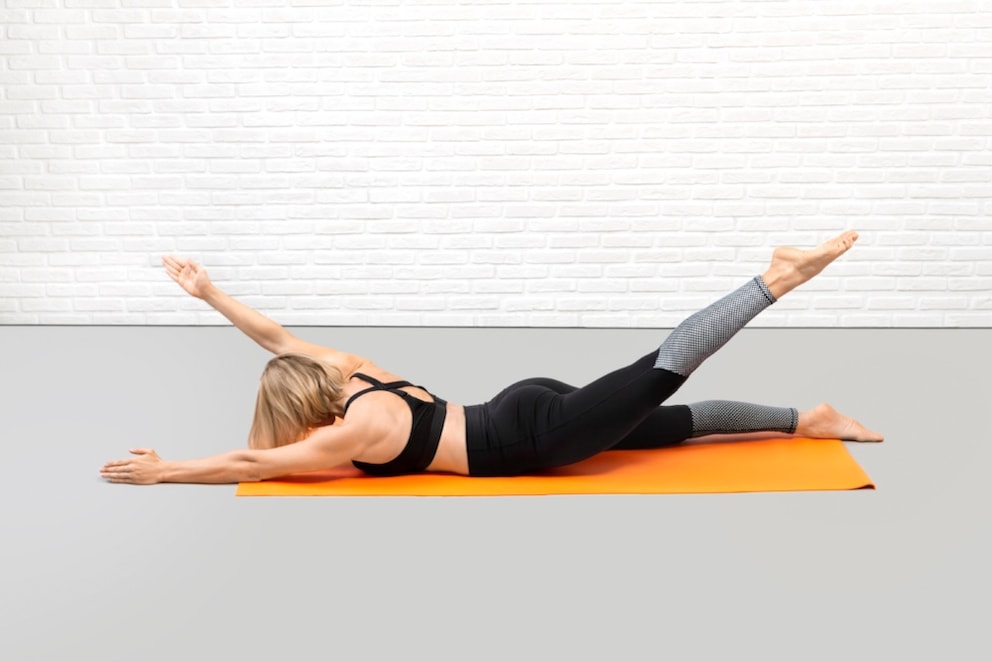
After much focus on the abdomen, “Swimming” is the perfect balance for a healthy back. It trains the entire diagonal chain and is effective against the typical “desk posture.”
Here’s how: In a prone position, stretch arms and legs long and alternately lift opposite limbs in small, quick movements–just like paddling in water.
7. Leg Pull Front
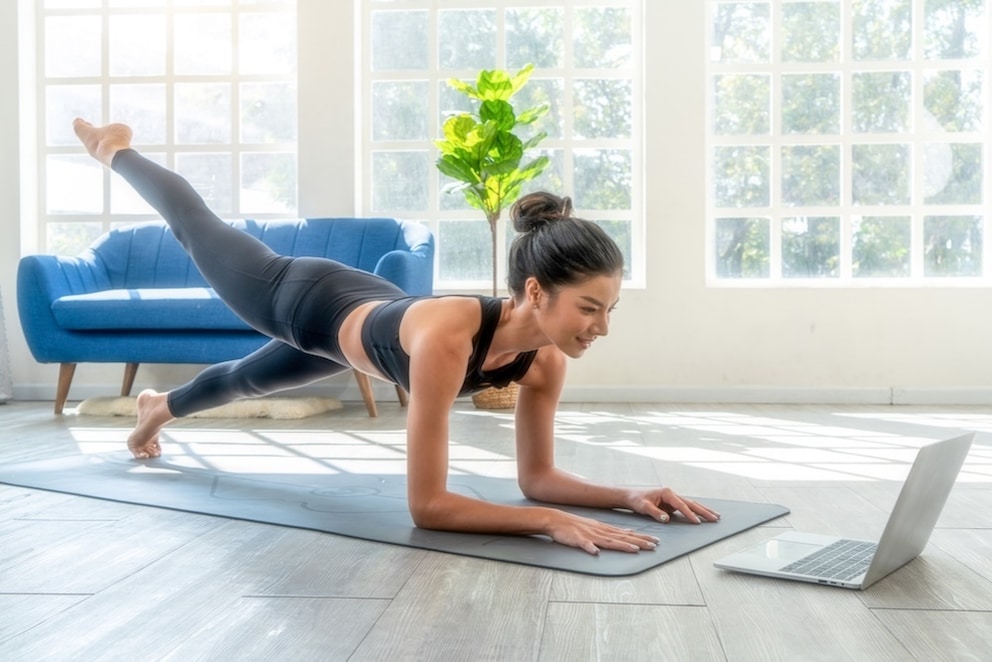
As a crowning conclusion, I choose this plank variation. Here, the entire body must work together: shoulders, core, glutes, and legs.
Here’s how: Start in the classic plank (push-up position). Lift one leg straight in a controlled manner, maintain tension throughout the body, and switch sides. Pure stability, which is why the exercise is also found in numerous bodyweight workouts from influencer videos to Freeletics to Crossfit: Yes, everyone can learn something from Pilates.
How to Combine the Pilates Exercises: 3 Workout Variants
Depending on how much time you have or what focus you want to set, you can weight these seven exercises differently. Here are three suggestions for your routine–depending on what type of workout you are:
Express Full-Body
- All 7 exercises in succession in the order mentioned above
- About 8 to 12 repetitions per exercise (100 beats for “The Hundred”)
- About 12 to 15 minutes
Powerhouse and Strength
- Focus on The Hundred, Side Kick Series, and Leg Pull Front
- Perform these three exercises as a circuit (3 rounds), the remaining four exercises serve as warm-up and cool-down
- About 25 minutes
Mobility and Back Flow
- Focus on The Shoulder Bridge, Roll-over, and Swimming
- Perform the movements particularly slowly and fluidly
- Repeat the mobilization exercises 15 times each
- About 20 minutes