


March 7, 2026, 3:37 pm | Read time: 4 minutes
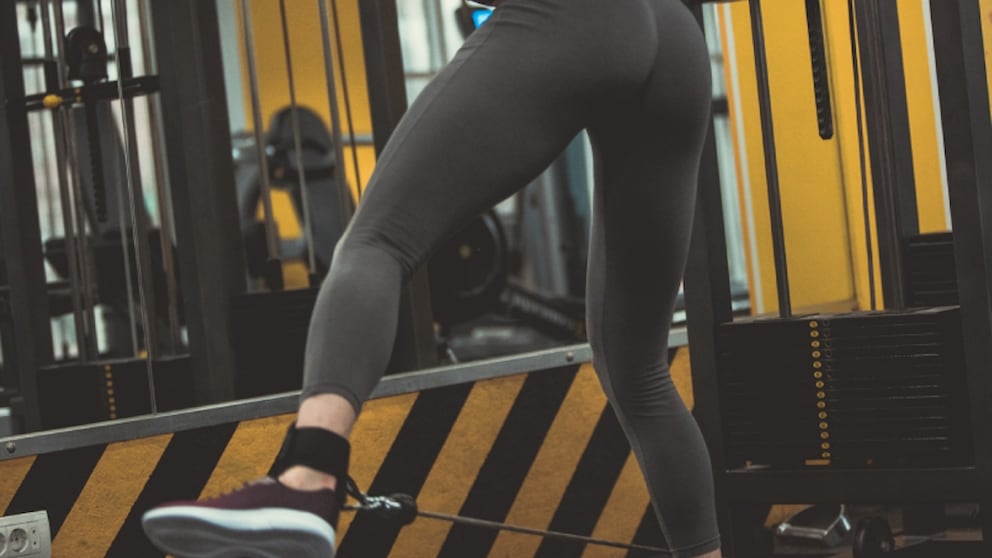
Raise your legs—this is the movement we perform with side kicks on the cable pulley. FITBOOK author Nina Ponath reveals what the exercise is good for and what abduction is all about.
You can think what you like about body trends: a toned bottom and strong legs are definitely useful when it comes to stabilizing the hips and pelvis. Both ensure an upright posture, prevent back pain and a rounded back, and yes, a trained back can even increase calorie consumption. So it’s really worth giving your legs an extra workout. One exercise that is ideal for this is side kicks, or abductions, on the cable pulley.1,2
Overview
Training the Lateral Gluteal Muscles
The lateral gluteal muscles, in particular the gluteus medius and gluteus minimus muscles, play a crucial role in stabilizing the hips and pelvis. They are essential for balance, correct posture, and performing many everyday movements such as walking, running, or climbing stairs. A strong gluteus medius also prevents knee and hip injuries as it helps to stabilize the pelvis during walking. Targeted training of these muscles can compensate for muscular imbalances, which reduces the risk of overuse injuries. At the same time, it improves athletic performance, be it running, jumping, or even strength training, as it creates a stable base for other movements.
What Is Cable Abduction?
This exercise is used to isolate and specifically strengthen the gluteal muscles, especially the lateral muscles. One leg is stretched sideways away from the body while the rest of the body remains stable. The resistance of the cable pulley ensures constant muscle tension. Thanks to the isolated movement, this exercise not only enables precise muscle development but also helps to improve hip stability and mobility. At the same time, it promotes the symmetrical development of the gluteal muscles, which is important for a balanced posture.
How to Correctly Perform Abduction on the Cable Machine

Assume the Starting Position
Attach an ankle strap to the cable pulley and fasten it securely around your ankle. Stand to the side of the machine and grab the handles or the cable pull station for stability.
Stabilize Your Posture
Keep your spine neutral and tense your core muscles. The supporting leg remains slightly bent to maintain balance.
Perform the Movement
Stretch your working leg sideways away from your body. Make sure that your hips remain stable and do not turn outwards. Keep the foot slightly turned outwards to maximize activation of the target muscles.
Hold the Upper Position
Hold the tension for one to two seconds at the highest point. Return the leg to the starting position in a controlled manner.
Repeat
Perform ten to twelve repetitions per leg for three to four sets.
Which Muscles Are Trained?
Abduction on the cable pulley focuses on the following muscle groups:
- Musculus gluteus medius (stabilizing, responsible for spreading the leg apart)
- Musculus gluteus minimus (lower lying lateral gluteal muscle)
The following muscles are also secondarily activated:
- Musculus tensor fasciae latae (lateral thigh muscle)
- Adductors and abductors (inner thigh and abductor muscles)
- Core muscles for stabilization
For a Toned Butt: The Proper Execution of Cable Kickbacks

7 Effective Exercises for the Glute Muscles
Common Mistakes and How to Avoid Them
Hip rotation
Keep your hips stable and avoid moving to the side.
Too much weight
Start with moderate resistance to keep the technique clean.
Use momentum
Perform the movement consciously and in a controlled manner without gaining momentum.
Alternatives to Side Kicks on the Cable Pulley
If the cable pulley is occupied, consider these alternative exercises:
Side kicks with resistance bands
Similar movement sequence, but with a resistance band as an alternative.
Clamshells
Side leg raises from the lateral position with or without a mini band.
Side-lying leg raises
Effective exercise to isolate the lateral gluteal muscles.
Monster Walks
Lateral walking with a resistance band around the thighs.