


May 29, 2026, 11:29 am | Read time: 7 minutes
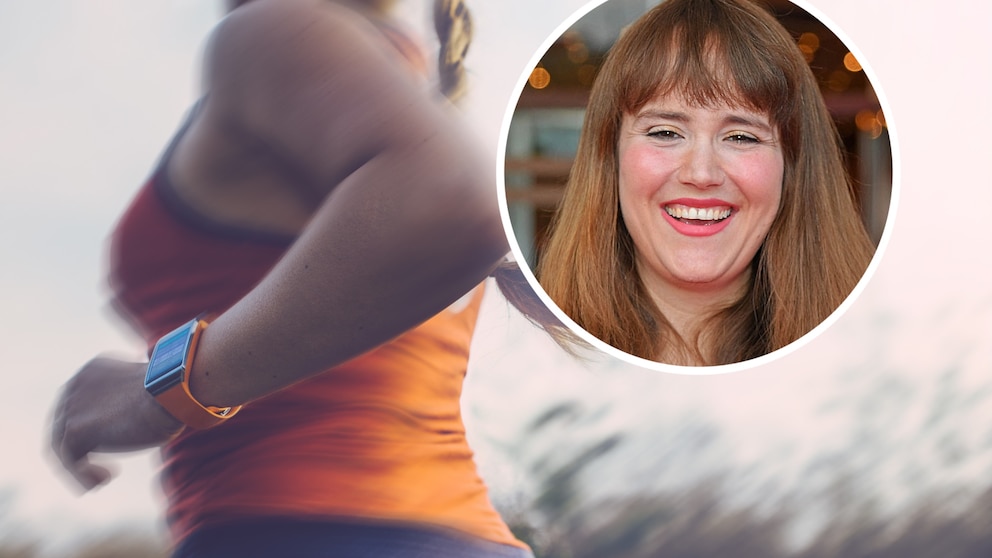
Just over a year ago, Ricarda Lang started running. During her half marathon in April, her pace was 6:55 minutes per kilometer. Now, she seems to have reached under six minutes. Two running experts assess her development, offer tips for beginners, and suggest what a training plan for the first four weeks might look like.
Ricarda Lang’s Running Development
“Today, for the first time, I stayed under a 6-minute pace,” Ricarda Lang wrote on Instagram over the weekend. The former Green Party leader says she only started regular running training a year ago. In April 2026, she ran her first half marathon in Hanover in 2:25:59 hours, which corresponds to an average pace of 6:55 minutes per kilometer. Now, she apparently ran a pace of under six minutes per kilometer in training for the first time.
Former European Champion Jan Fitschen Weighs In
Jan Fitschen, who became the European champion over 10,000 meters in 2006 and now works as a running coach, says of Ricarda Lang’s running development: “That deserves huge respect. I think it’s great; she’s a real motivator.” The fact that someone whom many might not initially credit with athletic achievements has completed a half marathon in just over a year and has now apparently run under a 6-minute pace for the first time has, according to Fitschen, a tremendous signal effect. “It’s fantastic for everyone else who says: Hey, I want to do more sports and maybe start running and achieve something.”
He doesn’t want to read too much into Ricarda Lang’s pace statement. Without distance and training data, it’s not possible to seriously assess how fast she actually runs. “It could also be that she just said: I’ll run the last three kilometers really fast,” Fitschen suggests. A fast interval or a single kilometer under six minutes is also possible.
In his view, however, her performance still involves a lot of consistency. Fitschen: “Looking at it, she has really invested a lot and done it very, very consistently.”
That beginner runner Ricarda Lang has made such significant progress in her first year doesn’t surprise the professional. Especially for beginners, enormous improvements can be achieved with simple basics. “With absolute basic tips, you can achieve the most at the beginning.” The most important: slow down. Fitschen: “Ninety to 95 percent of people who start running and say, ‘ This isn’t my sport,’ start too fast.”
The former running pro, who hosts the podcast “Running is Simple,” recommends beginners set a “bold” but realistic goal for their first year. “Being able to run ten kilometers at a stretch, I consider an absolutely perfect goal for beginners.” It may seem like a mammoth goal to people, but his experience shows that it “is achievable for most healthy people.” The prerequisite: “They manage to run slowly enough and stick with it!” Often, after three or four weeks, you notice that longer distances suddenly become possible.
Running Coach: The First “5” on the Stopwatch Is Moving for Many
The development described by Jan Fitschen is also experienced by Tabea Goldman, who leads the women’s running group at the Sport-Club Charlottenburg (SCC Berlin) and has accompanied many in starting running and beyond. She knows from experience the great importance of intermediate goals. “Achieving five kilometers is the first milestone for many beginner runners,” Goldman notes.
Similarly magical is, as observed with Ricarda Lang, running a pace of under six minutes per kilometer for the first time. “When you see that on the watch and finally don’t see the six anymore, I think that’s something very moving for many.”

Beginner Runners Make Rapid Progress
Goldman has also frequently observed that it is beginners who make particularly rapid progress in endurance. “The first year sees the most rapid development.” The body responds strongly to regular training during this phase—provided, she agrees with Jan Fitschen, that you stick with it and don’t increase too quickly. “Consistency beats talent in long-distance running,” says the coach. Those who train three to four times a week and stick with it can improve enormously in the first year.
Both experts warn against confusing the rapid progress of the first year of running with complete physical adaptation. “In the first year, endurance and muscles develop relatively quickly,” Goldman explains. Bones, tendons, and ligaments, on the other hand, change much more slowly. They often take years to adapt to regular running training. Only after about three years has the body fully adapted to the strain of running.
That’s why patience is so important. Those who increase too quickly or focus too early on pace and best times risk overuse and injuries.
In the First Year of Running, There’s Even More Potential Than With Ricarda Lang!
According to Tabea Goldman, there’s even more potential in the first year of running than with Ricarda Lang. “If you start with complete beginners, times of 56 to 52 minutes for ten kilometers are realistic for women.” That corresponds to a 5:12 to 5:36 pace. For men, 53 to 48 minutes (5:18 to 4:48 pace). For the half marathon distance, it’s possible in the same period—always assuming consistent training—to break the two-hour mark.
That means: As a beginner runner, you can become as fast as Ricarda Lang in a year—very well, in fact!

“Thanks to training with an AI app, I ran a half marathon in under 2 hours”

How Fast Are Runners on Average–Are You Faster?
How to Successfully Start Running Training
First, start slowly. If necessary, at a pace “where you almost feel like you could walk,” emphasizes pro Fitschen. He knows: “Anything else leads to frustration!” Two to three such sessions per week are enough for a start. Only when the basic endurance is built up, after a few weeks, should tempo sessions or intervals be added. Not before.
Good running shoes and patience with your own body are also important. Goldman advises beginners to focus less on pace, pulse, or performance data initially, but to develop a sense of their own rhythm. Those who already have knee or Achilles tendon issues or pre-existing health conditions should start slowly and consult a doctor if in doubt.
Fitschen emphasizes that even a little progress at the beginning can bring a lot of joy in running: “Nothing is as motivating as your own success.” Perhaps that’s the appeal of running: not in best times or pace records, but in the feeling of suddenly achieving things that seemed impossible before. Or, as Fitschen says: “Running is something so simple, but it can make you incredibly happy.” You can see exactly that in Ricarda Lang’s running posts.
You should not just start running if you have
* known heart problems or family history
* severe knee problems
* Achilles tendon issues
* major orthopedic complaints
Training Plan for the First 4 Weeks
The first four weeks should ideally focus on: not complicating things, creating success experiences, setting a “bold” but “realistic” goal (ten kilometers is ideal according to Fitschen).
Here’s a concrete way the first four weeks for beginner runners could look:
- two to three sessions per week
- significantly slow down the pace
- start with “running without panting”
- don’t focus on distance
- walk/run intervals are okay in this early phase
What else is important:
- don’t immediately focus on pulse/diagnostics
- avoid complicated training plans
- pay attention to good shoes
In this initial phase of running, Tabea Goldman is particularly focused on body awareness. Many beginners learn not only to better understand their bodies through the sport but also to deal with exertion and uncomfortable moments. “Running is an innate rhythm,” she says. Those who train regularly eventually “have a dialogue with themselves.”
Perhaps that’s why people like Ricarda Lang celebrate their first athletic achievements so visibly—something every running enthusiast can deeply relate to.