


September 6, 2026, 4:04 pm | Read time: 3 minutes
Between work, appointments, and daily life, there’s often little time for extended training sessions. That’s why exercises that engage multiple muscle groups and make workouts particularly efficient are so practical. One of these is the deadlift. FITBOOK trainer Alina Bock explains why this exercise is a true all-rounder and what to focus on during execution.
The deadlift, along with the squat and bench press, is one of the most important basic exercises in fitness. When performed correctly, it trains nearly all the body’s muscles and can also improve posture, stabilization, and coordination. You’ll learn more about the benefits of deadlifting and how to perform the exercise technically correctly below.
Which Muscles Are Trained by Deadlifting
The deadlift is one of the complex full-body exercises that engages a large portion of the body’s muscles through the involvement of multiple joints. Primarily, the knee and hip joints work, while the spine and the shoulder, hand, and sacroiliac joints stabilize the movement. As a result, the leg muscles—including the gluteus maximus, biceps femoris, and quadriceps femoris—are specifically strengthened during deadlifting.
Additionally, there is a strong training stimulus for the back muscles, particularly the erector spinae, trapezius, and latissimus dorsi. The abdominal muscles (rectus abdominis and obliquus abdominis) and the forearm muscles responsible for grip strength are also effectively engaged.
Also of interest: 4 common mistakes in deadlifting and how to avoid them
Archer Push-up: Proper Technique, Targeted Muscles, and Common Mistakes
Squats or Deadlifts: Which Strength Exercise Is Better for You
Additional Benefits of Deadlifting
The involvement of numerous muscles and joints requires a high degree of coordination—muscles must work together precisely to ensure optimal power transfer. The more often you perform the exercise, the better your nervous system learns this complex interaction.
Targeted strengthening of the leg and back muscles can also significantly improve posture, helping to alleviate or prevent back pain. Deadlifting also supports learning back-friendly lifting techniques in everyday life, which sustainably counteracts injuries.
The Correct Execution
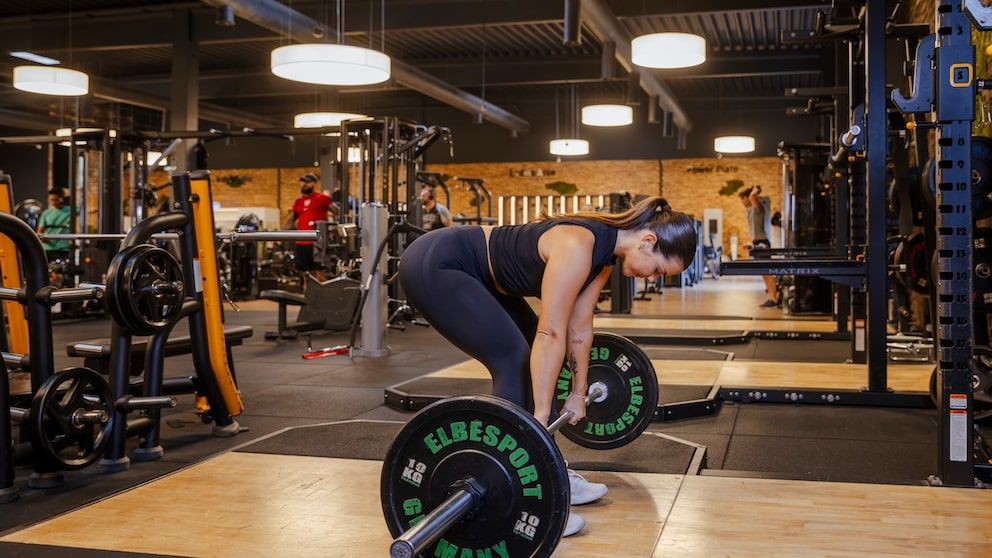
To benefit from deadlifting, a technically flawless execution is essential. Especially with progressive weight increases, proper technique protects against injuries, particularly in the area of the intervertebral discs. The exercise starts with a hip-width stance, with the barbell positioned close to the shins.
Tip: To avoid setting the starting position unnecessarily low, it’s recommended to use large weight plates with low weight (such as 2.5- or 5-kilogram bumper plates). These raise the barbell’s position and make it easier to start the movement. The bar is gripped with an overhand grip. The knees are slightly bent, and the upper body leans forward with a straight back, while the gaze remains directed slightly forward and downward. After building abdominal and core tension, the weight is lifted in a controlled manner. The legs extend dynamically while the upper body simultaneously straightens. At the top, bring the shoulder blades together by pulling the shoulders slightly back and down, which intensely involves the upper back muscles.
Be careful not to overextend the back in the end position to avoid spinal injuries. Keep your gaze neutral and follow the movement path. Do not tilt your head upward to protect the cervical spine.