

August 25, 2026, 8:09 am | Read time: 4 minutes
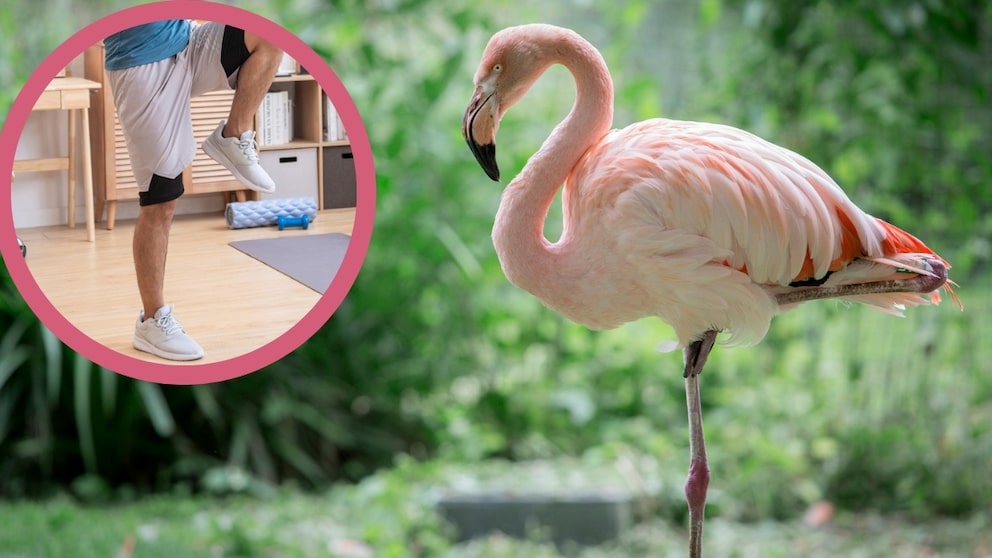
Standing on one thin leg, elegantly in pink, flamingos often remain motionless for hours. Even in sleep, they don’t lose their balance. In this, they are clearly superior to us humans. Nevertheless, it’s worth trying it yourself. How long we can stand on one leg is considered a marker for so-called neuromuscular fitness and possibly even healthy aging in medicine.
How the Flamingo Test Works
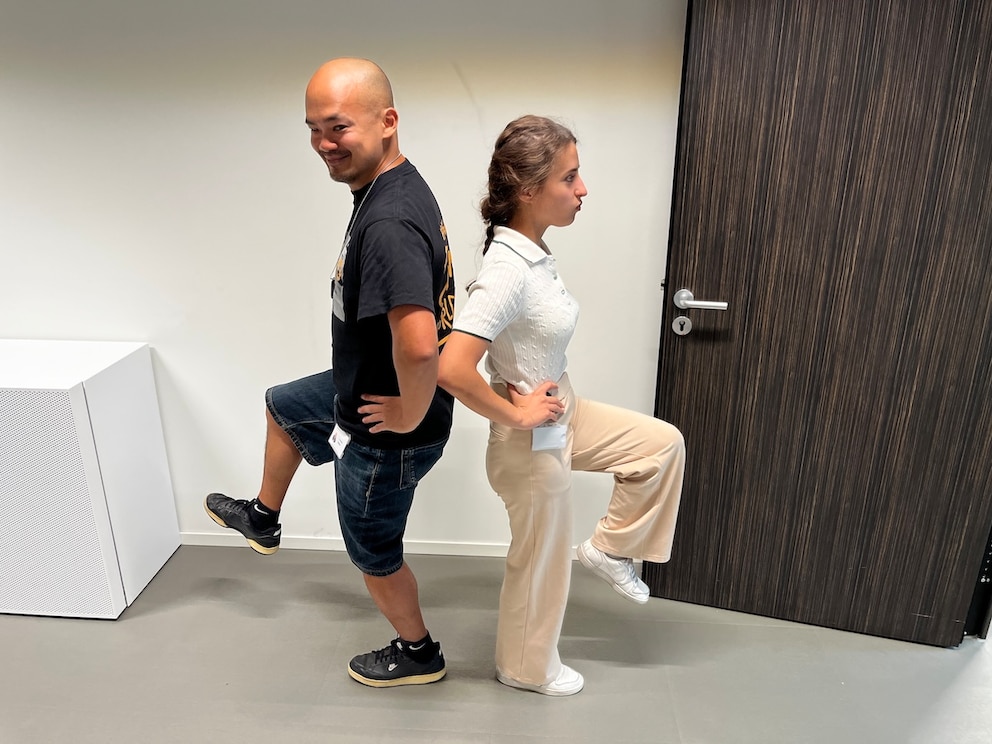
The Flamingo Test (“Flamingo Challenge”) was initiated by the British National Health Service (NHS). The aim of this campaign is to raise awareness about balance and fall prevention. Here’s how the Flamingo Challenge works:
- Stand on a flat, stable surface
- Lift one leg and stand on the other without holding on or supporting yourself in any way
- Keep your hands ready to quickly support yourself in case of a loss of balance
- Time starts as soon as your foot leaves the ground
- The goal is to reach the time specified for your age group1
How Long You Should Be Able to Stand on One Leg
| Age | Hold (in seconds) |
|---|---|
| 18- to 49-year-olds | One minute or more |
| 50- to 59-year-olds | 40 |
| 60- to 69-year-olds | 35 |
| 70- to 79-year-olds | 20 |
| > 80-year-olds | > 5 |
Age-dependent reference values from the NHS serve as a guideline.1
Neuromuscular fitness may sound cumbersome at first, but it is not. The Greek word “neuro” means “nerves,” and “neuromuscular” describes the interaction between nerves and muscles. The better this interaction is trained, the better the neuromuscular fitness. According to various studies, this may provide insight into how long we might live.
Standing on One Leg for 10 Seconds–Studies Show Link to Mortality Risk
In 2022, Harvard classified the results of a study where participants had to stand on one leg for ten seconds as a strong marker for overall health in middle age and a higher life expectancy.2, 3 The study involved 1,702 people aged 51 to 75.
Those who couldn’t hold the ten seconds had an 84 percent higher mortality risk. Seven years after the test, 17.5 percent of the participants who failed the one-leg stand had died, compared to 4.6 percent of those who passed.
If you want to replicate the ten-second test from the study, stand barefoot on one leg. Bend the other leg, placing the foot slightly behind the calf of the standing leg. Let your arms hang at your sides, and look straight ahead. Stay in this position for ten seconds, and voilà—you’ve passed the test.
Simple Balance Test Shows How Quickly You Age
What Men Over 50 Should Focus on to Build Muscle Effectively
Why Is That? People With Good Balance Are Often Fitter
However, Harvard notes that the results only show a correlation and do not prove that better balance directly extends life. The study itself cites as a weakness that fall history and the extent of physical activity were not controlled: The researchers didn’t know how athletic the participants were or if they had recently fallen. This could have influenced the results. People with good balance are often fitter, exercise more, and eat healthier. This might be the real explanation, not balance itself.
After 60, Balance Declines Especially Quickly–Here’s How to Counteract
Corey Rovzar from the Stanford Prevention Research Center explains in connection with the same study that balance is often neglected in many people’s training routines, even though it declines particularly quickly after age 60.4
The good news: The declining interaction of the nervous system, muscles, and senses can be reactivated and trained at any age. Targeted balance training can help maintain mobility, independence, and quality of life into old age. From ages 50 and 60, it is essential to preserve independence, strengthen coordination, and effectively prevent falls in everyday life.
According to personal trainer Anna Rogalev, training after age 60 should focus on injury prevention, maintaining muscle mass, and improving balance and flexibility, while training at 50 can often be a bit more intense and varied. Corey Rovzar particularly recommends one-leg exercises, yoga, tai chi, or strength training.