


September 6, 2025, 3:34 pm | Read time: 3 minutes
They are part of a variety of sports such as CrossFit or powerlifting and an important exercise for leg training: we’re talking about front squats. The front squat is not only appreciated by bodybuilders who want to specifically shape the quadriceps, but it also has benefits for recreational athletes. What are they? FITBOOK author Nina Ponath reveals them.
That squats are something like the classic of leg training is now known to almost everyone. Depending on mobility and coordination, however, the squat is not the right exercise for everyone and does not always target the desired muscles—namely, the glutes and legs. Some athletes even experience hip pain from the movement. An alternative can be front squats. The exercise is less complex, and the lighter weights help avoid a rounded back.
What Are Front Squats?
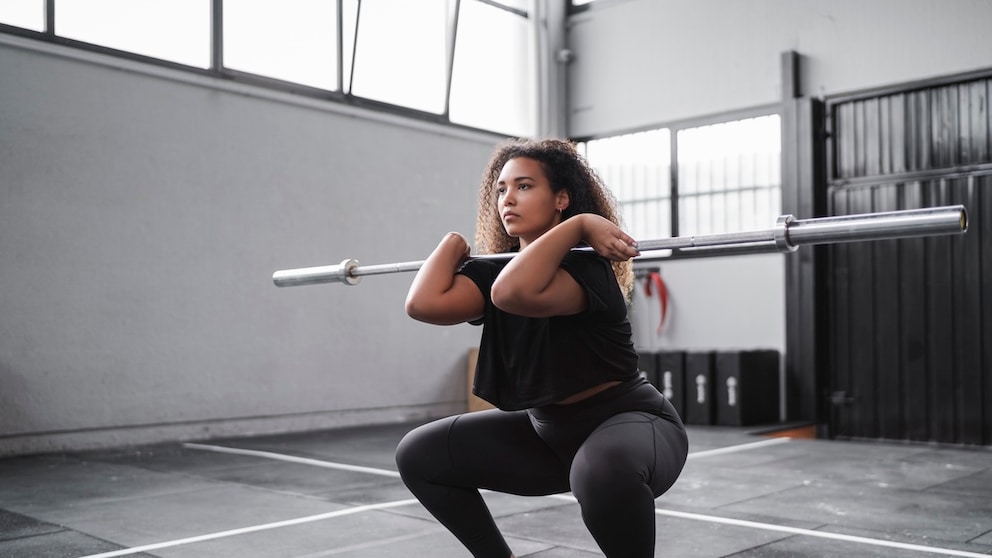
Front squats are squats where you load the weight—usually a barbell—not on your back as usual, but in front of your body. This distribution of the load targets the quadriceps more than traditional back squats. At the same time, this squat variant allows for more mobility, enabling you to go deeper. Front squats are also performed with less weight, reducing the strain on the back. This decreases the risk of poor posture and a rounded back. The core—especially the abdominal muscles—is more engaged during a front squat, bringing you closer to the goal of a six-pack.
Muscles Engaged During Front Squats
The exercise engages almost all the muscles of the legs as well as the glutes. Primarily, this special squat variant targets these muscles:
- Quadriceps (Musculus quadriceps femoris)
- Hamstrings (M. biceps femoris)
- Gluteus maximus
- Gluteus medius
But it’s not just these muscles that are engaged; the following also support:
- Erector spinae
- Adductor magnus
Additionally, the cardiovascular system is heavily challenged, as front squats train a large muscle group.

Squats or Deadlifts: Which Strength Exercise Is Better for You

7 Effective Squat Variations for Strong Legs and a Firm Butt
How to Perform Front Squats
This particular squat variant is technically quite complex and requires a high degree of body stability. However, as a functional exercise, it’s definitely worth incorporating front squats into your training. Proper technique is crucial in order to reduce the risk of injury.
Stand with your feet hip-width apart, knees pointing outward. Place a barbell in front of your face, resting lightly on your shoulders. Your elbows should point forward, with your fingers touching the bar, providing only light support. From this stance, engage your core. Lower yourself as deeply as possible with a straight back, then powerfully and controlled, rise back up while exhaling. Push your hips back, keeping your torso upright throughout the movement to ensure the bar doesn’t roll forward off your shoulders.
Keep your feet firmly on the ground during the exercise, shifting the weight to the midfoot. Squats are a classic exercise that benefits your entire body.
Variations of the Exercise
If front squats don’t feel right, you can try back squats or jumping squats.
How Much Weight Should You Use?
How a proper front squat looks, you now know (at least in theory). Unfortunately, mistakes can easily occur with this exercise. If in doubt, practice the movement with a trainer or a workout buddy before adding weight. In any case, squats are a classic exercise that benefits your entire body.12