



November 8, 2026, 7:27 am | Read time: 7 minutes
Mick Jagger is not only an exceptional musician but also a longevity icon. At 83, he remains in top shape, thanks to numerous healthy routines. Over the years, he has shared insights in interviews about how he stays fit and strong. Sports scientist and personal trainer Jörn Giersberg shares his assessment with FITBOOK.
There’s not much that needs to be said about Mick Jagger. The Rolling Stones frontman is one of the most successful musicians of all time. Most people picture him as an indefatigable rock star bursting with energy and letting loose on stage. For many, he was (or is) the epitome of rock ‘n’ roll–including the lifestyle.
That’s well-known. But the days of wild drug escapades are decades behind him. The now 83-year-old has long embraced a healthy lifestyle–well before the longevity trend emerged. It’s remarkable how disciplined and consistently he keeps himself fit into old age. Two factors play a crucial role: training and diet, as Mick Jagger explains in the men’s magazine “Men’s Health.”
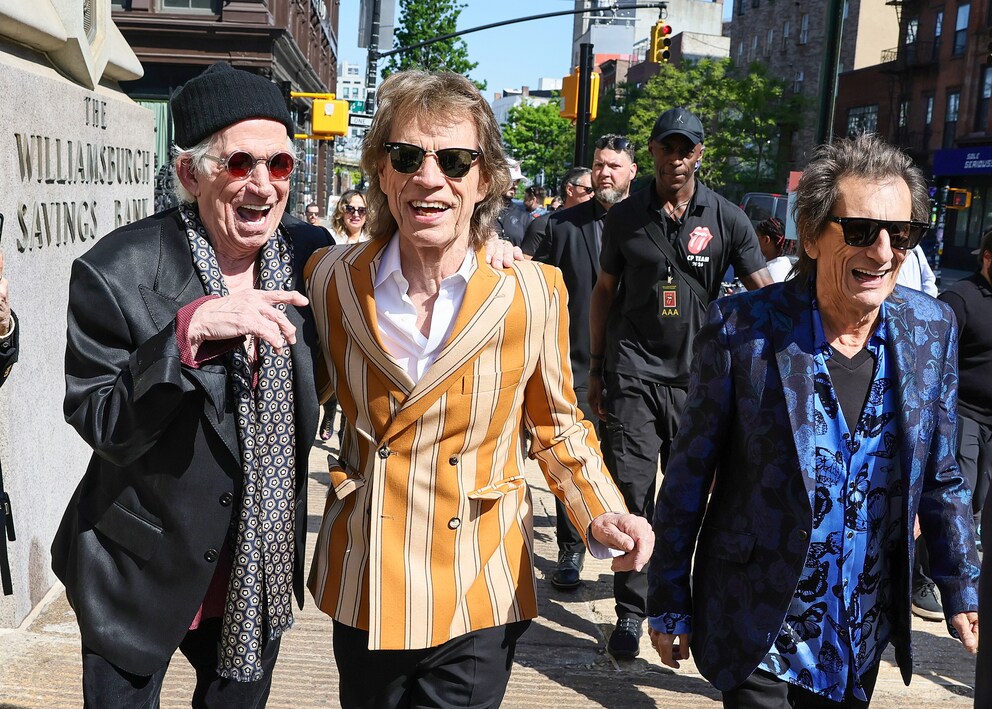
It’s All About Movement
It’s hard to believe, but according to a “Men’s Health” report, Mick Jagger runs 12 kilometers daily–even at the age of 83. It’s an impressive routine, though it’s not entirely clear if he covers this distance every day. Running increases his energy expenditure and improves his endurance, laying an important foundation for his energetic stage performances.
While this running achievement is impressive, sports scientist and personal trainer Giersberg views it critically: “There are certainly people with good genetic predispositions for whom it’s not a problem. But generally, I wouldn’t recommend jogging 12 kilometers every day at that age. I’d focus more on building muscle. And a lot of cardio training tends to have the opposite effect,” says the expert. He also advises varying the intensity. So, not always running 12 kilometers at the same pace, but sometimes opting for shorter distances with higher intensity to challenge the body more.
But apparently, running isn’t all he does. Jagger reportedly told “Q Magazine” in September 2026 that he trains six days a week, incorporating a remarkable variety: from swimming, cycling, and kickboxing to ballet, yoga, and Pilates. One thing is clear: Mick Jagger values variety. However, it’s not to say that he avoids gyms or traditional strength training. Other reports explicitly mention strength training as part of his regimen.
Jörn Giersberg cites good reasons to focus on strength training and muscle building in older age. “It’s important to lift heavy weights and do short sprints because it can positively affect testosterone levels compared to endurance training.” However, he advises against daily strength training, as the body needs to recover between sessions. Otherwise, there’s a risk of overloading. In older age, the recovery phase takes longer. Mentally, it’s also easier to maintain moderate training regularly than to exhaust the body completely in a short time.
Jagger Relies on a Versatile Training Mix
Instead of focusing on a single discipline, Jagger engages in sports that target different physical abilities. Swimming, for example, trains endurance and engages many muscle groups, while the buoyancy in water relieves the joints. This makes it a joint-friendly way to promote physical fitness. However, swimming is less suitable for bone strengthening than training that involves body weight or additional resistance.
Ballet, yoga, and Pilates can help maintain flexibility, balance, and body control into old age. Depending on the exercise, they also strengthen muscles and can support an upright posture. For bone health, however, sufficiently intense stress stimuli are crucial, such as through targeted strength training or suitable movements under body weight load. The various training forms complement each other rather than having the same effect.
Even Kickboxing Is Part of Jagger’s Repertoire
Kickboxing might seem a bit surprising, as it can carry injury risks depending on the training form. Contactless technique training or exercises on the punching bag are significantly less injury-prone than full-contact sparring. Kickboxing training can enhance speed, coordination, endurance, and muscular endurance. It requires clean technique, appropriate training intensity, and sufficient recovery. And, of course, a good warm-up.
“People often think that in older age, one should take it easy. But that’s not necessarily true. Quite the opposite: Intense loads are important, especially in old age. These should be loads that, for example, correspond to sprinting and heavier weights to address the muscles briefly and intensively,” explains fitness expert Jörn Giersberg.
Muscles, tendons, and bones can adapt to appropriate training loads over time and become more resilient. However, too high or rapidly increased loads can also lead to overuse complaints. But a well-structured training program can improve physical resilience. Jagger’s goal is clear: Even in old age, he wants to stay strong and healthy. Our FITBOOK expert recommends taking at least one rest day after two days of exercise to allow the body to recover fully.
Mick Jagger Eats a Lot
What initially surprises: Mick Jagger doesn’t skimp on calories to stay fit and lean. Quite the opposite. To ensure he doesn’t run out of energy with his training routine, he eats plenty throughout the day. “I have to eat a lot. People say to me, ‘You don’t eat anything.’ But I eat a lot. I tell them, ‘I just ate twice as much as you,'” he explained in a previous interview. And that makes sense. Because if he indeed exercises twice a day, he must supply his body with enough nutrients and protect against overtraining. However, our fitness expert notes that whether one eats a lot or a little is subjective. Just because it seems like a lot to Mick Jagger doesn’t mean it’s objectively a lot.
“Good nutrient supply is important in old age, very important even, and it’s often lacking,” says Jörn Giersberg. Plenty of fluids, nutrients, and not just proteins are crucial. Giersberg also advises consuming enough carbohydrates as energy carriers. That’s why Jagger follows the Mediterranean diet, which experts rate as one of the healthiest dietary forms (FITBOOK reported).

“I Recommend This Training to My Clients When They Want to Lose Weight”

World Record Attempt at 81? How Hard Rod Stewart Trains
Why the Mediterranean Diet Is So Healthy
Mick Jagger’s diet is Mediterranean and as unprocessed as possible. This means: In addition to plenty of fruits and vegetables, he consumes a lot of olive oil and fatty sea fish. Red meat, processed foods, butter, and margarine are minimized. The amount of refined carbohydrates, such as from white bread and pasta, is also limited.
This diet has clear health benefits. The plant-based oils and the omega-3 fatty acids in fish contribute to cardiovascular health. Since the Mediterranean cuisine uses little salt and sugar, this diet reduces the risk of type 2 diabetes, obesity, and hypertension. A study (FITBOOK reported) also showed that the Mediterranean diet slowed the brain’s aging process. It can also reduce the risk of dementia and Alzheimer’s.1
Jagger Also Indulges in Sweets
But Mick Jagger is not a true ascetic who completely forgoes pleasure. “He eats a dessert with every meal,” his daughter Georgia May Jagger recently revealed. For someone as physically active as Mick Jagger, it seems he can indulge in dessert without gaining weight. Nevertheless, health remains his top priority to stay healthy and fit for as long as possible.
The musician now lives so healthily that an entire book is dedicated to his longevity lifestyle. Author Isadora Puiggené wrote her book “Pacto con el Diablo: Los hábitos saludables del Rolling Stone más dinámico del mundo”–in English, “A Pact with the Devil: The Healthy Habits of the World’s Most Dynamic Rolling Stone.” She began exploring Mick Jagger’s diet and training when the rock star turned 80.