


July 6, 2026, 2:54 pm | Read time: 13 minutes
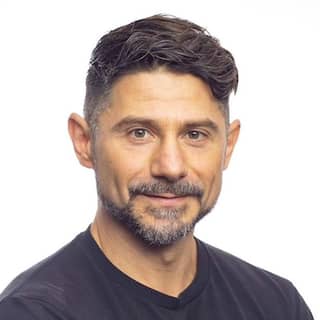
With his videos from China, Sacha Wenk (26) reaches millions on social media. The Swiss spent years in Chinese Kung Fu schools, continues to train with Shaolin masters, and now shares his knowledge in his own camps. In a conversation with Julia Freiberger and Nuno Alves from FITBOOK, Sacha Wenk discussed the significance of Qi, the rigor of Chinese Kung Fu schools, dealing with pain, mental strength, and the most important lesson of his life.
More about his time in Chinese Kung Fu schools and the lessons that continue to shape him can be found in Sacha Wenk’s book.
The Unusual Path to Becoming a Kung Fu Star
FITBOOK: With videos showing you practicing Kung Fu, you now reach millions. You’ve just published your first book. Was it always your plan to make a living from Kung Fu?
Sacha Wenk: “When I started this path, I was quite young. Back then, I never asked myself how I could make a living from it. I went to China out of personal interest, wanting to learn as much as possible about myself, Kung Fu, and the culture. Eventually, I had to take more responsibility for my life. It’s nice to do push-ups on the grass and follow your passion. But at some point, the question arises: What do I make of this? I love what I do, but I don’t earn money from it. That’s why I started posting videos on Instagram. That was my way of combining passion with a profession.”
Why His Experiences Differ from Those of Chinese Children
Unlike many Chinese children, you voluntarily went to a Kung Fu school.
“Many start school at six, seven, or eight years old. Imagine a six- or seven-year-old child waking up every day at 4:30 a.m., training for eight hours, and barely seeing their parents. It’s very tough. My situation was completely different. I was much older and made a conscious decision. Compared to the younger students, I had different tools and a different perspective on life. So, these situations can’t really be compared. The beauty of Kung Fu is that it always adapts to the individual. At 17, I had many questions, and Kung Fu provided answers to many of them.”
What kind of questions were those?
“They were mainly spiritual questions. I spent a lot of time thinking about who I really am and what my purpose in life might be. I don’t know how often people talk about such things, but I simply asked myself who I am as a person. Through the time I spent with myself, I was able to look inward more deeply and learn more about myself. That gave me an incredible amount.”

The Significance of Qi
Your book also focuses a lot on Qi. What exactly is it?
“For me, Qi means a feeling of inner well-being and joy of life that flows as energy through the body. In traditional Chinese medicine, it’s believed that stress and problems can cause blockages. When you get this Qi moving again and enter this flow, the energy can flow better through the body and support the healing of injuries and illnesses.”
Would you describe yourself as religious?
“Maybe not in relation to a single religion. I listen to many different things and take from various directions what I like. I then combine that for myself.”
Also interesting: Kung Fu – what lies behind the martial art and who it is suitable for
“I Believe We All Have Incredible Potential”
In your life, you’ve moved around a lot with your family and eventually ended up back in Germany. You were about 10 and faced some challenges. Why was that?
“I had real difficulties. Teachers or older people often attributed certain things to me. You quickly get pigeonholed. They say: You are this or that, and you can’t do this or that. But I believe we all have incredible potential. Especially as a young person, there’s so much inside you. In my opinion, this potential is not always sufficiently nurtured.”
Is that what you criticize about the German school system?
“What bothered me was the early assessment. You’re graded very early, and it quickly becomes about which school you’ll attend later and in which direction you’ll be categorized. As a child, you’re still in the middle of development. You don’t even ask yourself such questions at that age. Yet, you’re categorized early. That creates pressure. And then there’s how some teachers handle it.”
What do you mean by that?
“Every student is different, everyone has different strengths. I would have liked teachers who recognize that and support it accordingly, instead of just going through their lessons. School is important, but it’s not everything. There are many paths in life. And I think it would be valuable to convey that more strongly to children.”
“I Used This Stress Ball Like a Compass.”
During this phase, you also developed physical symptoms. In the book, you describe feeling a kind of stress ball inside you.
“When I was 15 or 16, I asked myself a lot of questions. What is my purpose? What do I want to do with my life? I often sat at home on the couch, staring into space and thinking. During this time, I read many spiritual books and engaged with such topics. In the middle of this phase, I suddenly felt this stress ball in my stomach. At first, I couldn’t deal with it at all. Over time, I used this stress ball like a compass. Whenever I did something that didn’t align with my direction, the stomach pains got worse. But when I did things that truly suited me–like sports–I felt freer.”
Many people feel stressed. What helped you cope, and what do you advise them?
“I would recommend consciously creating small time windows for yourself. It can help to just go outside for ten minutes: without headphones, without a phone, without distractions. Just walk and spend time with yourself. You learn to view your own stress from a different perspective. This way, you can better categorize many things and perhaps even put them into perspective.”
Did you learn that in Kung Fu?
“The beauty of Kung Fu is that you’re told many things that you often only truly understand years later. A teacher says a sentence, and you think you understand what he means. Ten years later, you suddenly realize that you hadn’t grasped the true meaning back then. In Kung Fu, many things aren’t fully explained. You interpret a lot yourself and have your own experiences. I’ve figured out a lot in my own way and made it useful for myself.”
Why Your Own Energy Is So Valuable
Has Kung Fu made you more resilient?
“Definitely. One of the most important lessons for me was understanding how valuable your own energy is. We don’t have an infinite amount of it. If I invest it in worries, stress, or negative thoughts, it will be lacking elsewhere. That’s why I try to be very conscious of where my energy flows. If you invest your strength in things that help you grow and try to give love and something positive to others, it also changes your own resilience.”
Apparently so much so that you can even endure physical pain. Videos of you being hit on the stomach with a bamboo stick have gone viral.
“I saw these exercises and wondered: Why do people even do that? It looked so strange, but at the same time, I found it fascinating. I just wanted to find out what was behind it. So, I started trying it myself. First once a week, then more often. I went to the teacher every day and said: Hit me again. Eventually, he must have hit me well over a hundred times on the stomach.”
How do you endure the pain?
“I charge myself positively and just imagine that I’m shining from within and feeling happy. That helps me endure the pain better. I’m not tense and not afraid, but just relaxed.”
Not Every Provocation Needs a Response
Can people apply this approach to their everyday lives?
“I think so. After I had to leave China due to the coronavirus pandemic, I was in the Swiss military. There, I had a boss who didn’t like me and constantly yelled at me. Sometimes I thought: Why? That doesn’t make any sense. I resolved it for myself by just listening to him but not giving him my energy and attention. I just stayed with myself. If someone is mean to me or says something negative, I don’t give that energy back. I try to rise above them vibrationally to show them: What you’re doing right now doesn’t help. It doesn’t affect me. I give the person a neutral energy back. An energy that shows that the situation can be resolved differently. I try to go through life as neutrally and harmoniously as possible.”
What do you mean by vibrational energy?
“In Buddhism, it’s said that every single soul has a different sound and creates something like a mantra. But through tension, we move further away from this sound and thus from our true core. When you slowly break down these layers and get closer to your own soul, you can reconnect with this tone that you actually emit. And this tone has a very high vibration. It might all sound a bit crazy, but that’s how it’s explained in Kung Fu.”
In Kung Fu, it’s also about leaving your comfort zone. How important is that to you?
“Every time I left my comfort zone, I grew from it. No matter in which area–I always discovered myself anew afterward. That’s why I try to guide the people who come to my Kung Fu camps a little out of their comfort zone. I’ve noticed that you encounter new strengths there. You discover sides of yourself that you didn’t know before. Often, you limit yourself. You set boundaries and consider them real. But once you cross those boundaries, you suddenly realize that much more is possible.”
Growth Begins Outside the Comfort Zone
How much pain is involved?
“Quite a lot. If you keep trying to push your limits, you inevitably encounter this pain. It’s part of achieving something. Many important experiences only arise when it gets tough. You don’t have to constantly suffer or challenge yourself permanently. But you also shouldn’t spend your entire life solely in the comfort zone.”
In Kung Fu, that often ends early in the morning. What does a typical training day look like in one of the Chinese schools?
“Training actually starts very early, depending on the season, between 4:30 a.m. and 5:30 a.m. First, you train for about an hour. Then you have about half an hour to tidy up your room before breakfast. After that, there’s a training session of about three hours. Then there’s lunch and about an hour and a half break before the next three-hour training session. Afterward, there’s dinner and later in the evening another session. The whole day is completely scheduled. You’re basically training all the time. Sometimes you don’t even get the recovery you actually need.”
At some point, your body couldn’t keep up anymore …
“While hitting pads, I suddenly felt pressure on my heart and didn’t know how to handle it. This feeling stayed with me for months–actually until today. If I train too much, I notice it immediately. It’s like a signal from my body. As if it’s saying: Stop. Be careful.”
Did you have it checked out?
“I went to a doctor in China at the time. He told me I definitely needed to take a break. What exactly the cause was, I couldn’t really understand back then. So, I still can’t say for sure what it was.”
“In China, It’s Difficult to Eat Healthily”
Do you otherwise pay a lot of attention to your health? What does your diet look like?
“I try to eat a lot of rice and vegetables there, but unfortunately, a lot of oil is used. That’s why I even bought a sieve. When I get my food, I pour hot water over it and let the oil drain off. If you do that three or four times, oil still comes out each time. So, my diet there isn’t necessarily healthy. But I try to eat a lot of oatmeal.”
Do you take supplements?
“For a while, I took a lot–from Omega-3 to creatine.”
Do you have a good sleep routine?
“I try to go to bed every day around 10:30 p.m. and get up around 5:30 a.m. There’s usually a midday break from 1 to 2:30 p.m., where I sleep for another hour and a half.”
“I Hope to Sit on a Bench at 80 Years Old.”
You’re now in your mid-20s. How do you envision healthy aging?
“Like my grandpa. I hope to sit on a bench at 80 years old, maybe with a little beard, and just be content. I want to have my children and grandchildren around me and give something positive to people. Just be happy.”
Will you still be training at 80?
“Probably. The beauty of Kung Fu is that it adapts to the person. If I do a movement today, I can go very deep into the position. At 80, that might not be possible in the same way. I have to adapt the movement. In China, you see many older people who still practice Kung Fu. They may not move as explosively as before, but the movements are still elegant.”

Jackie Chan: “Yes, I’m 71—but I can still move!”

“I Was Terrible at School Sports! It Was Much Later That I Discovered My Passion for Sports.”
Why Kung Fu Trains More Than Just the Body
What does Kung Fu teach people that a gym might not?
“I think the biggest difference isn’t necessarily the sport itself. When you go to the gym, you often train alone. In Kung Fu, you have a teacher who accompanies you long-term. Ideally, they explain not just the exercise but also the thought behind it.”
In what way?
“Take, for example, the plank exercise. Physically, it’s the same whether you do it in the gym or the temple. But in a Kung Fu school, if you want to give up after three minutes, the teacher might say: ‘If you keep going now, remember this moment later in life in a difficult situation and that you didn’t give up back then.’ So, a physical exercise becomes a life lesson. You learn not just to hold your body but also to stay committed internally. That’s an important difference for me.”
So, it’s about the mindset behind it?
“You don’t even need Kung Fu for that. You can push your limits anywhere and try to apply the experiences from training to life. Kung Fu essentially means: hard work over a long period. You can apply that to anything.”
You Should Find Something You Truly Love
Is that the lesson you want to pass on from Kung Fu to everyone?
“I think one of the most beautiful lessons for me is realizing that you should find something you truly love. Kung Fu confirmed to me how much changes when you do something you really enjoy. When you wake up in the morning and look forward to the day, that’s incredibly valuable. So, I would say: Try to find out what happiness means to you. Try to find out what you really want to do. And when you’ve found that, work towards it step by step. Then you can wake up in the morning and just be grateful for the life you get to lead.”