

December 7, 2020, 5:36 pm | Read time: 5 minutes
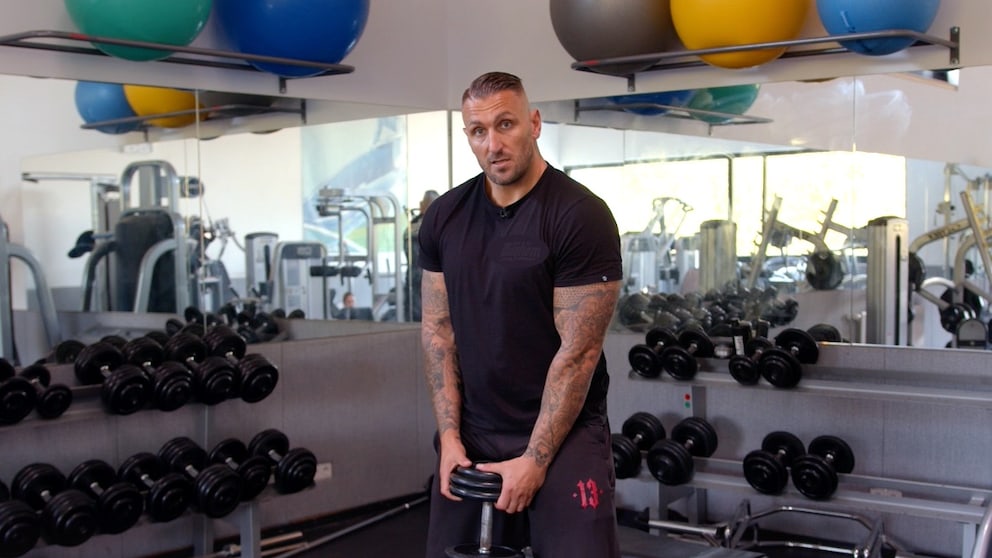
Bobsled pushers must accelerate a 170-kilogram sled from a standstill within five seconds. This requires not only a lot of strength but also explosive power in the legs and glutes. Four-time Olympic bobsled champion Kevin Kuske demonstrates how to build this explosiveness exclusively in the FITBOOK series 10-Minute Workouts.
With four gold and two silver medals, Kevin Kuske is the most successful bobsledder in Olympic Winter Games history. He was a top pusher in the bobsled teams of André Lange and Thomas Florschütz, among others. Kuske ended his athletic career in 2018. Today, he trains the next generation of German bobsledders at the Olympic training center in his hometown of Potsdam. For the FITBOOK series “10-Minute Workouts,” he has put together a simple and effective workout for legs and glutes that you can do from home.
Overview
Which Muscle Groups Are Trained?
In ten minutes, Kevin Kuske demonstrates five compound exercises that will make you break a sweat. Using additional weights, such as dumbbells and barbells, you train several lower body muscle groups: hamstrings, quadriceps, glutes, and lower back. Various training techniques are employed.
10-Minute Arm Workout for Advanced Athletes with Olympic Champion Kevin Kuske
7 Effective Squat Variations for Strong Legs and a Firm Butt
What to Consider in This Leg and Glute Workout?
When working out with additional weights, it’s important not to overestimate your abilities and to be mindful of pre-existing conditions. People with knee or back issues should gradually approach the training weight.
The rule of thumb for this workout is: The weight should be heavy enough that the last three to five repetitions in the final set are very challenging. And: The last repetition should still be performed cleanly! The standard barbell weighs 20 kilograms (Olympic standard). Many gyms also have 10-kilogram bars. Dumbbells come in all weight classes. Once the technique is correct, more weight can be added.
Also interesting: The Big 5 for Muscle Building
Legs and Glutes: The Exercises for the 10-Minute Workout at a Glance
Bobsledder “Good Mornings”
The leg and glute workout begins with a great auxiliary exercise for the hamstrings and lower back! Stand with feet hip-width apart and rest the barbell at shoulder blade height. Grip the bar next to the shoulders to secure it. Keep the knees slightly bent and move the hips back. The upper body approaches the floor. During the exercise, the knees should align with the feet. Keep the heels firmly on the ground.
Barbell Squats
To perform this classic leg exercise correctly, the barbell should rest on the neck or shoulder blades. Important: The weight should not press on the spine! The shoulders can be slightly raised and squeezed together to create a natural cushion. The closer the legs are together, the more the front of the thighs are engaged. With legs further apart, you can squat deeper and engage the glutes more. Kuske recommends a shoulder-width stance. Point the toes slightly outward. During the squat, the knees should point in the same direction as the feet. Move the glutes toward the floor and keep the upper body upright. Keep the heels on the ground and shift the weight to the heels.
All other exercises build on this technique.
Also interesting: Are Heavy Weights Really Better for Muscle Building?
Bulgarian Split Squats
To find the correct starting position for Bulgarian Split Squats, take two steps forward from the bench. The rear foot is the one placed on the bench. The basic execution is identical to squats. Move the rear knee toward the floor. Depending on the height of the bench and the person’s size, the knee may touch the floor. For the front leg, ensure the knee points to the toes and keep the upper body upright. A neutral head position with a forward gaze can help. When pushing the weight up, ensure the body moves vertically. Switch legs after one set.
Dumbbell Squats
The dumbbells can be held either at the sides of the body (ensure the arms remain vertical during the squat) or rest on the front shoulders. The dumbbells should not shift the center of gravity, causing imbalance. For execution, see the description of the barbell version.
Also interesting: Men, Many of You Are Doing This Wrong in Training!
Jump Squats
The unique aspect of this exercise is the jump at the end of the repetition. This hop serves as an extension of the classic squat and trains explosiveness in the legs and glutes. Note that the arms are typically held in front of the body. Depending on the center of gravity, the arms can be moved further from or closer to the body. It’s important that the momentum for the jump comes from the legs, not the arms or upper body. Otherwise, it is very difficult to maintain balance and start the next repetition after the jump.