

July 12, 2026, 6:41 am | Read time: 3 minutes
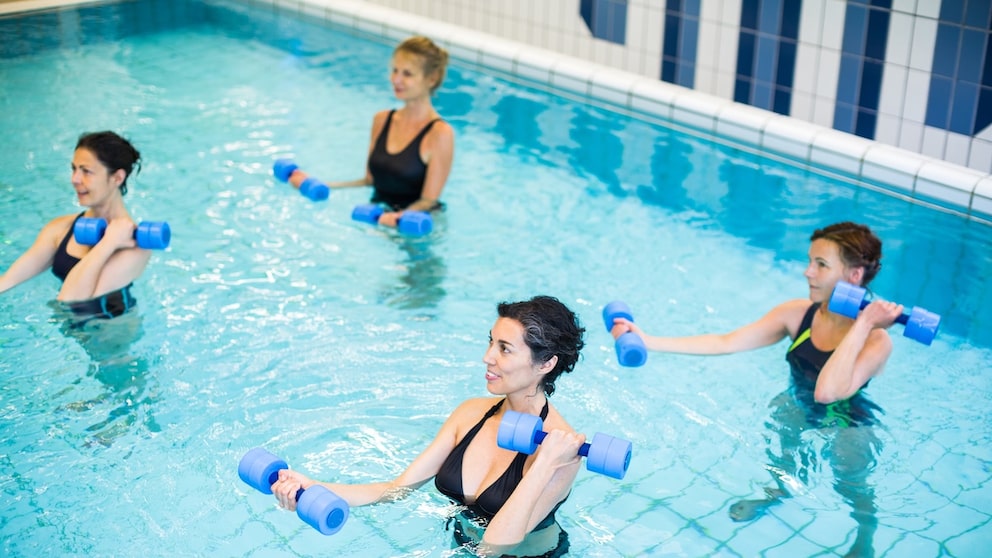
It’s probably not the sexiest sport to mention when a coworker asks, “So what do you do for your body?” The reputation of being a “retiree sport” clings to water aerobics, and unfairly so. Water aerobics, also known as “aquafitness,” is an excellent workout, especially during the warmer months.
Prejudice: Aquafitness Is Too Easy
Just because you might picture a circle of retirees in the pool when you think of aquafitness doesn’t mean water fitness is always easy. The high density of water makes resistance noticeable with every movement. This makes it a strength and endurance sport. The training effect can be up to five times stronger than comparable exercises on land.1 In an intense hour, you burn between 400 and 700 kilocalories. This energy expenditure is as high or often even higher than a comparable running session on land. Reason: The body has to expend additional energy to maintain its temperature in the water.
Building Muscle in Water
A meta-analysis from 2025 shows how effective aquafitness can be for muscle building.2 In over 70 percent of the cases studied, muscle activation in the pool reached a level that was at least equivalent to or even superior to comparable exercises on land. Due to water resistance, muscles must work with every movement, unlike traditional gym exercises, where you typically target a single muscle, such as either the biceps or triceps. When you do a biceps exercise in water, the triceps must also work harder as an antagonist than if you were doing the exercise outside the water. This is because the water pushes back as you move your arm. The triceps must overcome this resistance. If you want to increase the challenge, you can use aqua dumbbells or pool noodles.

8 Tips for Effective Strength Training

How Long Men and Women Should Be Able to Swim
Gentle on the Joints and Virtually No Risk of Injury
Who doesn’t know it: Jogging always makes the knees hurt, and in the gym, the shoulder constantly pinches? And this isn’t just the case when you’ve reached retirement age. These problems can occur at any age. The great advantage of aquafitness is that the risk of injury is negligible. The buoyancy of the water supports your body weight. When you’re standing up to your neck in the pool, you feel only about ten percent of your own weight.3 This relieves the entire musculoskeletal system, including joints, tendons, and the spine. While running on land, each step delivers hard impacts of up to three times your body weight on the knees; water completely absorbs these forces. If you already have issues with balance control, back pain, or joint diseases like osteoarthritis, you should venture into the water and try aquafitness.
Why Water Is the Best for Recovery
If you fear sore muscles and aching joints after your intense aquafitness session, you can rest easy. Training in water can support recovery. Reason: hydrostatic pressure. The water exerts even pressure on the body from all sides, acting like a gentle compression massage.4 This boosts circulation, helping to transport metabolic waste products away more quickly. Swelling decreases, and small inflammations in the tissue subside faster.5, 6
However, the research is not entirely clear. Some studies show that the reduction in swelling does not depend solely on hydrostatic pressure but is also influenced by water temperature and individual factors.7 Aquafitness does not replace a targeted recovery strategy but can be a useful component.