



July 20, 2026, 9:58 am | Read time: 4 minutes
A defined abdomen is at the top of many wish lists—but often, there’s not enough time for long training sessions in daily life. In fact, even a relatively small amount of training can be enough to specifically strengthen the core muscles. However, the right exercises, a suitable diet, and sufficient recovery are crucial for a six-pack.
Visible Abs Need More Than Just Training
Those who want to develop a muscular abdomen should not rely solely on training. For the abs to become visible, body fat percentage must also be sufficiently low. If too much fat tissue covers the muscles, even well-trained abs remain hidden.
Therefore, a daily calorie deficit of about 200 to 500 kilocalories is recommended. At the same time, sufficient protein intake and omega-3 fatty acids should be ensured. Equally important are enough sleep and a stress-free daily routine. A persistently high cortisol level can impair fat burning and hinder progress.
Genetic predisposition also plays a role. While the abdominal muscles can be specifically trained, the later visual appearance—such as a six-pack or eight-pack, or less clearly defined “packs”—cannot be influenced.
Why Full-Body Exercises Are More Effective Than Classic Crunches
Crunches and sit-ups are among the best-known abdominal exercises and do strengthen the muscles. However, those who want to train as efficiently as possible should also focus on complex movements.
Exercises like squats or jump variations engage several large muscle groups simultaneously. The core must be stabilized throughout, which means the abs work intensively. At the same time, calorie consumption increases significantly more than with isolated abdominal exercises. This supports fat loss—an important factor on the way to a defined abdomen.

Why Sit-ups Aren’t for Beginners

7 Effective Exercises for Toned Lower Abs
These Exercises Are Part of the Training Program
The four-week plan is based on several full-body and core exercises:
Squats

Feet are shoulder-width apart. Then, bend the knees and push the hips back. Afterward, rise back up in a controlled manner.
Tuck Jumps

From a squat position, touch the ground first, then follow with an explosive jump upward.
Jumping Jacks

During the jump, open the legs and raise the arms above the head. Then return to the starting position.
Burpees

From a squat, place the hands on the ground, jump the legs back, and then bring them forward again. Finish with a jump upward.
Box Jumps

Jump onto a stable platform or box with both feet. Then step back down.
Forearm Plank

The body is supported on forearms and toes. Keep the body straight and the abdominal muscles actively engaged.
Mountain Climbers
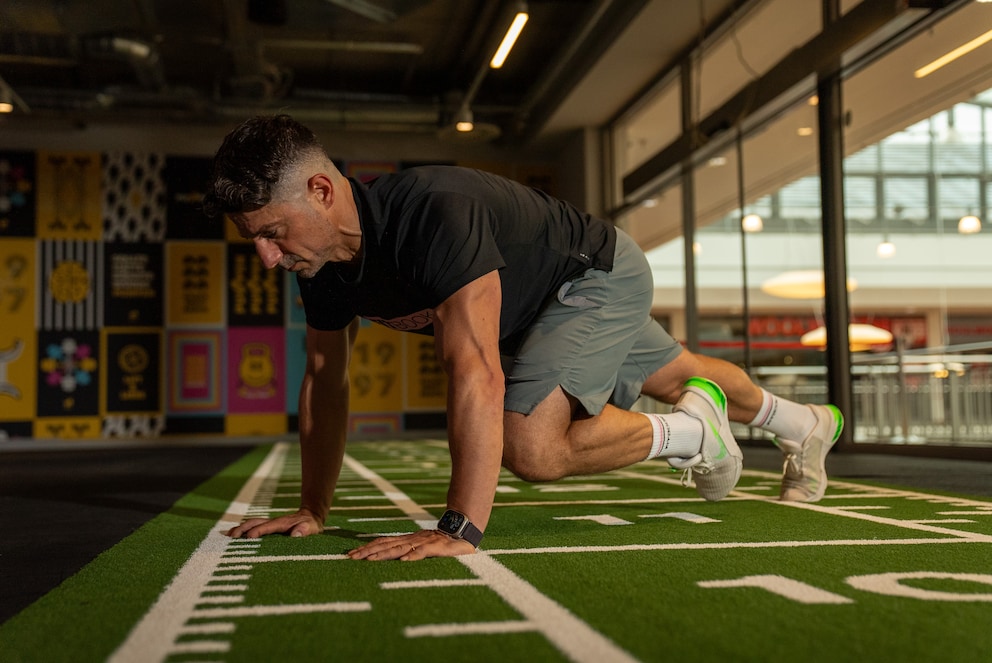
From a push-up position, alternate bringing the knees toward the chest.
Knee Lift
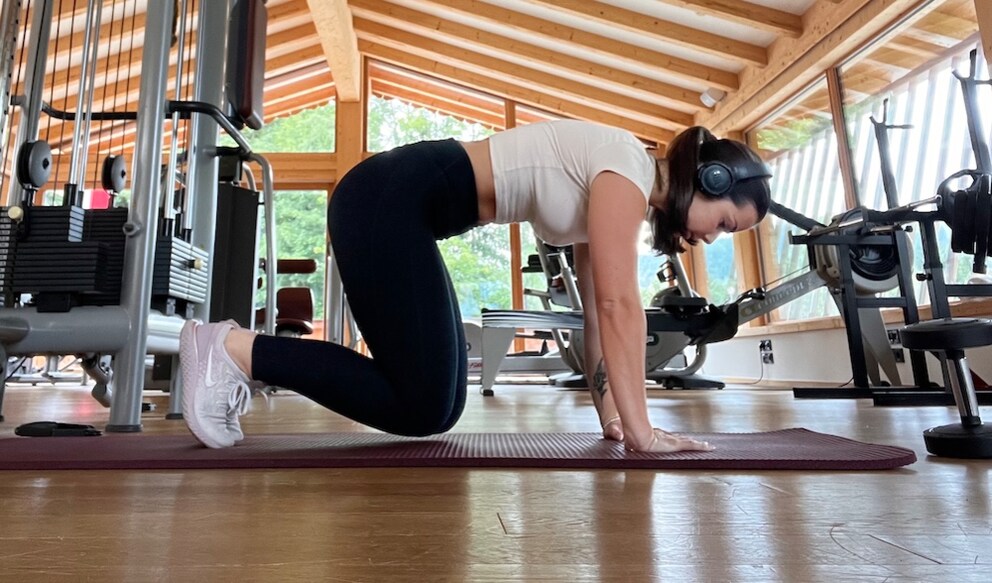
In a quadruped position, slightly lift the knees off the ground. Hold the position while keeping the abdominal and pelvic floor muscles engaged.
High Knees

Run in place while lifting the knees as high as possible.
The Four-Week Training Plan
To optimally tone and define the abs in four weeks, all exercises should be spread over two ten-minute training sessions per week. There should be enough rest days between sessions, such as on Mondays and Thursdays.
In the first week, the focus is on the correct execution of the exercises to learn proper technique. In week two, the intensity increases with a faster pace and shorter breaks. From week three, it’s best to conduct the training as high-intensity interval training (HIIT). This way, you increase your heart rate more and boost your calorie consumption. In the fourth and final week, increase the intensity again: Instead of traditional breaks, active recovery phases with more moderate exercises allow the body to catch its breath without completely stopping movement. This way, the training load gradually increases from week to week, and the body can continuously adapt. Find the detailed training plan here.