

October 19, 2026, 11:35 am | Read time: 5 minutes
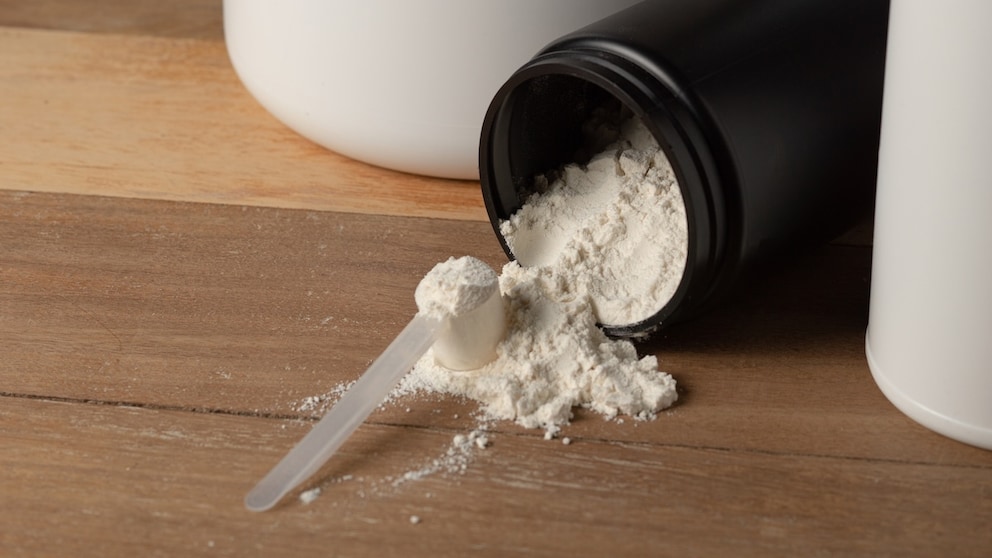
After an intense workout, your legs feel heavy, your muscles ache, and your usual performance declines. It can take several days for the body to fully recover. Proteins are supposed to aid in recovery. But does it matter where they come from? Researchers have studied how a protein mix of yeast and whey protein affects muscles and muscle soreness after intense exertion.
Mix shows positive effects after intense exercise
A mix of yeast and whey protein could mitigate some negative effects of intense physical exertion. In a study with 48 well-trained athletes, some positive effects were observed compared to a control group. These were particularly noticeable among male participants. However, whether the protein mix speeds up overall recovery remains unclear.
How the study was conducted
Intense or unfamiliar physical exertion can cause minor muscle damage. The consequences include muscle soreness, temporary loss of strength, and inflammatory reactions. Whether additional proteins can reliably reduce these issues is not yet clearly established. There are few studies on the effects of yeast protein in particular.
To learn more, researchers at Beijing Sport University randomly divided 54 well-trained competitive athletes into three groups. One group received a mix of yeast and whey protein, the second only whey protein, and the third water. A total of 48 people completed the study. The participants already had sufficient protein intake through their normal diet (about 1.2 grams per kilogram of body weight daily).1
The two protein groups consumed an additional 0.9 grams of protein per kilogram of body weight daily for ten days, divided into three portions. On the eighth day, all participants completed an intense, standardized leg workout designed to induce muscle damage.
The researchers then examined various blood values, muscle strength, jump performance, and perceived muscle soreness up to 72 hours after the exertion. The results for women and men were evaluated separately.
Better blood values, but no faster recovery
The protein mix showed positive effects, especially on certain blood values and muscle strength. The levels of creatine kinase (CK), an enzyme that increases in the blood after intense muscle exertion, were particularly notable. In men with the protein mix, the CK level was about 48 percent lower 48 hours after training than in the water group. In women, a decrease was already noticeable after 24 hours, but after stricter statistical review (correction for multiple testing), it was considered less significant and merely exploratory.
Additionally, men with the protein mix reported less muscle soreness. This advantage was not observed in women. The level of the inflammatory marker interleukin-6 was also about 49 percent lower in men immediately after training. Other inflammatory values, however, showed little difference between the groups.
In some strength measurements, men with the protein mix lost less strength immediately after training. Their jump performance was also partially better. However, many of these results were not statistically well-supported.
The researchers emphasize that lower blood values do not automatically mean less muscle damage. There were also no clear indications that muscles recovered faster. The mix showed no proven advantage over pure whey protein. Whether yeast protein can further improve recovery remains open.

Sour Cherry Juice as a Post-Workout Drink–Does It Really Work?

Certain Snack Should Be Able to Prevent Sore Muscles
Strengths and weaknesses of the study
A strength of the study is the random assignment of participants into three groups. Additionally, the researchers compared two protein variants with the same protein amount and studied well-trained athletes.
However, the study was relatively small, with 48 participants completing it. Therefore, it is not certain whether the protein mix affects all groups equally. Some positive results were also not clear after stricter statistical tests. Another weakness is that the control group only received water. Thus, it remains unclear whether the benefits are due to the proteins themselves, the additional energy, or other ingredients.
Moreover, the pure water control did not allow for blinding of the athletes, which could have influenced subjective assessments like muscle soreness through expectation effects. Furthermore, the gender-specific subgroups were very small, with seven to nine people, and the study was not statistically designed to make direct comparisons between men and women. The participants’ diet was also not sufficiently controlled.
The study was funded by Beijing Sport University. The authors reported no conflicts of interest.
Also interesting: Why is it actually called muscle soreness?
What previous studies on this topic showed
A review by Durham University supports part of the findings. The researchers evaluated 40 trials in which participants received additional protein around intense strength training.2 With protein, muscle strength was better maintained in the days following, and creatine kinase increased less. However, the protein had no effect on muscle soreness. The reduced muscle soreness in men in the new study is therefore not supported by previous research.
There are still few human studies on yeast protein. In one, 92 older adults received 20 grams of yeast or whey protein daily for six months, or no supplement.3 Both proteins improved physical performance similarly, and muscle mass and grip strength did not change. Here too, yeast protein showed no advantage over whey.