


April 23, 2026, 2:16 pm | Read time: 7 minutes
At FIBO–the world’s largest fitness trade show–when women were asked about their favorite exercise for a toned butt, one answer was heard repeatedly: hip thrust. FITBOOK, along with fitness expert Jörn Giersberg, explains why the exercise is so popular, what makes it so effective, and why it should no longer be a secret tip for men.
Possibly the Best Butt Exercise–Research Suggests
A look at studies that have analyzed the hip thrust in detail and compared it with other popular exercises reveals a clear picture. One study stands out when it comes to muscle activation during the hip thrust.1 It compared the hip thrust with the back squat, another popular lower-body exercise and often the first choice for many when it comes to shaping the butt. The finding: The hip thrust activated all areas of the butt more strongly than the comparison exercise.
Muscle Activation?
Muscles consist of a vast number of fibers. An essential aspect of muscle building is to activate the largest possible number of fibers. They are activated when the brain sends electrical signals to the muscle. The more demanding the muscle is challenged, the higher the number of activated fibers. Pure activation, however, does nothing. When you stand in front of the mirror and tense your muscles, it does not lead to growth. But high activation combined with mechanical tension leads to optimal muscle growth. Holding a coffee cup leads to relatively low activation, whereas muscle training exercises lead to high activation. And even among muscle training exercises, there can be further differentiation: Depending on the exercise, different levels of activation can be achieved.
Two more studies then put the created picture into a meaningful framework. One study showed that adding hip thrusts to the training program of untrained women significantly increased butt growth–by more than three percent compared to the group that trained without hip thrusts.2 Additionally, a case study with identical twins showed: Six weeks of hip thrusts led to greater gains in the butt than six weeks of squats.3
Also interesting: Barbell squats–the ultimate athlete’s exercise
Hip Thrusts Strengthen More Than Just the Glutes
The hip thrust is particularly suitable for strengthening the glutes, thighs (especially the back), hamstrings, and knee tendons. “However, it should be noted that this exercise falls into the second category. That means squats, deadlifts, and lunges are more important for targeting these body parts,” says our expert Jörn Giersberg. He means that the hip thrust should not serve as the main exercise. Instead, the hip thrust is ideal for complementing, varying, and rounding out the training. The exercise can be performed on the floor or on a bench.
The Hip Thrust Improves Explosiveness and Speed
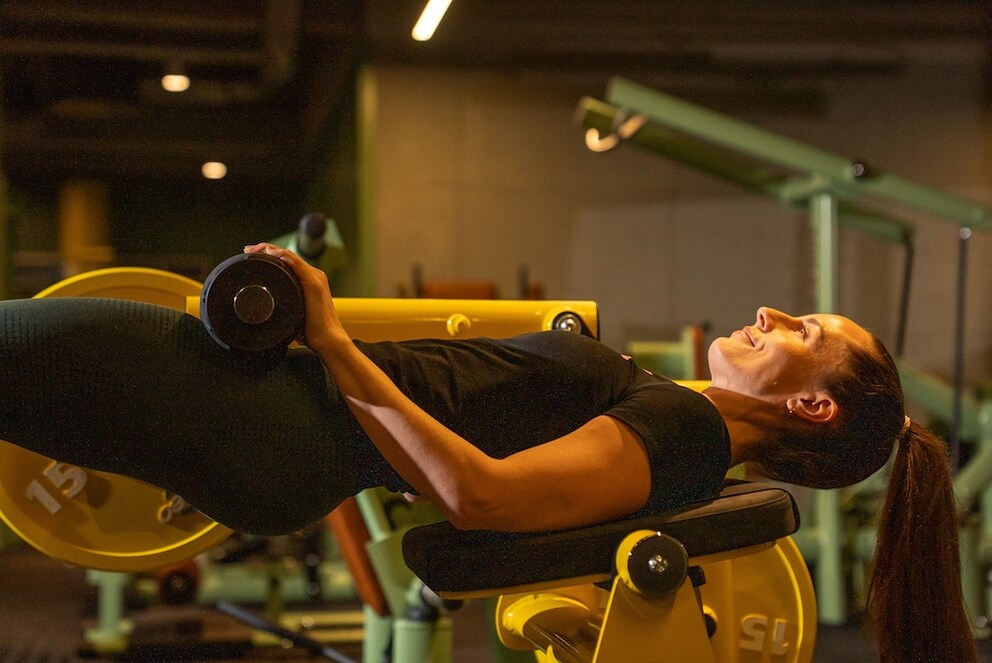
“The exercise is mainly about briefly tensing at the top point in the extension. This particularly engages the glutes,” explained trainer Jörn Giersberg to FITBOOK. To achieve this, one should not use maximum loads.
But with the hip thrust, you can also specifically train what is known as explosiveness. This refers to the ability to exert maximum force in minimal time. For example, you can improve running speed and jumping power. For explosiveness, you should use maximum loads, as is common with squats. That’s why, for example, sprinters do a lot of strength training with heavy loads. Therefore, the hip thrust only helps explosiveness if the exercise is performed with heavy weights. However, one should not overdo it, as it can lead to injuries in the pelvic area.
The Hip Thrust Protects Against Injuries
“Increased muscle tension developed through strength training exercises always protects against injuries,” explained Giersberg. The hip thrust is beneficial because it complements basic exercises like squats and deadlifts. This ensures a balanced ratio of all muscle groups in this area and prevents imbalances. “This is particularly beneficial for the lower back if you have problems in this area or want to prevent them,” adds the expert. As always, secondary exercises like the hip thrust help train the body holistically and thus in a balanced way. This benefits weak points such as the lower back.
Hip Thrusts Strengthen the Posterior Chain
The posterior chain refers to the muscles running from the neck down the back and buttocks to the calves–the entire back area of the body. Because we usually can’t see this area when training or in everyday life, the posterior chain is often neglected in training. After all, training successes in the chest, arms, abdomen, and thighs are easier to observe in the mirror. The hip thrust helps set a stronger training impulse, especially in the posterior chain, by engaging the glutes, hamstrings, and rear thighs. “There are relatively few exercises for the posterior muscle area that are as effective for the hamstrings as the hip thrust,” says our expert. Therefore, it is advisable to integrate the hip thrust into the workout.

Hip Thrust or Squat: Which Is Better for a Toned Butt?

Why Glute Workouts Are the New Ab Workouts–and My 7 Exercise Tips
The Hip Thrust Improves Posture
“Increased muscle tension always leads to better posture,” explains personal trainer Giersberg. The better the muscle tension, the better the posture. It is important to address the muscles from different angles and not always perform the same standard exercises. For the lower back, which causes problems for many people, it is advisable to have a balanced ratio between abdominal muscles, glutes, quadriceps, and hamstrings. “You have to think of this muscle complex like a ship’s mast on a sailing ship. The posture is only optimal if, like the ship’s mast, all ropes are properly tensioned,” explained Jörn Giersberg. This means: Only if all muscles are equally well trained do we have good posture and protect our bodies from injuries or complaints, such as those common in the lower back.

The Correct Execution–Even Without Equipment
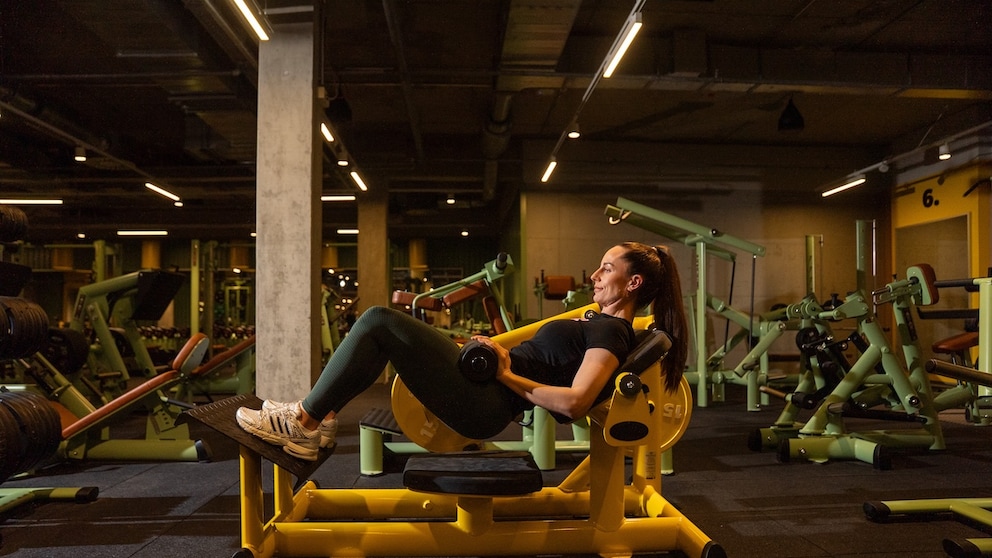
Too often, German gyms lack a hip thrust machine. And even if one is available, many prefer the free variant with the barbell or on the Smith machine. However, the hip thrust can also be performed without special equipment. For beginners, the floor variant is suitable: Lie on your back, bend your knees so that your feet are flat on the floor, place the weight on your pelvis, and push your hips up until your knees, hips, and shoulders form a straight line. If you want a greater range of motion, support your upper back on a bench, allowing for a deeper starting position and thus a more complete movement.
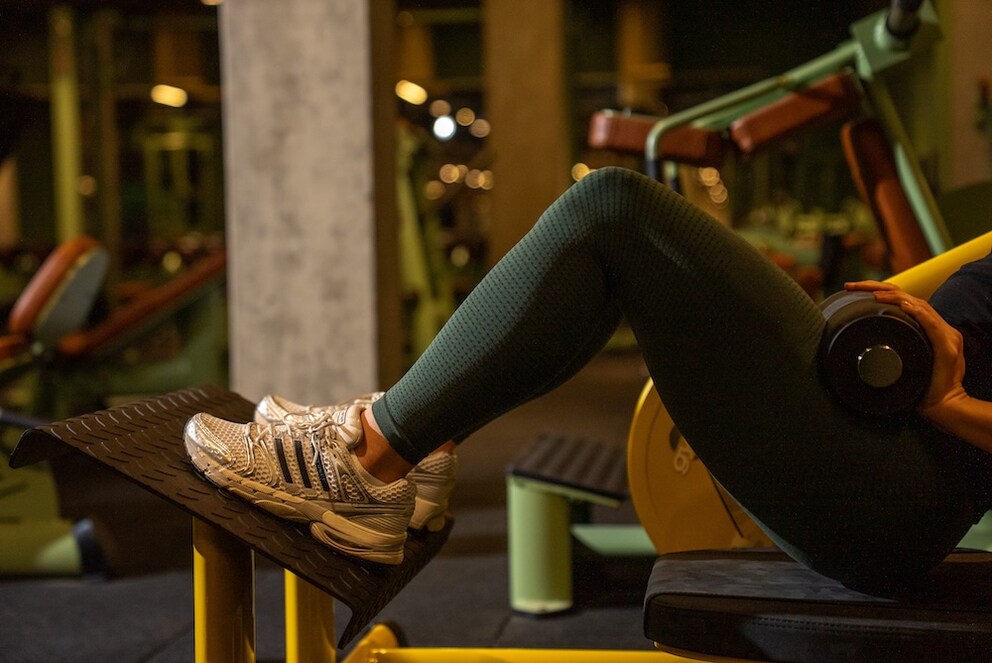
If you have access to a hip thrust machine, you should first adjust the seat position correctly: The back pad should be at shoulder blade height, and the feet should be hip- to shoulder-width apart on the platform. Common mistakes include an overly arched back at the highest point of the movement and knees that collapse inward. Both should be avoided.