


December 17, 2025, 3:55 am | Read time: 5 minutes
In principle, exercise is good for the body. However, there are exceptions. You can overdo it with exercise. Those with improper training habits may permanently damage their cells and even age faster. Sports scientist and personal trainer Jörn Giersberg explains to FITBOOK why.
Many people swear by exercise, not just for health reasons, but also as an anti-aging tool. Strength training can counteract muscle loss, and endurance training can ensure a fit cardiovascular system. Additionally, exercise in old age can even lead to a longer life, as FITBOOK reported. But what if you overdo it with exercise?
“The Dose Makes the Poison”
Exercise is actually quite simple, says fitness expert Jörn Giersberg: You trigger a training stimulus through physical activity. This is a strain on the body. During this strain, the tissue or body substance is weakened, “a little bit even damaged,” says Giersberg. That’s why recovery after exertion is so important, “because during the rest phase, adaptation occurs.” This means the body tries to overcome the state of exhaustion as quickly as possible and restore its balance. Ideally, it becomes stronger than before. But beware, even in sports, “the dose makes the poison,” the sports scientist emphasized.
Also interesting: Is Daily Exercise Healthy or Unhealthy? Experts Weigh in
Avoid Extreme Endurance Sports
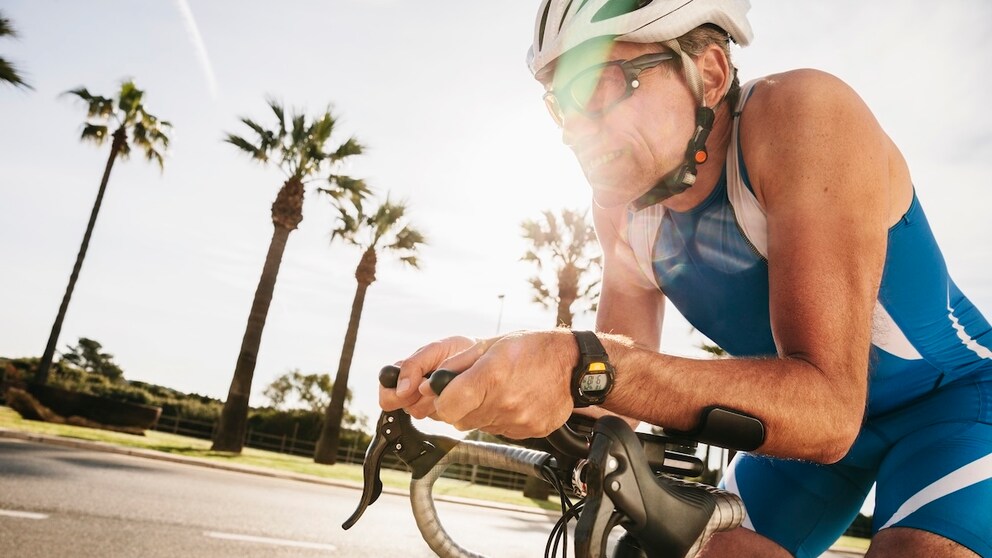
Especially too intense or too extensive strains can harm the body. The latter includes extreme endurance sports, as is the case with professional road cyclists. Giersberg cites the “Tour de France” as a prime example of a damaging strain. Triathletes, through long distances in swimming, cycling, and running, “wear out” their bodies to the point where it becomes visible after a few years. Therefore, even amateur athletes should be careful not to constantly push their limits in their training habits.
After extreme endurance strains over a long period, the skin is “worn out,” and the body is exhausted, explains the expert. The problem: The body is unable to rebuild body substance and renew cells sufficiently after damage from exercise.
Sports with a Risk of Accelerated Aging
Another problem arises when you don’t allow enough rest between individual strains. In this case, the body has to work hard again, even though it hasn’t sufficiently recovered. This leads to more breakdown rather than strengthening, the expert emphasized. “And if this happens over a long period, you actually age faster,” says Giersberg.
Two groups of athletes are particularly at risk:
- extreme endurance athletes (e.g., road cyclists and triathletes)
- weightlifters in high-performance areas
In strength athletes, wear and tear is also evident in the permanent damage to joints, tendons, and ligaments. Therefore, Giersberg advises: “Pay attention to the balance between strain, recovery, and adaptation!”
According to the sports scientist, doping is also common in high-performance areas. This allows athletes to train beyond their natural capacity. The body is pushed into a zone where there is an unnatural strain. The price for extreme performance: permanent damage and long-term consequences. However, training hard is certainly part of good training habits–as long as you pay attention to physical limits and avoid any form of doping.
The Role of Cortisol in the Aging Process
“There is a distinction between catabolic and anabolic hormones,” explains Giersberg. Anabolic hormones are body-building, from which the term muscle-building anabolics is derived. Cortisol, on the other hand, is a catabolic hormone released during stress phases. This leads, for example, to muscle breakdown and simultaneous fat storage. So, an opposite effect. Additionally, this hormone burdens the cardiovascular system. According to Giersberg, a strong and especially frequent release of cortisol leads to faster aging because the cells cannot renew themselves sufficiently.
Also interesting: Caloric Intake Influences the Aging Process in Surprising Ways
How to Avoid Strong Cortisol Release
- ensure sufficient sleep
- eat a balanced and healthy diet
- drink enough water
- actively recover from athletic performances: light swimming, bathing, sauna, walks
- avoid emotional stress from fears and problems

Overtraining: Signs and What You Can Do About It

Starting This Training at a Young Age Can Positively Influence Aging From the Age of 55
Is Strength Training Better to Counteract Aging Processes?
“There is a realization that from the age of 30, you lose about ten percent of muscle mass per decade,” says sports scientist Giersberg. Strength training can counteract this and reduce natural muscle loss to up to two percent. Because muscle growth automatically stimulates the production of anabolic hormones. This increases, for example, the production of testosterone–in both men and women. This leads to other hormones in the body trying to establish a balance and boosting their production. According to Giersberg, you have the opportunity to engage in anti-aging from within through strength training. “No pill from outside can do that,” says the expert.
“There are studies comparing strength training and endurance sports. Strength training showed a significantly stronger hormone release,” explains Giersberg. In strength training, proteins are “broken down” and then rebuilt. This protein synthesis is the best anti-aging method. It improves hormone status, renews cells, and enhances body shape.
Conclusion: More Strength Training, Less Cardio
Therefore, the sports scientist recommends focusing on strength training as you age and not doing too much endurance training. However, you should not strain yourself too extensively and intensively, as adaptation processes slow down with age and recovery phases are longer. “Train shorter, but more often,” advises Giersberg.
Also Better for Potential “Problem Areas”
For example, if you have a “sagging butt” in older age, you can shape it better with squats than with a running session, says the expert. According to him, dumbbell training can be used to target physical problem areas very specifically. Because you can consistently increase the weight and thus the strain, it is a better solution for many than exercises with your own body weight. But good training habits also include allowing sufficient recovery in between. Only then can you achieve the best anti-aging results.