

March 18, 2022, 8:08 pm | Read time: 4 minutes
Ticks can transmit dangerous pathogens through their bites. Pediatricians advise parents to comprehensively protect their children against TBE and others–including through vaccination.
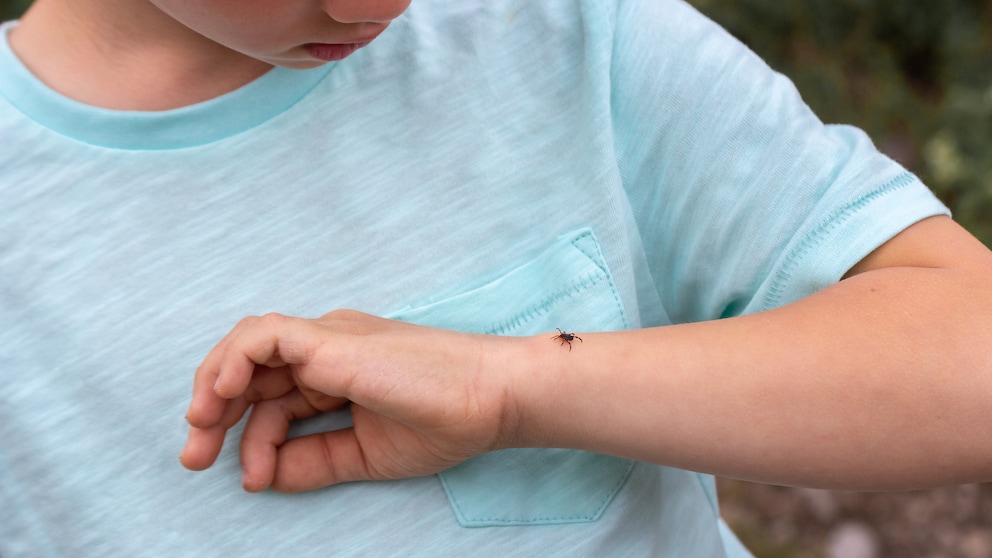
While hiking, in tall grass, or in the forest, they lie in wait for their prey: ticks. Children playing outdoors often pick up one of these bloodsuckers. The bite can transmit pathogens that cause diseases such as Lyme disease and TBE, tick-borne encephalitis. FITBOOK offers six tips on how to best protect children from ticks.
Overview
Risk Areas in Germany
While Lyme disease occurs nationwide, the Robert Koch Institute (RKI) has identified risk areas for TBE. These include Bavaria, Baden-Württemberg, southern Hesse, southeastern Thuringia, and Saxony. However, the TBE risk has also increased in other regions.
The Professional Association of Pediatricians (BVKJ) therefore recommends that parents living in these areas protect their children from ticks and the consequences of tick bites.
Also interesting: How to behave correctly in tick areas
6 Tips to Protect Children from Ticks
1. Through Vaccination
TBE transmitted by tick bites can lead to inflammation of the brain, meninges, or spinal cord. This manifests as flu-like symptoms that can appear about one to two weeks after a tick bite, describes the BVKJ of the disease progression. A doctor’s visit is urgently needed here.
Due to the lack of a current therapy, vaccination is considered the best protection against TBE. According to the RKI, it is approved for children from 12 months and is recommended for everyone living in risk areas. Three vaccinations are administered several months apart. Doctors recommend starting immunization in winter for good protection in spring. Booster vaccinations are then necessary for the first time after three years and subsequently every five years.
2. Wear Closed Clothing
Long pants, closed shoes, and covered arms can protect children from ticks. This way, the animals cannot bite directly but must first climb on the clothing. Then they can usually be discovered and removed in time.
Also interesting: What to consider when choosing functional clothing for outdoor sports
3. Apply Tick Repellent
These sprays are applied to the skin. Their active ingredients irritate the sensory perceptions of ticks, preventing them from biting. According to the BVKJ, their effect does not last long. Therefore, the sprays should be reapplied every three to four hours.
4. Careful Inspection
Parents should thoroughly check their children for ticks after a day in nature. Popular bite sites include the hairline, ears, neck, armpits, elbow, navel, genital area, or the back of the knees.
Also interesting: 3 tips for dealing with ticks correctly
https://oembed/fitbook/affiliate/53a77e7d368e2447ba4de7d0b1c0aaa11bfe1a37804806dc529b7877ccbd5894/900b495e-d27d-429e-892a-029abf95d223/embed
5. Avoid Grass and Bushes
Ticks usually stay at knee height in grass or bushes. Ensuring that children mainly use solid paths can reduce their contact risk.
6. Keep Stimuli Low
Ticks react to stimuli such as movement, (body) heat, and emitted scents, such as from sweat or perfume. With a special sensory organ in their front legs, they can smell when a potential host is nearby. When a potential host–whether human or animal–passes by, ticks extend their front legs and latch on with their tiny claws. Parents should avoid using strongly scented shower gels or body lotions on their children to keep scent stimuli as low as possible.
Also interesting: How can I protect myself from ticks during outdoor sports?

TBE – When the Brain Becomes Inflamed

Lyme Borreliosis – Causes, Symptoms and Treatment
How to Properly Remove a Tick
If a tick does reach its target, parents should remove the animal very carefully. This is easiest with tweezers or a tick removal tool. Place it close to the skin’s surface and grasp the animal by its mouthparts–not the engorged body. Then pull it straight out. Important: Do not twist the animal out.
After removal, parents should disinfect the bite site, mark it, and monitor it closely over the coming days. If a red infection ring–known as erythema migrans–appears around it, this could be an early sign of Lyme disease. Warning signs include massive joint swelling. In this case, parents should consult a doctor who can prescribe antibiotics.
Sources
- Stiftung Gesundheitswissen. Tick Bites–How to Protect Yourself? (accessed on 3/18/22)
- With material from dpa